
Introduction
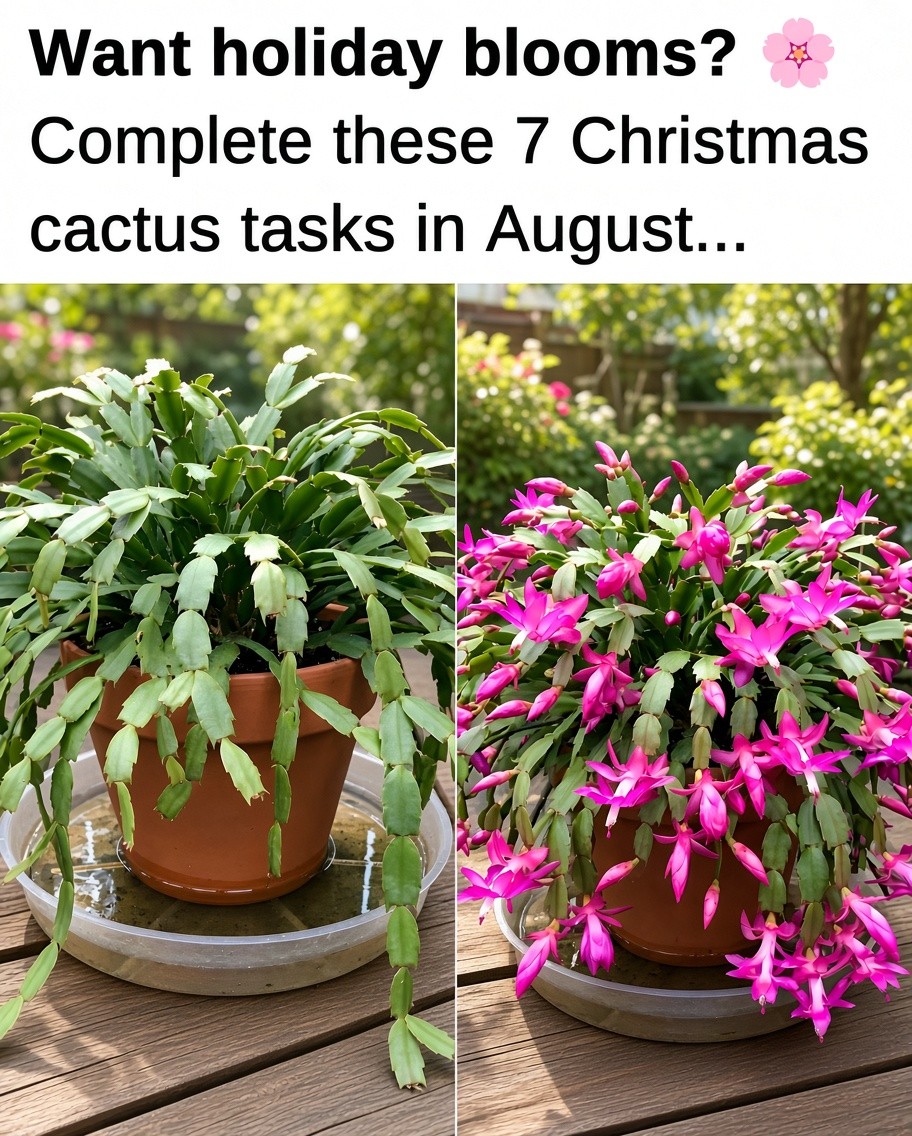
If you want your Christmas cactus to burst into bloom around the holidays, August is an important month for preparation. The plant is still focused on healthy summer growth, but the way you care for it now can influence how well it handles the transition into fall and flower-bud formation.

Christmas cactus (Schlumbergera) is a tropical forest cactus rather than a desert cactus. It naturally grows in humid, shaded conditions, so bright filtered light, sensible watering, and good drainage are much more important than baking it in full sun. August is the time to keep the plant strong, inspect it carefully, and avoid mistakes that can interfere with its fall flowering cycle.
1. Move It Away From Harsh Summer Sun
One of the first August Christmas cactus tasks is checking its light. These plants prefer bright, indirect or filtered light, and strong summer sun can scorch or stress the flattened green stem segments. The RHS recommends bright but indirect light and notes that Christmas cacti can be moved outdoors in summer as long as they are kept in a warm, sheltered, shady position.

If your plant is outside, a covered porch, shaded patio, or position beneath a leafy tree can work well. Indoors, an east-facing window is often a good choice. If the only available window receives strong afternoon sun, use a sheer curtain or move the pot farther from the glass. Pale, reddish, or purple-tinged segments can be signs that the plant is receiving more intense light than it prefers.
2. Check the Soil Before You Water
Limp or wrinkled Christmas cactus stems do not always mean the plant needs more water. In summer, drooping can result from either dry soil or roots that are staying too wet. Before watering, check the potting mix with your finger and make sure the container has functioning drainage holes.
Christmas cactus needs more moisture than a typical desert cactus, but it still should not sit in waterlogged compost. Extension guidance recommends a well-drained growing medium and watering when the upper portion of the soil has dried rather than keeping the roots permanently saturated.
When the mix is dry, water thoroughly and allow excess water to drain away. Empty a saucer rather than leaving the pot standing in water. If the mix remains wet for days, improve drainage and investigate the roots if the plant continues to look limp.
3. Be Careful With August Fertilizing
Fertilizer advice for August can vary with climate, plant condition, and the exact holiday-cactus cultivar. Some extension recommendations continue light feeding through August, while other bloom-focused schedules stop feeding toward the end of summer as the plant approaches bud formation. The important point is to avoid excessive feeding, especially once the plant is entering its fall flowering phase.
If your plant is actively producing healthy summer growth, a balanced houseplant fertilizer used at the label’s recommended dilution may still be appropriate earlier in August. As fall approaches, stop routine fertilization so the plant can transition naturally into its blooming cycle. Avoid heavy nitrogen applications that encourage a sudden flush of soft new growth when mature stems are more useful.
4. Don’t Give It a Big Summer Haircut
August is not the ideal time for aggressive pruning if your main goal is holiday flowers. Christmas cactus flowers develop at the ends of stem segments, and healthy terminal growth should be left intact as the plant moves toward fall bud formation.
If you find a broken, diseased, or badly damaged segment, it can be removed carefully. Otherwise, save major shaping and pinching for after flowering or the appropriate post-bloom period. Pruning after flowering can encourage branching and create more terminal tips for future blooms. The University of Florida also recommends finishing routine pruning by mid-summer when the goal is to encourage branching and flowering.
5. Let Late-Summer Temperatures Set the Stage
Christmas cactus responds to changes in temperature and day length. Cooler nights and longer periods of darkness in fall help trigger flower-bud formation. That means August is less about forcing buds immediately and more about keeping the plant healthy enough to respond when seasonal conditions change.
If you grow the plant outdoors during summer, let it enjoy warm days and bright shade, but protect it from cold weather as temperatures begin to fall. The RHS recommends bringing holiday cacti indoors before temperatures drop too far. In many climates, nights moving toward the low 50s°F (around 10–12°C) are a useful warning to start preparing for the move indoors.
6. Inspect for Spider Mites, Scale, and Other Pests
Before moving a Christmas cactus indoors for fall, inspect the entire plant. Check the joints between stem segments, the undersides of stems, and the area around the pot and soil surface. Common holiday-cactus pests include scale, mealybugs, fungus gnats, and spider mites.
If you find scale or another small infestation, isolate the plant from other houseplants and treat it according to a product label or trusted extension recommendation. Small scale infestations can sometimes be removed manually; the University of Georgia and other extension guidance also recommends appropriate insecticidal products for persistent infestations.
Cleaning the plant before bringing it indoors is worthwhile because warm indoor conditions can allow a pest population to spread quickly to nearby houseplants.
7. Keep Giving It Good Daytime Light
Do not put your Christmas cactus in a dark cupboard in August. The plant still needs bright, indirect daytime light to maintain healthy stems and build energy. The strict dark period used to encourage flowering belongs later, as fall approaches and the plant begins responding to shorter days.
A useful August routine is therefore simple: bright filtered light during the day, sensible watering, and no unnecessary environmental stress. As September arrives, natural shortening days and cooler nights can begin doing the work of triggering buds. If you later need to provide artificial darkness, remember that porch lights, lamps, and other nighttime illumination can interrupt the dark period and delay flowering.
When Should You Start the Darkness Routine?
The exact timing depends on your cultivar, climate, and indoor conditions. Many holiday cacti respond to long, uninterrupted nights in early to mid-fall, and extension sources commonly recommend around 12 to 14 or more hours of darkness for reliable bud formation. citeturn1search1turn2search9turn2search3
Rather than trying to force the process in August, focus on creating a stable routine now. Once the nights naturally become cooler and the days become shorter, keep the plant away from artificial light at night. If your home stays bright late into the evening, a naturally dark room can make the process easier.
Avoid Repotting in August Unless There Is a Real Problem
A healthy Christmas cactus usually does not need to be repotted simply because August has arrived. Holiday cacti often flower well when slightly root-bound, and both extension and horticultural guidance recommend repotting after flowering or during the spring-to-early-summer growing period rather than disrupting the plant close to bud formation.
If the plant has serious drainage problems, badly depleted soil, or another urgent root issue, corrective action may be necessary. Otherwise, leave the roots undisturbed and concentrate on stable summer care. A calm, consistent environment is more valuable than a last-minute pot upgrade.
Signs Your Christmas Cactus Is Ready for Fall
By late summer, a healthy Christmas cactus should have firm, green stem segments and steady growth without persistent wilting. You may not see flower buds yet, and that is completely normal. Bud formation generally becomes more obvious after the plant experiences the shorter days and cooler conditions of fall.
If the stems are shriveled, yellowing, soft, or dropping segments, investigate watering, drainage, light, temperature, and pests before worrying about flowering. A plant that is stressed in August is less likely to enter the fall bloom cycle in good condition.
Common August Christmas Cactus Mistakes
Several common mistakes can reduce your chances of a strong holiday display. Overwatering is a major one because saturated soil can damage roots. Another is exposing the plant to intense summer sun after assuming that every cactus wants full light. Christmas cactus is a rainforest plant and prefers filtered conditions.
Other mistakes include heavy late-season feeding, aggressive pruning, moving the plant repeatedly, and bringing an infested outdoor plant indoors without inspection. Keeping the routine simple is often the best strategy: give it the right light, check moisture before watering, keep the roots well drained, and protect the plant from extremes.
Final Thoughts
August is the month to prepare your Christmas cactus rather than force it into bloom. Keep it in bright indirect light, protect it from harsh summer sun, water according to the soil rather than a rigid calendar, and avoid conditions that leave the roots saturated. Inspect the plant for pests before it comes indoors, and resist unnecessary pruning or repotting.
As summer gives way to fall, cooler nights and longer uninterrupted darkness will provide the natural signals that encourage flower buds. With steady August care and a gentle transition into fall conditions, your Christmas cactus can enter the holiday season healthy, full, and ready to produce the colorful blooms it is known for.
SEO Keywords
August Christmas cactus care, Christmas cactus August tasks, how to get Christmas cactus to bloom, Christmas cactus holiday blooms, Christmas cactus care before flowering, Christmas cactus watering, Christmas cactus light requirements, when to bring Christmas cactus indoors, Christmas cactus fall care