
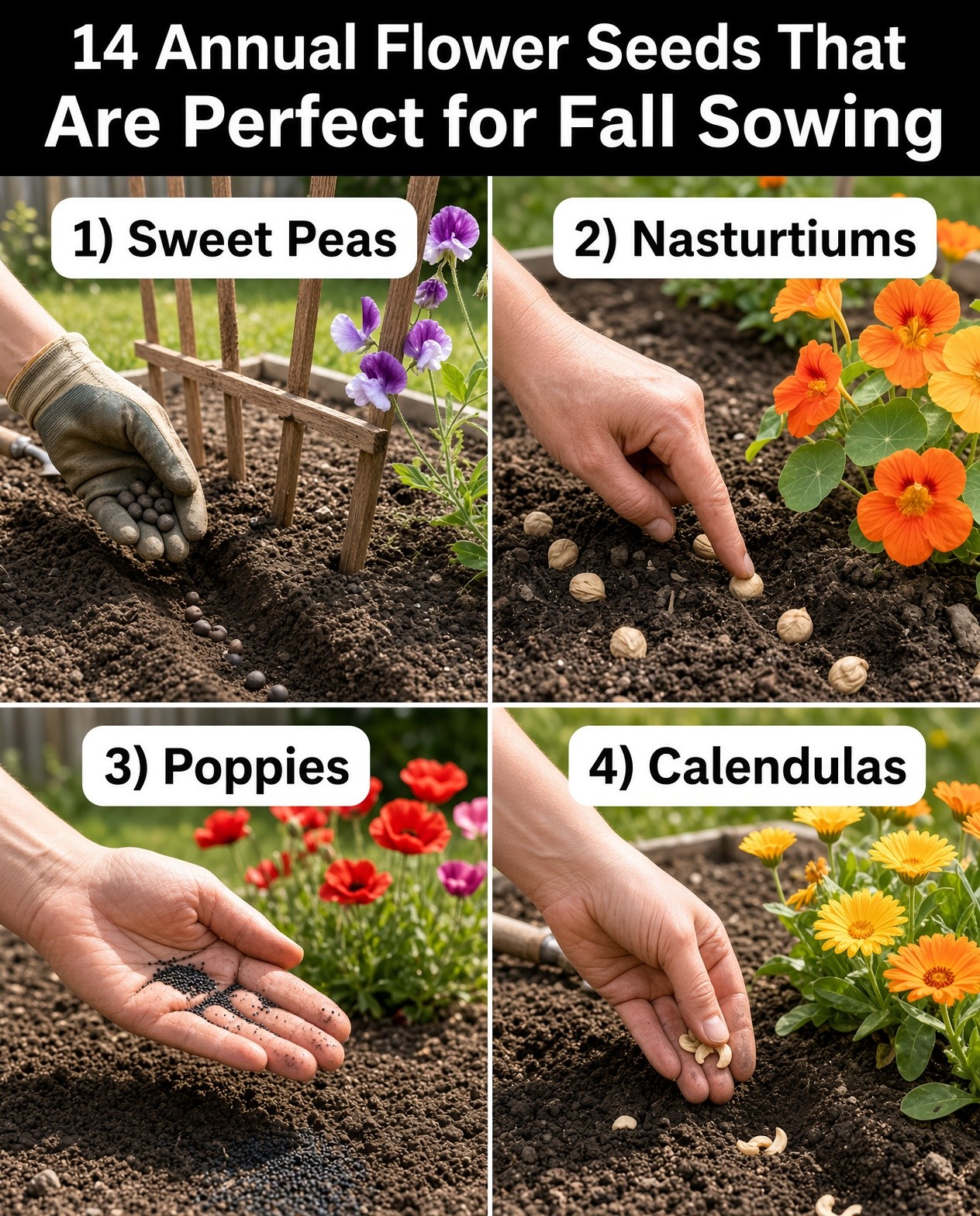
Fall is not the end of the flower-growing season—it can be the beginning of next year’s display. The key is choosing seeds that tolerate cool conditions and understanding that fall sowing depends on climate. This guide focuses on hardy or cool-season annuals and similar flowers that can be direct-sown in suitable regions.
1. Calendula

Calendula is a useful cool-season flower to consider for fall sowing. Its cheerful blooms brighten beds, borders and containers, and it can perform well when temperatures are milder. In a sunny, well-drained bed, sow according to the packet instructions and avoid burying small seeds too deeply. In mild-winter regions, autumn sowing can give plants an early start; in colder climates, use local frost patterns and the seed packet to decide whether outdoor sowing is appropriate.
2. California Poppy

California poppy is commonly direct-sown because its seedlings do not always appreciate root disturbance. Prepare a fine, open seedbed and press the small seed into the surface or cover it only lightly, following the packet directions. Good drainage matters, especially through winter. Fall sowing can work in suitable climates because the seed remains in place until spring conditions encourage growth, but very wet winter soil can cause problems.
3. Love-in-a-Mist (Nigella)

Nigella, or love-in-a-mist, is a classic direct-sown flower with feathery foliage, delicate blooms and decorative seed pods. Sow it where you want it to grow because unnecessary transplanting can disturb its roots. A fall sowing may lead to an early spring display in appropriate climates. Mature seed pods can also add structure after flowering and may drop seed naturally around the garden.
4. Cornflower

Cornflower, also called bachelor’s button, is a hardy annual that can be grown easily from seed. Give it sun and reasonably well-drained soil. Sow at the depth recommended on the packet rather than burying the seed deeply. Fall sowing can allow plants to establish before spring growth, while the blue flowers work beautifully in mixed borders and pollinator-friendly beds. Thin crowded seedlings so individual plants have room to develop.
5. Larkspur

Larkspur is a useful choice when you want tall, airy flower spikes early in the season. It is treated as a hardy annual in many gardens and can benefit from exposure to winter conditions. Sow it where you want it to grow, prepare the soil finely, and avoid covering small seed with a thick layer of soil. Always check the packet because species and cultivars can differ in their requirements.
6. Sweet Alyssum

Sweet alyssum forms low mounds covered with small, often fragrant flowers. It is useful along paths, bed edges and containers. Fall sowing is most suitable where winter conditions are moderate rather than persistently harsh or waterlogged. Scatter the tiny seeds thinly over prepared soil and keep the surface gently moist. Once seedlings emerge, thinning helps prevent overcrowding and weak growth.
7. Snapdragon

Snapdragons are grown as annuals in many gardens, although their winter behavior varies with climate. Penn State Extension lists snapdragon among hardy annuals, making it a candidate for fall sowing in suitable regions. Because the seed is fine, surface sowing or very shallow coverage is often appropriate. A protected, well-drained bed can help, but severe freezes may still favor protected or spring sowing.
8. Sweet Pea

Sweet peas can reward gardeners who match the sowing date to local winter conditions. In suitable climates, autumn sowing lets roots establish before the coldest period and can support an early spring start. Choose a sunny site with fertile but well-drained soil and provide support for climbing stems. In very cold or wet regions, protected containers or a later sowing may be safer.
9. Pansies and Violas

Pansies and violas are classic cool-season flowers and can be useful in regions with moderate winters. For fall sowing, the goal is to let young plants establish roots without encouraging excessive soft growth. Avoid heavy fertilizing late in the season, provide appropriate light, and protect seedlings where severe winter weather is expected. In colder climates, winter-sown containers or spring-started plants may be more dependable.
10. Dianthus

Certain dianthus types can be grown as annuals, biennials or short-lived perennials depending on climate. Their compact habit makes them useful for edging and mixed beds. When sowing in fall, choose a sunny location with good drainage and follow the packet for depth and spacing. Species and cultivars differ, so do not assume that every dianthus seed has identical cold or germination requirements.
11. Annual Poppies

Many annual poppies are best direct-sown because their young roots can be sensitive to transplanting. Prepare the soil finely and sow the tiny seed shallowly. For many poppies, light at the soil surface helps germination, so pressing seed into the surface can be preferable to burying it. Mark the planting area clearly so spring seedlings are not mistaken for weeds.
12. Stock

Annual stock is valued for its attractive flowers and fragrance and can be a useful cool-season option where winters are moderate. Give it a sunny, well-drained location and avoid persistent wet soil. Fall sowing can work where young plants can establish without severe winter injury. In colder climates, use a protected structure or start seed at the recommended late-winter or spring window.
13. Sweet William

Sweet William is often grown as a biennial or short-lived plant, but it is easy to include in an annual-style seed plan. Fall sowing gives young plants time to establish before their main flowering period. Keep the seedbed weed-free and avoid excessive moisture. Label the location because seedlings may look insignificant during the first stage of growth and can otherwise be removed during spring cleanup.
14. Hardy Annual Mixes

A packet labeled as a hardy annual mix can be a convenient way to experiment with fall sowing, but read the contents before planting. Different species can have different cold tolerances, sowing depths and germination needs. If several species are mixed together, follow the packet guidance as closely as possible. Penn State Extension emphasizes that seed requirements vary and that good seedbed preparation and correct spacing influence germination and plant development.
15. Self-Sowing Annuals

Some annuals naturally drop mature seed and return as volunteers. Allowing a few healthy plants to self-sow can create a relaxed planting and reduce the amount of purchased seed. However, volunteers from hybrids or cultivars may not reproduce the parent exactly. Keep desirable seedlings, thin crowded patches and remove volunteers growing where they are unwanted. Treat self-sowing as a useful possibility, not a guarantee.
How to Prepare the Bed for Fall Sowing
Choose a location with the light required by the flowers you are growing. Remove weeds, break up large clods and create a level surface with good seed-to-soil contact. Penn State Extension recommends preparing outdoor seedbeds so they are moist below the surface and free of large clumps. Avoid a muddy planting area because saturated soil can encourage rot and heavy rain can move tiny seeds.
How Deep Should Flower Seeds Be Sown?
Seed size matters. Large seeds can be handled individually, while very small seeds may be sprinkled thinly. As a general principle, many seeds should not be planted much deeper than their diameter, but packet instructions should take priority because some seeds need light or special treatment. Do not bury tiny seeds deeply just to hide them from birds; use appropriate surface protection instead.
Watering and Winter Protection
After sowing, aim for good seed-to-soil contact and consistent moisture without keeping the bed saturated. Use a gentle spray rather than a strong stream that can wash seed away. In severe climates, winter sowing in ventilated containers can be an alternative to exposed beds. Penn State describes winter sowing as a way to mimic natural cold and moisture while giving seeds some protection from animals and harsh weather.
What Not to Sow in Fall
Fall sowing is not a universal shortcut. Tender annuals such as zinnias, marigolds, sunflowers, impatiens and many warm-season bedding plants generally perform better when started after cold weather has passed. Penn State Extension separates hardy annuals from tender annuals and lists several familiar summer flowers among the tender group. If a packet says to wait for warm soil or after-frost conditions, follow that advice.
A Simple Fall-Sowing Checklist
Check the packet for cold tolerance, sowing depth, light requirements and timing. Prepare a sunny, well-drained bed, remove weeds, loosen the surface and label every planting. Sow thinly and at the correct depth, then water gently. If winter is severe, consider winter-sowing containers or waiting for the recommended spring window. In spring, identify seedlings early, thin crowded patches, control weeds and water according to weather and soil conditions.
Plan Now for a Fuller Spring Garden
Fall sowing can make spring gardening more organized because some of the work is completed before winter. The key benefit is matching suitable seeds to their natural seasonal rhythm rather than forcing every annual onto the same schedule. With good seed selection, a prepared bed, accurate labels and realistic expectations for your climate, a small autumn sowing can become a colorful spring display.