
Why October Pruning Needs a Smarter Approach
October can be a useful month for cleaning up herbaceous perennials, but it is not a universal cut-everything-back deadline. The right timing depends on whether the plant has finished useful growth, whether diseased foliage needs removal, whether seed heads provide food for birds, and whether stems offer shelter for insects. University of Minnesota Extension recommends selective fall cleanup and notes that many perennials can be left standing until spring. Its guidance also explains that spring- and summer-blooming perennials are often better candidates for fall division, while fall-blooming plants are generally better divided in spring. In practice, October pruning works best when you focus on plants that have clearly finished for the season while protecting healthy structure that still benefits the garden. A useful final habit is to mark plants you intentionally leave standing. A simple label or photograph can prevent accidental cleanup later in winter or early spring, when dormant stems all look alike. Record which plants had disease, which remained vigorous, and which beds dried quickly. Those notes make next season easier because pruning and watering decisions can be based on the real conditions in your garden rather than a generic calendar.

1. Peonies
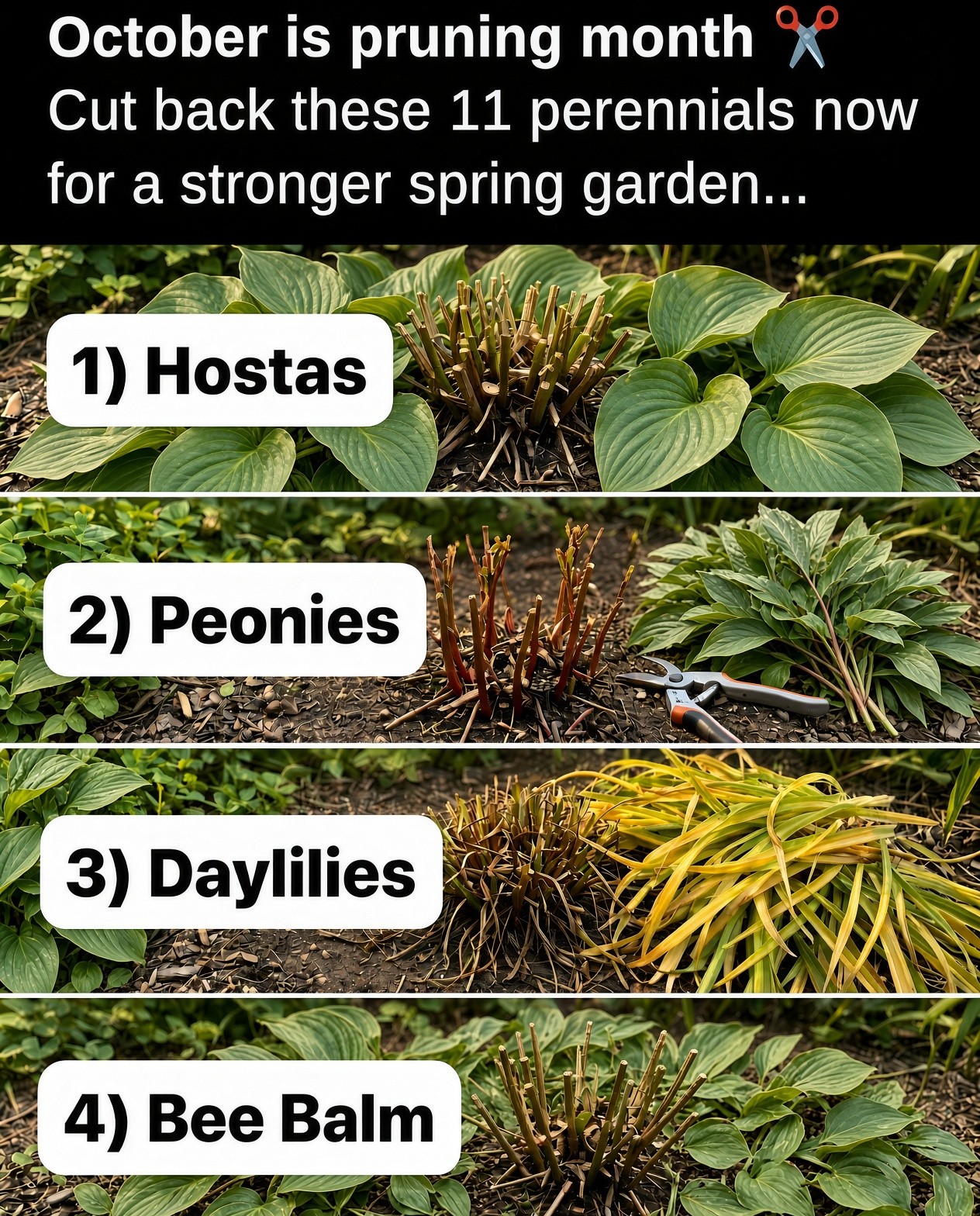
Peonies are one of the clearest perennials to clean up after the foliage has finished for the year. Wait until the leaves yellow naturally or are blackened by a hard frost before cutting. Once dormant, cut stems close to the soil line and remove spent foliage from the planting area, especially when the plant suffered leaf spots or other disease during summer. Clearing diseased debris reduces the amount of infected material left around the crown. Do not cut green leaves simply because October has arrived. If you also divide a peony, remember that its fleshy roots are easy to damage and divisions need correct planting depth. A useful final habit is to mark plants you intentionally leave standing. A simple label or photograph can prevent accidental cleanup later in winter or early spring, when dormant stems all look alike. Record which plants had disease, which remained vigorous, and which beds dried quickly. Those notes make next season easier because pruning and watering decisions can be based on the real conditions in your garden rather than a generic calendar.

2. Hostas
Hostas usually become yellow, limp, and soft as autumn progresses. Once frost or natural senescence has finished the leaves, cut old foliage down and remove heavy piles of debris around the crown. This creates a cleaner planting area and can reduce places where slugs hide. Do not rush while the leaves are still green and healthy. Let the plant complete its seasonal work first. In gardens where hosta foliage remains attractive late into fall, there is no reason to prune simply for appearance.

3. Daylilies
Daylily foliage can be trimmed when it becomes yellow, brown, or collapsed after frost. Use clean shears and cut the finished leaves down without damaging the crown where new shoots will appear next season. Remove a thick wet mat of dead leaves if it is collecting around the plant. Autumn is also useful for noticing whether a clump is overcrowded, but pruning and division are separate jobs. If you divide a daylily, make sure the climate still provides enough time for roots to establish before the ground freezes.

4. Bee Balm
Bee balm, or Monarda, can be cut back after flowering, particularly when its foliage has suffered from powdery mildew. Wait until the plant has finished its main growth, then remove old and visibly diseased stems with clean pruners. Dispose of severely infected foliage rather than leaving it packed around the crown. Fall cleanup is also a chance to notice whether the clump has become too dense, because generous spacing improves airflow next season. You can leave a few clean seed heads for wildlife if the plant is healthy.

5. Garden Phlox
Garden phlox can benefit from an end-of-season cutback when the plant is finished growing, especially after a summer with powdery mildew. Remove old foliage and stems and clear obviously diseased debris from the bed. This is pruning for sanitation rather than appearance. If the plant stayed healthy and you want winter structure, leave a few clean stems standing instead of stripping the bed completely bare. Good airflow, sensible spacing, and appropriate watering remain important the following year.

6. Astilbe
Astilbe foliage often looks worn out after several freezes and can become a soft mass during wet weather. Once the leaves have turned brown and the plant is clearly dormant, trim the old growth close to the crown and remove the debris. Waiting for dormancy prevents you from removing useful green foliage too early. The timing varies by climate, so let the plant show you when it is finished rather than relying on a fixed October date. Be careful not to damage the crown while cutting.

7. Yarrow
Yarrow gives gardeners more flexibility than many perennials. You can remove spent stems in autumn if you want a cleaner look, but you can also leave some dry flower heads standing. Those dried structures add winter texture and can provide food or shelter for wildlife. If you prune, wait until flowering has largely finished and the plant is beginning to decline. A mixed approach often works best: clean paths and bed edges while preserving mature stems inside the planting.

8. Catmint
Catmint can remain attractive well into autumn, especially in mild climates, so October pruning should follow the plant rather than an arbitrary date. If flowering has finished and the top growth has become ragged, shear back the soft stems and leave the crown undisturbed. Avoid cutting deeply into old woody growth. In warmer gardens, a full cutback may be unnecessary in October. Think of the job as seasonal cleanup, not an attempt to force another flush of growth before winter.

9. Columbine
Columbine is a perennial where leaving selected stems can be more useful than complete cleanup. After the foliage collapses, remove dead or diseased material, but mature seed heads may provide natural reseeding and winter interest. If you want volunteer seedlings, leave a few pods standing. If disease was present, remove affected foliage and debris. This is a good example of selective pruning: take away what is finished or unhealthy while preserving healthy structures that still have a purpose.

10. Siberian Iris
Siberian iris can be cleaned up in fall by removing dead or diseased foliage, but pruning should not be confused with division. Keep the crown and rhizome undisturbed unless you are intentionally dividing the plant. University of Minnesota Extension lists Siberian iris among perennials that can be divided in fall. If the soil is already cold or winter is close, skip a nonessential division and simply remove damaged material.

11. Purple Coneflower
Purple coneflower is a strong reason not to treat October as a universal pruning month. Its dry seed heads can feed birds such as goldfinches and provide useful winter structure. Rather than cutting every stem to the ground, remove only broken or diseased sections and leave healthy seed heads standing. Tiny Garden Habit specifically advises leaving coneflowers alone in October, and University of Minnesota Extension encourages wildlife-friendly fall practices. A less tidy late-season bed can be an intentional garden feature.

12. Black-Eyed Susans
Black-eyed Susans can be managed much like coneflowers. Once flowering is finished, the central seed heads can remain through winter rather than being removed. Birds can use those seeds, and the dried stems add vertical texture. Cut back only damaged or diseased material, or clear a small area where a path must stay open. In a wildlife-friendly garden, leaving most healthy stems standing is often more useful than making the bed perfectly bare.

13. Ornamental Grasses: Usually Wait
Ornamental grasses are another group that is often better left standing through winter. Dry leaves and seed heads provide structure and can shelter insects and birds. University of Minnesota Extension’s seasonal guidance emphasizes leaving some perennial plant material standing rather than treating all autumn growth as waste. Unless a particular grass is diseased, blocks access, or becomes unsafe at your site, a late-winter or early-spring cutback is often more useful. Waiting also lets frost and snow turn dry stems into part of the landscape.

How to Prune Perennials Safely in October
Use sharp, clean pruners and make deliberate cuts. Remove dead, broken, or diseased growth first. When a perennial is completely dormant, cut old stems close to the crown without injuring new basal buds. Sanitize tools between plants when disease is present. Avoid pruning wet foliage when practical. University of Minnesota Extension recommends sharp, clean tools and cautions against unnecessary over-pruning. If you cannot identify a plant or do not know whether its stems are needed for next year’s flowers, wait before making a major cut.

Final October Pruning Checklist
Before putting away the pruners, review each perennial individually. Peonies, hostas, daylilies, bee balm, phlox, and astilbe can often be cleaned up after their foliage has naturally finished, especially where disease sanitation matters. Yarrow and catmint offer more flexibility, while columbine, coneflowers, black-eyed Susans, and ornamental grasses can remain standing for seed, structure, or wildlife. The most important lesson is to prune with a reason: remove what is truly finished, damaged, or diseased, and keep healthy structures that still serve the plant or the garden. That selective approach is more reliable than treating every October perennial the same way.
