
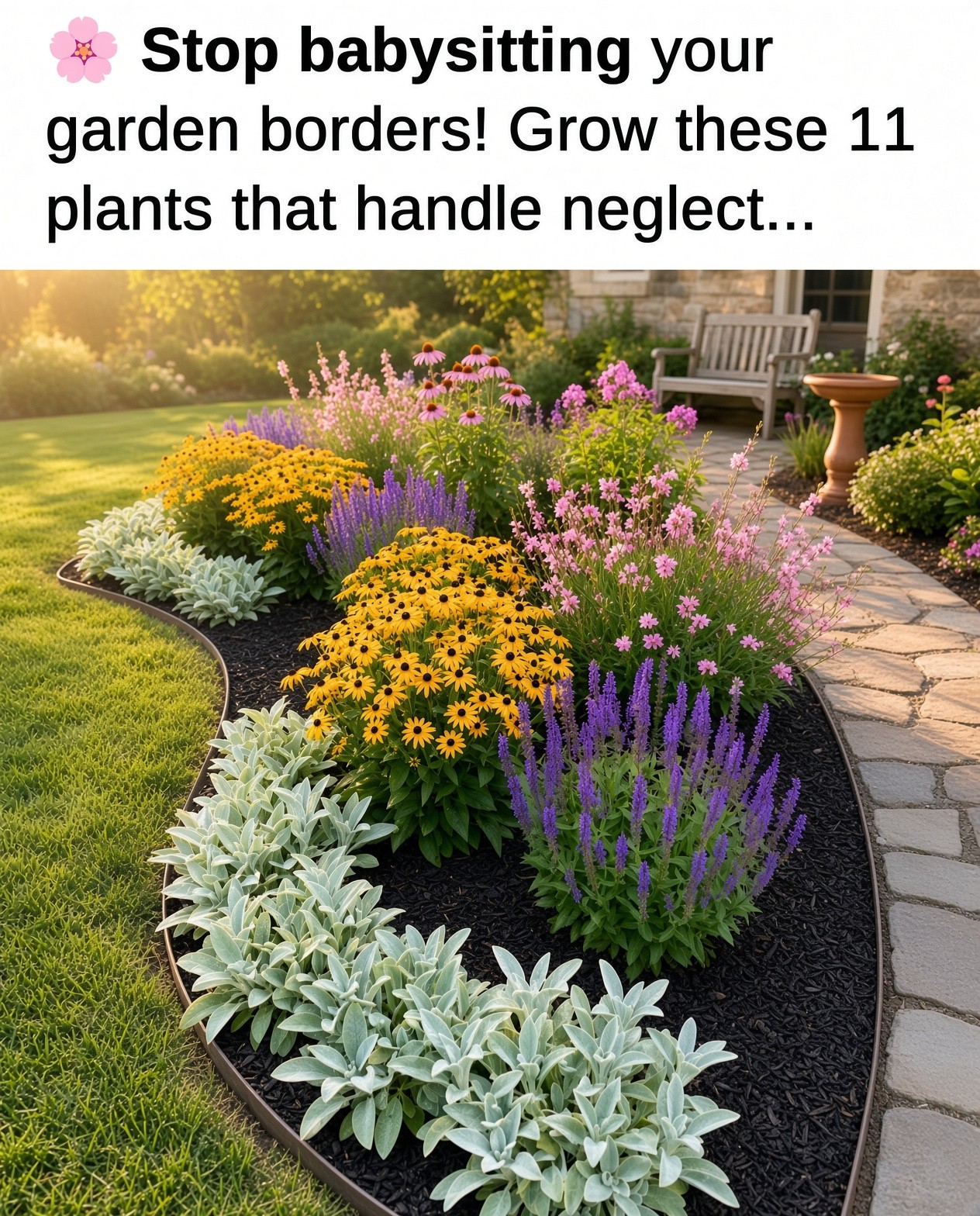
Introduction
A beautiful garden border does not have to be a high-maintenance project. If you want attractive flowers and foliage without spending hours watering, pruning, dividing, and deadheading, the right plant choices can make a huge difference. Many hardy perennials are naturally drought-tolerant, resistant to common garden problems, and able to look good with relatively little attention once established.

The key is to understand that “thrive on neglect” does not mean a plant needs zero care. Every garden needs some watering, seasonal cleanup, and occasional attention. Instead, these are plants that can cope well when you are busy or when you miss a gardening task. The following 11 options are particularly useful for creating beautiful, low-maintenance borders.
What Makes a Plant Thrive on Neglect?
A low-maintenance border plant usually has several useful traits. It may tolerate dry periods because of deep roots or water-storing foliage, resist many common pests and diseases, or maintain a naturally tidy shape without constant pruning. Perennials that return reliably each year are especially valuable because they reduce the need to replace plants every season.
For a border, it is also important to choose plants that stay reasonably well behaved. Avoiding aggressive spreaders helps keep the planting scheme under control and reduces future maintenance.
1. Catmint (Nepeta × faassenii)
Catmint is one of the best choices for a relaxed, low-maintenance border. This clumping perennial produces aromatic gray-green foliage and long spikes of lavender-blue flowers. It is highly attractive to bees and other pollinators and is remarkably tolerant of dry conditions once established.
Many popular catmint cultivars are sterile or have limited seed production, making them much easier to manage than aggressive spreaders. A light trim after the first flush of flowers can encourage fresh growth, but catmint remains useful even when you do not constantly deadhead it.
2. Coreopsis (Coreopsis verticillata)
Coreopsis brings bright, cheerful flowers to the border while asking for very little in return. Clump-forming varieties such as ‘Moonbeam’ are especially useful because they can handle heat and periods of dry weather once established.

Its fine foliage gives the plant a light, airy appearance, while the flowers provide a long season of color. Coreopsis generally performs best in full sun and well-drained soil. Occasional deadheading can extend the display, but it is not essential for keeping the plant attractive.
3. Russian Sage (Salvia yangii)
Russian sage is valued for its silvery stems, aromatic foliage, and airy sprays of blue-purple flowers. It is an excellent option for hot, sunny borders because it tolerates poor soil and dry conditions once established.

Its upright, open form adds height without creating a heavy visual block, making it useful among shorter edging plants. Give Russian sage plenty of sunlight and avoid consistently wet soil. With those basics in place, it needs surprisingly little attention.
4. Sedum ‘Autumn Joy’ (Hylotelephium)
Sedum ‘Autumn Joy’ is a dependable perennial for sunny borders and late-season color. Its fleshy leaves help it cope with dry conditions, while its broad flower clusters change from pale pink to deeper tones as the season progresses.

The plant forms a clump rather than racing through the garden, and its sturdy stems can remain attractive well into autumn and winter. Leaving the dried flower heads in place also provides texture and can offer food for birds.
5. Lamb’s Ear (Stachys byzantina)
Lamb’s ear is an excellent edging plant thanks to its soft, silvery foliage and low-growing habit. It creates a distinctive carpet of fuzzy leaves that contrasts beautifully with green-leaved perennials and colorful flowers.

It prefers full sun and well-drained soil and becomes drought-tolerant once established. Look for well-behaved cultivars such as ‘Silver Carpet’ if you want foliage without a heavy flower display. Remove damaged leaves when needed, but otherwise this is a very easy plant to maintain.
6. Daylily (Hemerocallis hybrids)
Daylilies have a well-earned reputation as tough garden plants. Clump-forming hybrids can tolerate a wide range of conditions and provide reliable flowers in many colors. They are particularly useful when you want a border plant that can cope with heat and occasional dry spells.

Choose named varieties with a tidy clumping habit rather than plants that are likely to spread aggressively by seed. Once established, daylilies usually require little more than watering during prolonged drought and occasional removal of old foliage.
7. Lavender (Lavandula angustifolia)
Lavender is a classic low-maintenance border plant because it combines fragrant foliage, colorful flower spikes, and excellent drought tolerance. English lavender forms naturally tidy mounds and works especially well along paths and sunny garden edges.

The most important requirement is good drainage. Lavender dislikes constantly wet soil, so avoid planting it in heavy ground that stays saturated. In the right location, it needs little supplemental watering and attracts bees and other pollinators.
8. Globe Thistle (Echinops ritro)
Globe thistle adds dramatic texture to a low-maintenance border with its round blue flower heads and silvery foliage. It forms clumps and is generally easy to manage when planted in a sunny, well-drained position.

The flowers are excellent for bees and other pollinators, and the unusual seed heads add winter interest if left standing. Globe thistle can produce seedlings if mature heads are allowed to release seed, so remove unwanted seed heads if you want to keep the plant strictly contained.
9. Yarrow (Achillea cultivars)
Yarrow is a hardy perennial that can tolerate heat, dry soil, and periods of neglect once established. Its flat-topped flower clusters create a strong visual shape and come in shades such as yellow, pink, terracotta, and cream depending on the cultivar.

For a controlled border, choose clumping cultivars such as ‘Terracotta’ or ‘Moonshine’ rather than aggressive wild forms. Yarrow performs best in full sun and well-drained soil and can be cut back after flowering when you want a tidier appearance.
10. Blue Fescue (Festuca glauca)
Blue fescue is a compact ornamental grass that brings cool blue-gray color and year-round structure to sunny borders. Its neat, rounded clumps stay relatively contained, making it especially useful along paths and at the front of mixed perennial beds.

It prefers full sun and well-drained soil and usually needs little watering after establishment. Remove old or damaged foliage when necessary, and divide aging clumps if they begin to decline. Otherwise, blue fescue is one of the simplest grasses to maintain.
11. Bergenia (Bergenia cordifolia)
Bergenia is a strong option when you need a low-maintenance plant for a border that receives partial shade. Its large, bold leaves provide structure through much of the year, while clusters of pink flowers appear in spring.

Bergenia forms clumps and is not an aggressive spreader, making it useful for controlled planting schemes. It can tolerate a range of soils once established and requires little routine care beyond removing damaged leaves and dividing mature clumps when necessary.
How to Choose the Best Low-Maintenance Border Plants
The best plant is always one that matches the conditions where you intend to grow it. Before planting, consider how much sun the border receives, whether the soil drains quickly or stays damp, how much summer heat the area experiences, and how large each plant will become.
Grouping plants with similar needs is another simple way to reduce maintenance. For example, drought-tolerant plants such as lavender, sedum, yarrow, and blue fescue can share a sunny, well-drained section. Plants that prefer more moisture or partial shade should be placed elsewhere rather than forced to cope with unsuitable conditions.
Simple Tips for a Border That Needs Less Work
Prepare the soil before planting and give each perennial enough space to reach its mature size. Crowded plants often require more pruning and can have poorer airflow. A layer of mulch can help suppress weeds and conserve moisture, reducing the need for frequent watering.
You can also reduce work by leaving healthy seed heads standing through autumn and winter, choosing plants with different bloom times, and avoiding unnecessary fertilizer. The goal is not to ignore the garden completely, but to create a planting scheme that naturally requires fewer interventions.
Final Thoughts
A low-maintenance garden border is achievable when you choose tough, well-adapted plants and place them in conditions they actually enjoy. Catmint, coreopsis, Russian sage, sedum, lamb’s ear, daylilies, lavender, globe thistle, yarrow, blue fescue, and bergenia all offer useful combinations of resilience, beauty, and relatively low care.
Remember that “neglect” is simply a shorthand for low maintenance, not a recommendation to abandon your plants. Water newly planted perennials until their roots are established, watch for unusual pest or disease problems, and provide occasional seasonal cleanup. With the right planting choices, your border can remain attractive without becoming another full-time job.
SEO Keywords
easy-care plants for garden borders, low-maintenance border plants, plants that thrive on neglect, catmint, coreopsis, Russian sage, sedum Autumn Joy, lamb’s ear, daylily, lavender, globe thistle, yarrow, blue fescue, bergenia