
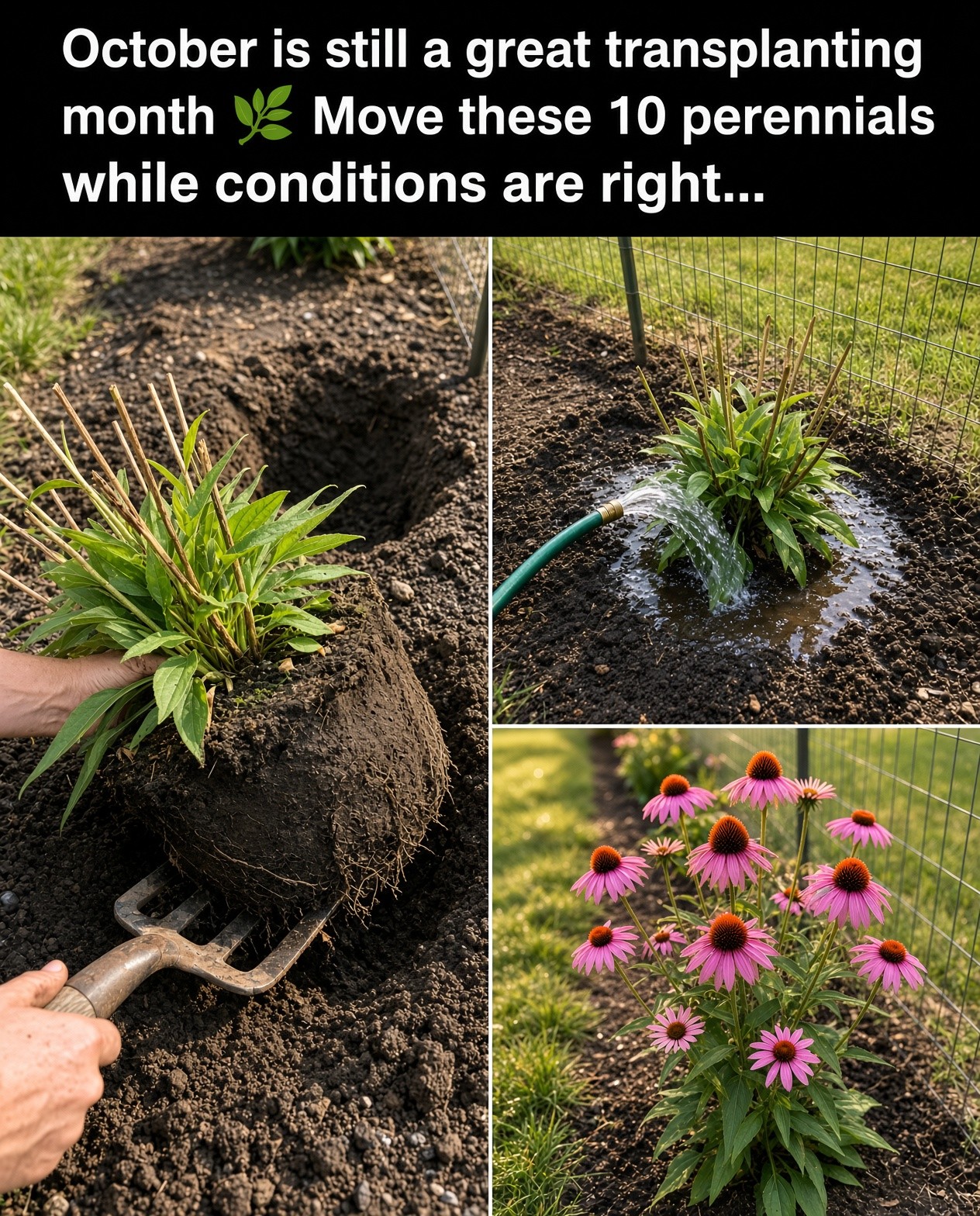
Fall can be a practical time to move established perennials when the soil is still workable and roots have enough time to settle before winter.
October is not automatically the perfect transplanting month everywhere. The important factors are the individual plant, local climate, soil condition, and how soon the ground normally freezes. University of Minnesota Extension recommends giving fall-divided perennials about four to six weeks to establish before the ground freezes, particularly in colder climates. That makes timing more important than the calendar date itself. citeturn0search0turn0search2
1. Hostas
Hostas are among the most familiar shade perennials, and established clumps can be divided or moved in autumn when conditions are suitable. Their broad, shallow root systems make them easier to handle than some deep-rooted perennials. Dig around the clump with a fork or spade, lift carefully, and separate healthy sections with several growing points attached. Replant at the same general depth, with the crown at soil level. Water thoroughly after planting and keep the soil reasonably moist while the roots settle. Fall can work well for hostas in many climates, although local conditions should always take priority.

2. Daylilies
Daylilies are practical candidates for fall division because established plants naturally form clumps that can be separated into smaller fans. Start by watering dry soil, then loosen the entire root mass with a garden fork. Lift the clump and gently remove excess soil so the individual fans are easier to see. Separate healthy sections and replant them promptly at the original depth. Keep newly divided plants watered while they establish, but do not leave them sitting in saturated soil. Giving each division enough space now also prevents another overcrowded clump later.

3. Peonies
Peonies can be moved in fall, but they require more care because their roots are thick and brittle. Dig farther from the crown than you might expect and work underneath the plant gradually instead of forcing a shovel straight through the root system. If you divide the plant, retain healthy roots and viable buds, commonly called eyes. Plant peony divisions at the correct shallow depth; burying the eyes too deeply can reduce flowering. Do not expect a newly divided peony to look spectacular immediately. These long-lived plants may need time to rebuild their root systems before returning to strong flowering.

4. Siberian Iris
Siberian iris is specifically listed by University of Minnesota Extension among perennials that can be divided in fall. Lift the mature clump carefully and separate it into healthy pieces with roots attached. Replant the divisions quickly so the roots do not dry out. Because iris types differ, identify the plant before using a particular planting method. Siberian iris can be treated differently from bearded iris, whose rhizomes need shallow planting and excellent drainage. For either type, avoid crushing or leaving roots exposed for long periods and water the new planting thoroughly.

5. Garden Phlox
Garden phlox can benefit from division when established clumps become crowded. Crowding can reduce airflow around the foliage, so moving or dividing an old clump can also give the plant more breathing room. Lift the clump with a fork, separate healthy sections, and replant them with adequate space between plants. Water deeply after transplanting and continue checking moisture if autumn weather is dry. Avoid excessive nitrogen late in the season because the goal is to help roots establish rather than push tender new top growth just before winter.

6. Coneflowers
Coneflowers such as Echinacea can sometimes be moved in fall when there is enough warm soil time left before freezing. Dig around the plant widely so you preserve as much of the root system as possible. If the clump is being divided, keep healthy roots attached to each section. Replant at the previous depth and firm the soil gently around the roots. Coneflowers prefer well-drained conditions, so avoid responding to transplant stress by keeping the bed constantly wet. One deep watering after planting, followed by sensible moisture checks, is generally more useful than repeated shallow watering.

7. Black-Eyed Susans
Perennial Rudbeckia types can be divided in spring or fall, depending on the species and local conditions. When a mature clump is crowded, lift it carefully and separate healthy pieces with roots attached. Replant at the same depth and water thoroughly. Black-eyed Susans generally prefer sunny, well-drained locations, so choose a new site that matches those conditions rather than simply moving the plant to an open patch. Removing damaged sections during division can also give the remaining divisions a cleaner start.

8. Sedum ‘Autumn Joy’
Upright sedums are forgiving plants that tolerate heat and dry conditions once established, making them relatively straightforward to handle. When moving a mature clump, lift a healthy section and place it in a sunny location with excellent drainage. Do not bury the crown deeply. Water thoroughly after planting, then allow excess moisture to drain away. Sedums are not a good match for permanently soggy soil, so improving drainage is more valuable than adding frequent irrigation. Fall transplanting can work when the roots still have time to establish before the ground freezes.

9. Bee Balm
Bee balm, or Monarda, can be divided when an established clump becomes too crowded. Lift the plant and separate vigorous sections with roots attached, then replant them where they will have enough room to mature. Good spacing is especially useful because dense bee balm foliage can have poor airflow. Water at the base of the plant rather than repeatedly wetting the leaves, and monitor soil moisture while the new divisions establish. A prepared planting site with good drainage and adequate organic matter will give the roots a much easier transition.

10. Shasta Daisies
Shasta daisies can be divided when mature clumps become crowded or lose vigor. Dig around the entire plant, lift it carefully, and separate the crown into sections with healthy roots. Replant each section at approximately its former depth and firm the soil around the roots. Water well after planting, then monitor the soil rather than following a fixed watering schedule. Autumn can be an excellent time to prepare these plants for the next growing season when there is sufficient time before hard freezing. Avoid heavy feeding immediately after transplanting; root establishment should be the priority.

How to Transplant Perennials Successfully in October
Prepare the new location before lifting the old plant. Remove weeds, loosen compacted soil, and make a hole wide enough for the roots to spread naturally. Water the plant or surrounding soil first if conditions are dry. Lift with a fork or spade, keeping as much of the root system intact as practical. If dividing, make clean cuts and ensure each division has healthy roots and growing points. Keep lifted divisions shaded and moist until they are replanted.
After planting, water thoroughly so soil settles around the roots. Continue checking moisture during dry autumn weather, but do not keep the planting area saturated. Newly transplanted roots need consistent moisture while establishing, while waterlogged soil can cause its own problems. University of Minnesota Extension also recommends that newly planted landscape plants be in the ground several weeks before the ground freezes. citeturn0search0turn0search6
Final Thoughts
October can be a useful transplanting window for many spring- and summer-blooming perennials, but success depends on giving the roots enough time to establish. Hostas, daylilies, peonies, suitable irises, phlox, coneflowers, perennial Rudbeckia, sedums, bee balm and Shasta daisies all have reasons they may be considered for fall relocation. Prepare first, dig carefully, replant at the correct depth, water deeply, and work backward from your area’s normal ground-freeze date rather than choosing a date blindly.
Trusted Gardening Sources
The practical timing and division guidance in this article was checked against University of Minnesota Extension, including its recommendations for fall division, four-to-six-week root establishment, watering, and winter mulch. citeturn0search0turn0search2turn0search6turn0search10
The supplied Tiny Garden Habit page was used as the subject reference. The article above is newly written and does not reproduce the source wording. Image licenses vary by individual Wikimedia Commons file, so check each linked file page before commercial publication.