
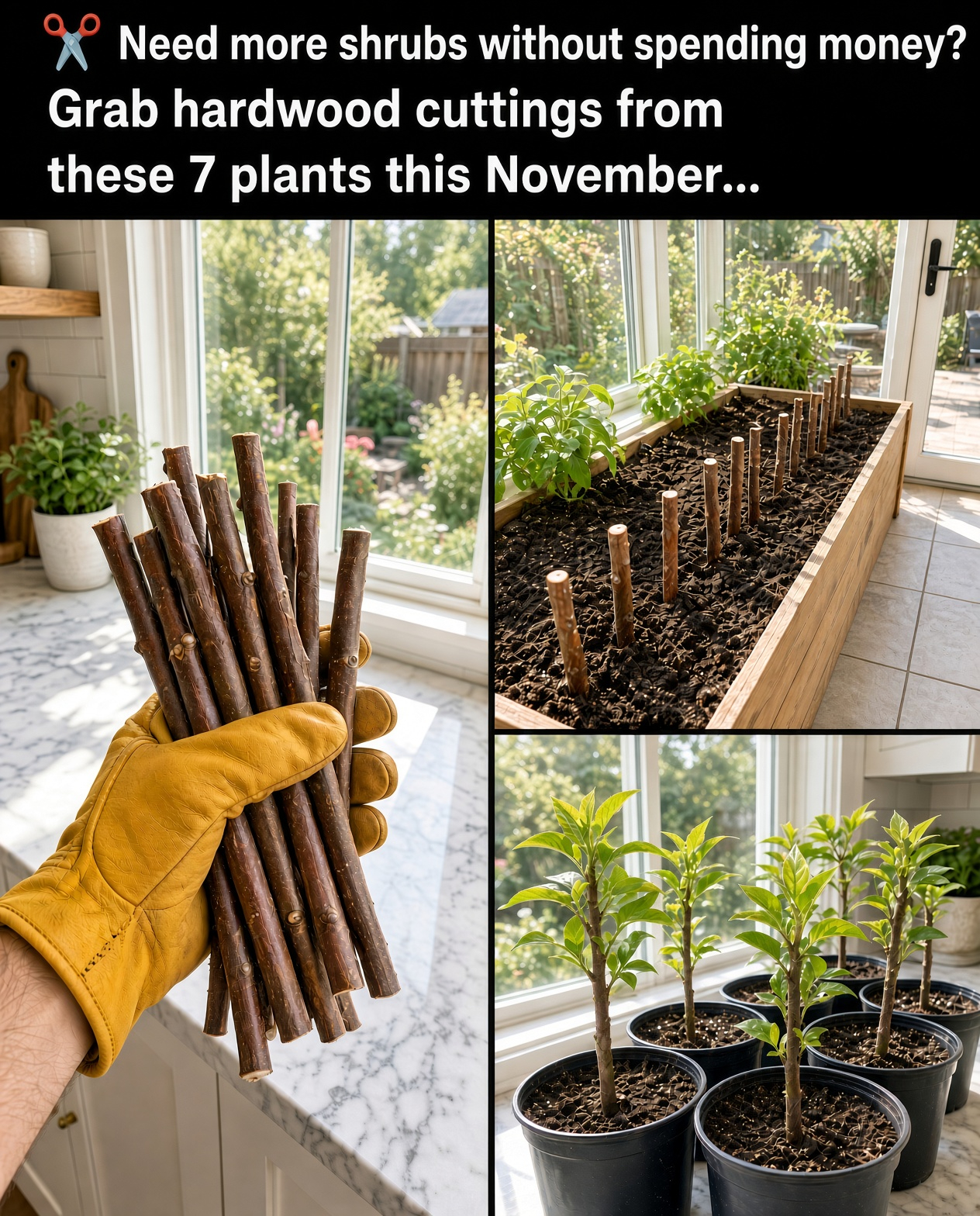
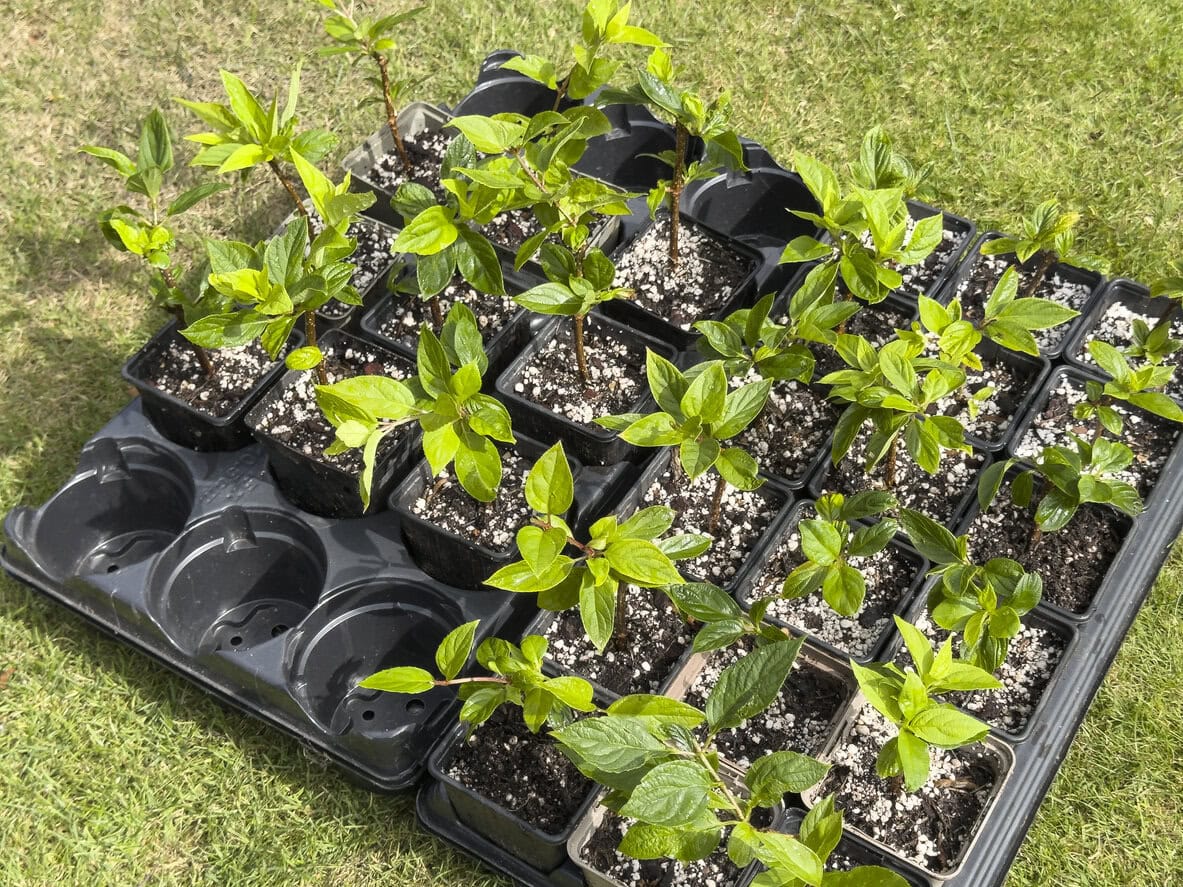
Although this method requires patience, it can help you create new plants without purchasing additional shrubs. Some varieties root more readily than others, so taking several cuttings rather than relying on just one is a sensible approach.
How to Take Hardwood Cuttings in November
Before choosing your shrubs, it’s important to understand the basic process. Hardwood cuttings are usually taken after the current season’s growth has matured and the plant has entered dormancy.
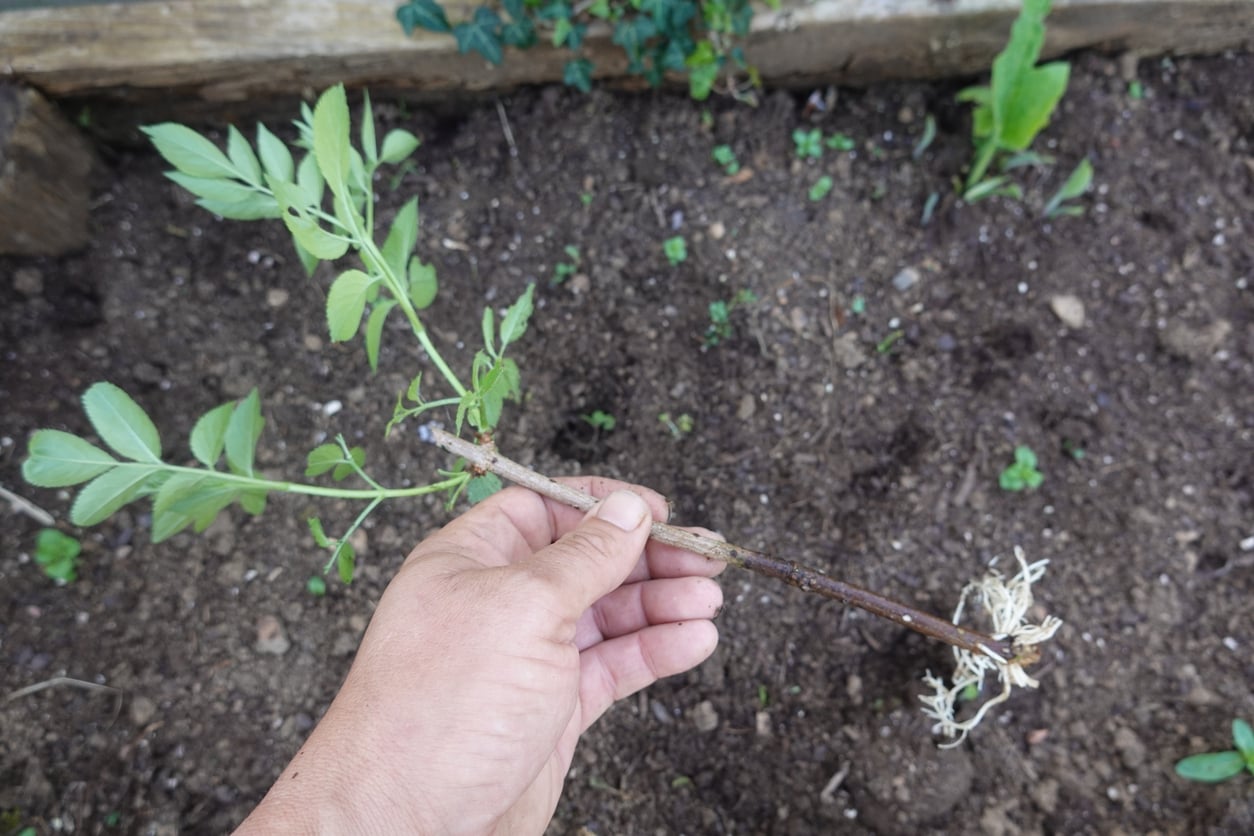
Follow these general steps to prepare your cuttings:
- Choose suitable stems: Look for healthy, straight sections of mature growth from the current year. Pencil-thick stems are a useful starting point for many shrubs.
- Prepare the cuttings: Cut sections approximately 6–8 inches long, adjusting the length according to the shrub.
- Make the cuts correctly: Make a flat cut just below a node at the bottom and an angled cut above a bud at the top.
- Prepare the rooting medium: Use a light, well-draining mixture that provides moisture without becoming waterlogged.
- Plant the stems: Insert roughly two-thirds of each cutting into the rooting medium, leaving a few buds above the surface.
- Maintain suitable moisture: Keep the mixture slightly moist and protect the pots from severe weather.
Once everything is planted, patience becomes the most important part of the process. Many hardwood cuttings spend the winter developing roots before producing noticeable new growth in spring.
7 Shrubs to Propagate From Hardwood Cuttings
1. Forsythia
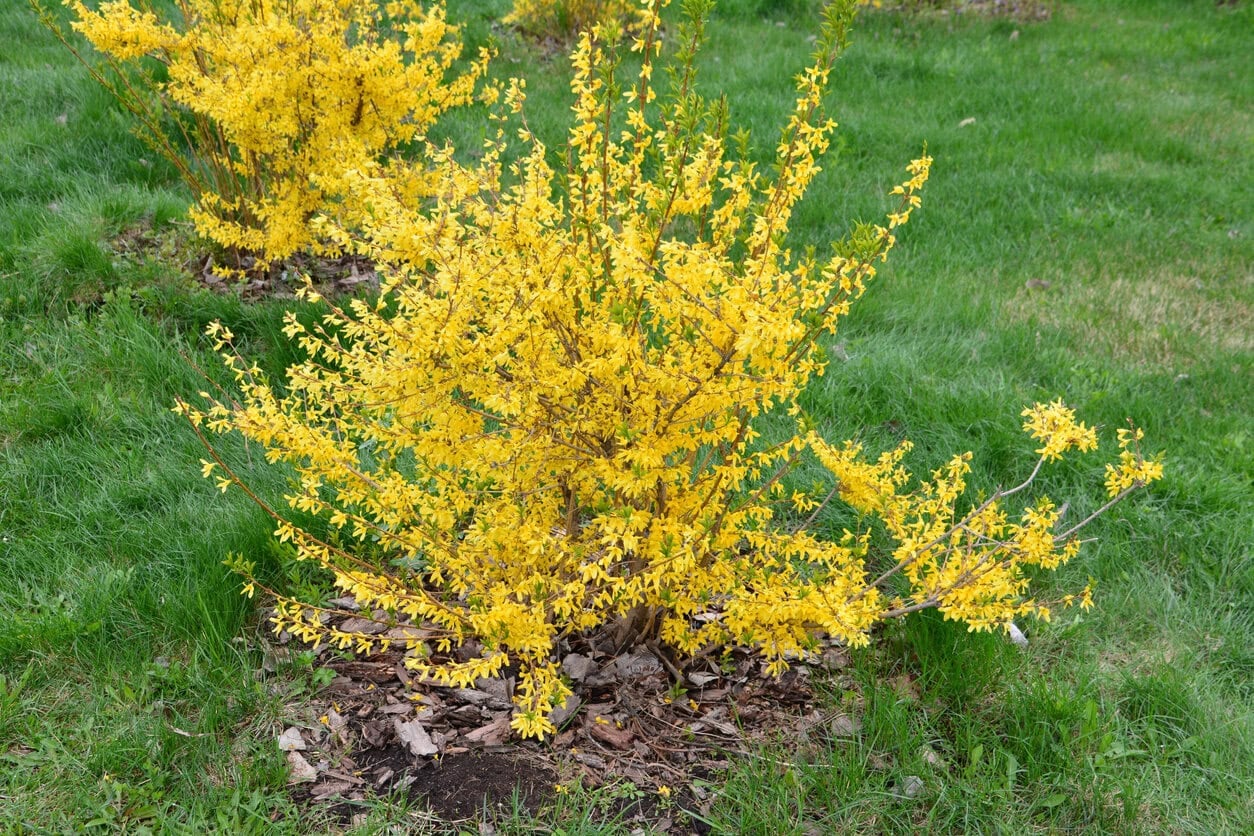
Forsythia is one of the most rewarding shrubs to propagate from hardwood cuttings. Its bright yellow flowers appear early in spring, often before many other garden plants have started blooming.
November is a convenient time to collect cuttings after the leaves have fallen and the stems have matured. Look for healthy, firm branches from the current year’s growth.
Cut sections approximately 6–8 inches long. Make the lower cut just beneath a node and the upper cut above a healthy bud.
Insert the lower portion into a well-draining rooting mixture and gently firm the medium around each stem. Keep the pots in a sheltered location where strong winter winds won’t dry out the cuttings.
2. Suitable Hydrangeas
Hydrangeas are another interesting option for hardwood propagation, although success can vary depending on the variety and growing conditions.
Panicle hydrangeas, including ‘Limelight’, are worth experimenting with during the dormant season. Bigleaf hydrangeas can also be propagated from hardwood, although they are often easier to root from softwood cuttings taken during summer.
Select healthy, pencil-thick stems from the current year’s growth and cut them into sections approximately 6–8 inches long. Remove any remaining dried flower heads and make the lower cut just below a node.
Rooting hormone can be used on the base of the cuttings before inserting them into a moist, well-draining propagation mixture. Bury approximately two-thirds of each stem.
For gardeners who want more reliable results, summer softwood propagation is another excellent method to consider.
3. Shrub Roses
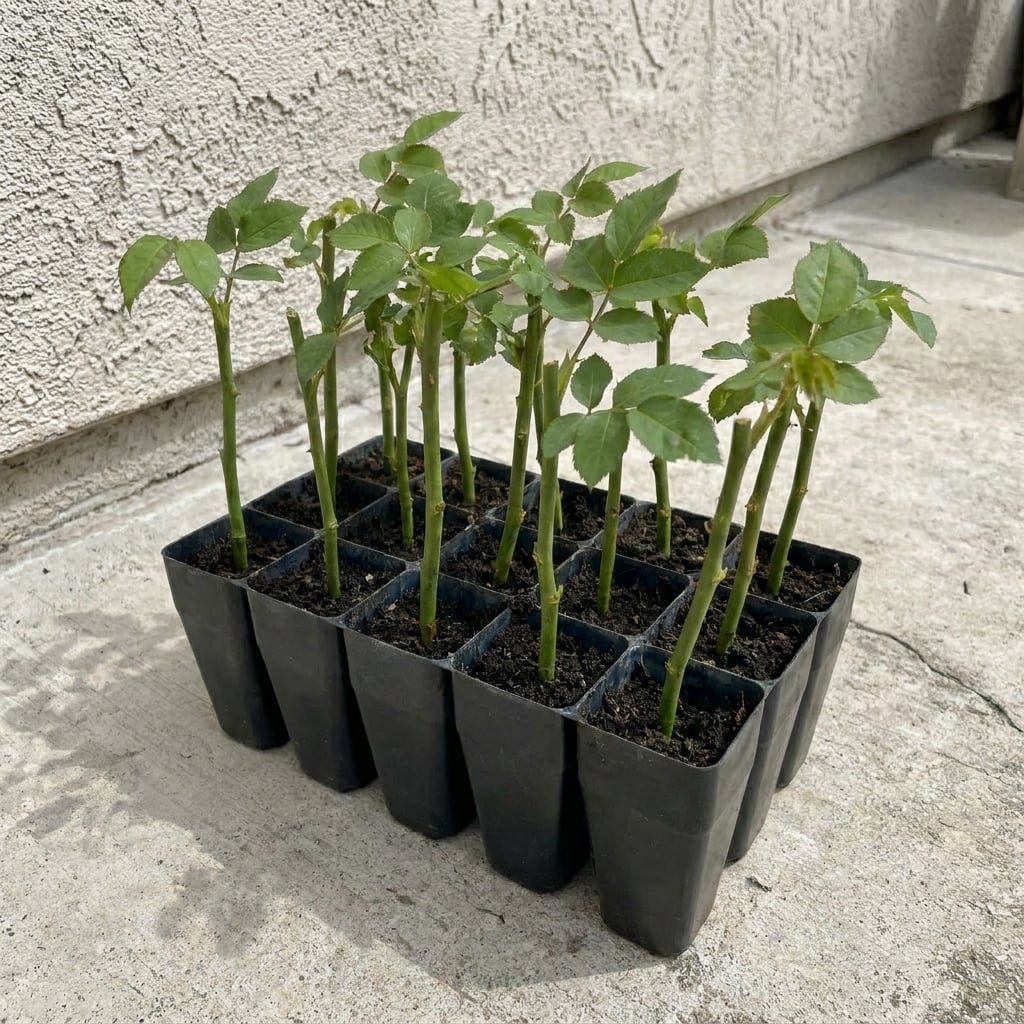
Shrub roses can be propagated from mature hardwood stems once they enter dormancy. This is a useful way to multiply established garden roses and create additional plants for other parts of the landscape.
Choose firm, healthy branches from the current growing season. Cut sections approximately 8 inches long, making sure each cutting contains several healthy buds.
Prepare a light rooting mixture using coarse sand and perlite. This combination helps excess water drain away and reduces the risk of cuttings remaining in overly wet conditions.
Insert approximately two-thirds of each cutting into the mixture and leave the upper buds exposed. Keep the medium slightly moist while the stems gradually develop roots.
Don’t expect immediate growth. Dormant rose cuttings may spend much of the winter developing callus tissue and roots before visible shoots appear.
4. Spirea
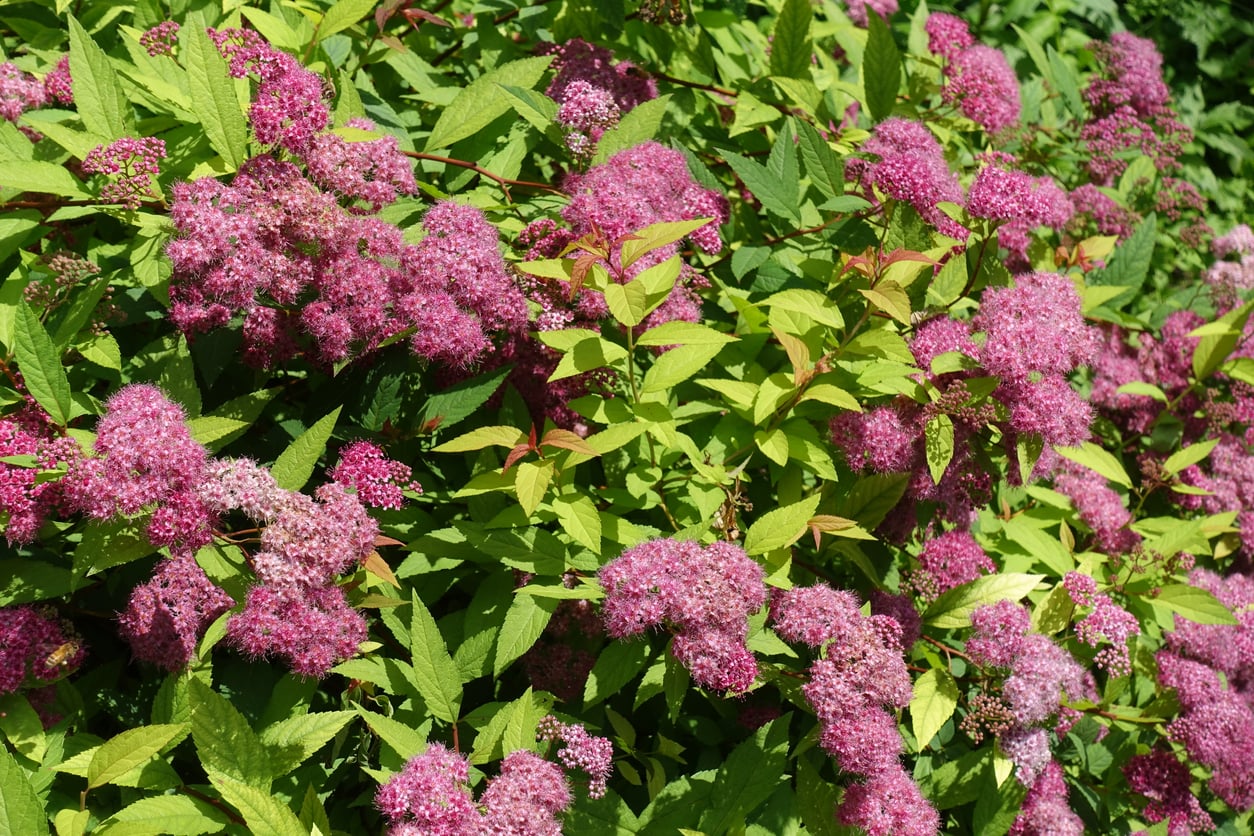
Spirea is a popular ornamental shrub valued for its abundant flowers and relatively easy-care nature. Depending on the variety, its blooms can appear in white, pink, or other attractive shades.
November offers an opportunity to experiment with hardwood cuttings after the plant has dropped its leaves. Choose healthy, firm stems rather than thin, weak branches.
Cut sections approximately 6 inches long, making the lower cut just beneath a node. Remove any damaged material and prepare a well-draining rooting medium.
Insert the lower two-thirds of each cutting into the mixture and gently firm the soil around the stem to keep it upright.
Keep the pots in a sheltered position and check them occasionally to ensure the rooting medium hasn’t dried out.
5. Rose of Sharon (Hibiscus syriacus)

Rose of Sharon is a beautiful flowering shrub that can bring plenty of color to summer gardens. Its large hibiscus-like flowers make it a popular choice for borders, hedges, and ornamental planting areas.
Even after the leaves fall, the branches may retain small seed pods. When collecting hardwood cuttings, concentrate on straight, healthy shoots from the current growing season rather than thick, older branches.
Cut sections approximately 6–8 inches long, making the lower cut just beneath a node. Remove any remaining seed pods and prepare the bases with rooting hormone if desired.
Place the cuttings into deep containers filled with a well-draining rooting mixture. Bury approximately two-thirds of each stem while leaving a couple of buds above the surface.
Don’t become discouraged if the cuttings appear inactive during early spring. Rose of Sharon can be slow to show visible signs of growth, so give the stems sufficient time to establish.
6. Red-Twig Dogwood
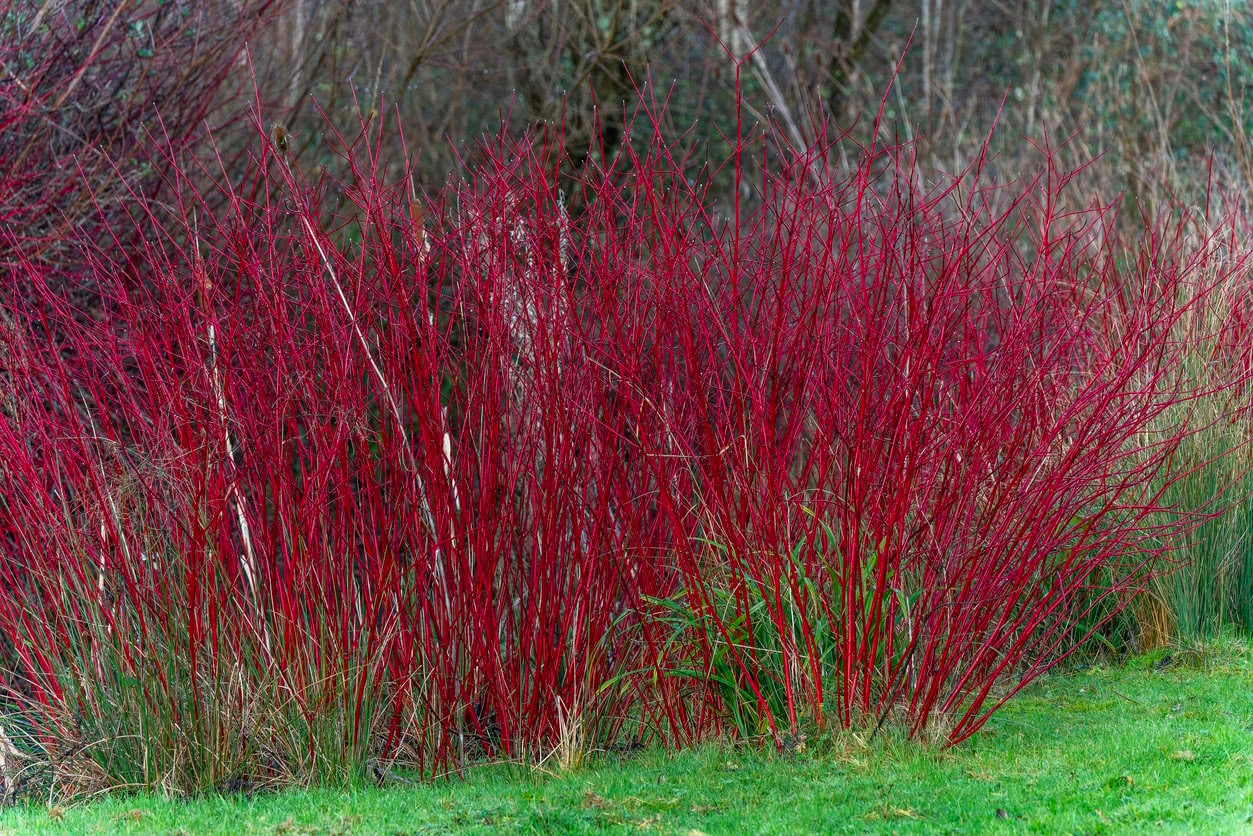
Red-twig dogwood is especially valuable in winter gardens because its colorful red branches stand out beautifully against bare landscapes and snowy backgrounds.
It is also a good candidate for hardwood propagation. Dormant stems can develop roots relatively readily when prepared correctly and kept in suitable conditions.
Choose straight, healthy branches approximately the thickness of a pencil. Cut sections around 8–10 inches long, keeping track of which end originally faced the base of the shrub.
Make a flat cut beneath a node at the bottom and an angled cut above a bud at the top. This makes it easier to identify the correct orientation when planting.
Insert the lower two-thirds into a coarse, well-draining rooting mixture, leaving several buds above the surface.
Once the new plants become established, they can eventually develop into colorful shrubs that provide attractive winter interest.
7. Elderberry (Sambucus)
Elderberry is a vigorous shrub grown for its clusters of flowers and dark berries. It can also be propagated from hardwood cuttings, making it a practical option for gardeners who want additional plants.
Choose healthy, straight canes produced during the previous growing season. Cut sections approximately 7–8 inches long, making the lower cut just beneath a node.
Insert the lower one or two nodes beneath the rooting medium while leaving the upper buds exposed. A cutting with two to four healthy nodes is generally sufficient.
Keep the rooting medium slightly moist and place the containers somewhere protected from severe winter weather. Root development may take longer than expected, so don’t rush to transplant the cuttings.
Once rooted and established, young elderberry plants can be transplanted into suitable permanent positions in the garden.
How to Protect Hardwood Cuttings During Winter
After planting your cuttings, the next challenge is helping them survive the colder months. Dormant stems don’t need the same attention as actively growing plants, but their rooting medium and containers still require occasional monitoring.
Choose a Sheltered Location
Place containers somewhere protected from strong winds, heavy rainfall, and extreme temperature fluctuations. A sheltered outdoor area or suitable cold frame can work well.
Prevent the Rooting Mix From Drying Out
Check the containers periodically. The medium should remain slightly moist, but it should never become waterlogged.
Protect Containers During Severe Freezes
In regions with harsh winters, an unheated garage or sheltered cold frame may provide additional protection. Avoid bringing dormant cuttings into excessively warm indoor conditions that could encourage premature growth.
Label Every Cutting
Once several shrubs have been propagated, their bare stems can look remarkably similar. Use clear labels showing the plant name and the date each cutting was prepared.
Wait for Root Development
New buds and green shoots are encouraging, but they don’t necessarily mean the cutting has developed a strong root system. Give the plants enough time to establish before transplanting them.
Important Things to Know Before Propagating
Not every shrub or cultivar can be propagated freely. Some named ornamental varieties are protected by plant patents or other propagation rights.
Before multiplying a named cultivar, check its legal status and any restrictions that apply where you live. For home gardening, choose varieties that are legally available for propagation.
Also remember that November is not equally suitable for every climate. The timing of hardwood cuttings depends on whether the plant has entered dormancy and whether the local weather allows the cuttings to remain in suitable conditions.
Final Thoughts
Hardwood propagation is a rewarding way to expand your garden without purchasing a new shrub every time you want to add something different.
Forsythia, hydrangeas, shrub roses, spirea, Rose of Sharon, red-twig dogwood, and elderberry are seven interesting plants to experiment with during the dormant season.
Choose healthy stems, prepare the cuttings carefully, use a well-draining rooting mixture, and protect the containers throughout winter.
The process requires patience, but when spring arrives, some of those seemingly lifeless branches may surprise you with their first signs of new growth.
With a little preparation now, you can have new shrubs ready to establish themselves in your garden for the seasons ahead.