
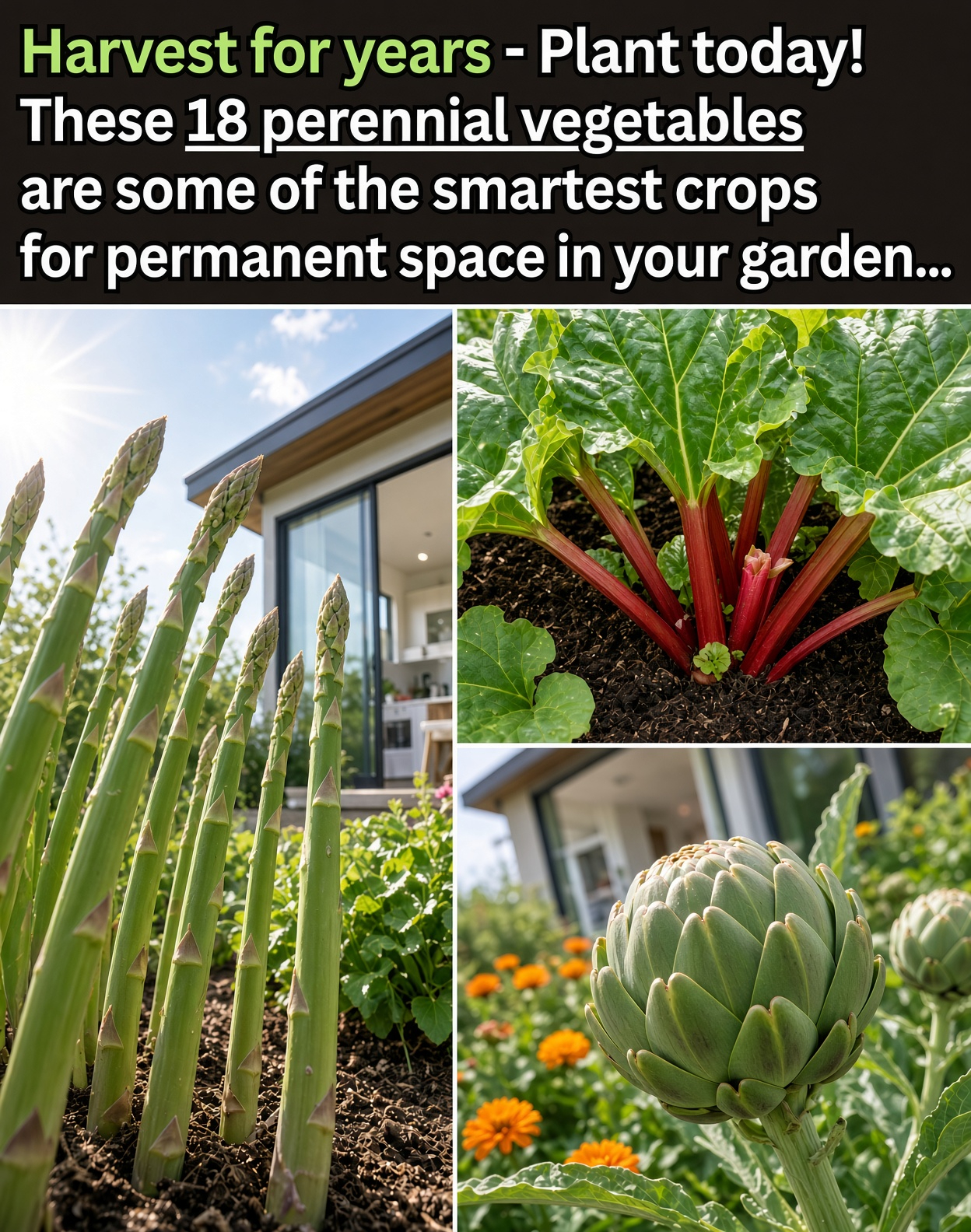

Growing perennial vegetables is also a practical way to reduce gardening work, make better use of garden space, and create a more sustainable food-growing system.
From familiar favorites such as asparagus and rhubarb to unusual crops like Good King Henry and skirret, here are 18 perennial vegetables worth considering for your garden.
Why Grow Perennial Vegetables?
One of the biggest advantages of perennial vegetables is that you don’t need to replant them every year. Their established root systems allow them to return when the growing season begins again.
They can also help reduce soil disturbance because you don’t have to dig up and replace the entire growing area every season. Once established, many require relatively little attention beyond watering, feeding, mulching, and occasional dividing.
Another advantage is the variety of harvests they provide. Some perennial crops produce early spring vegetables, while others offer greens, roots, and shoots later in the year.
18 Perennial Vegetables to Grow in Your Garden
1. Asparagus (Asparagus officinalis)

Asparagus is one of the most rewarding perennial vegetables you can grow. Once established, a healthy asparagus bed can continue producing tender spring spears for 20 years or longer.
The edible shoots emerge from underground crowns, usually in early spring. They have a delicate flavor and can be roasted, steamed, grilled, or added to soups and salads.
Plant asparagus crowns in a sunny location with loose, fertile, well-drained soil. Give each plant enough room to develop a strong root system.
- Choose a sunny planting location.
- Prepare the soil with plenty of organic matter.
- Mulch annually to protect the roots.
- Avoid harvesting during the first two growing seasons.
- Allow the mature fern-like foliage to grow after harvesting.
Although asparagus requires patience at the beginning, the long-term harvest makes it an excellent investment for a permanent vegetable garden.
2. Rhubarb (Rheum rhabarbarum)

Rhubarb is a hardy perennial vegetable known for its thick stalks and enormous decorative leaves. Its pleasantly tart flavor makes it especially popular for pies, jams, sauces, and homemade desserts.
It grows best in fertile soil that retains some moisture while allowing excess water to drain away. A sunny position is ideal, although it can tolerate partial shade.
Plant rhubarb crowns in spring or autumn and give them plenty of room to develop. Avoid harvesting during the first year so the plant can establish a strong root system.
- Provide fertile, well-drained soil.
- Water during extended dry periods.
- Remove flower stalks when they appear.
- Apply compost around the plant in spring.
- Harvest stalks carefully without removing too many at once.
Remember that rhubarb leaves are not edible. Only the stalks should be harvested and used in the kitchen.
3. Globe Artichoke (Cynara scolymus)

Globe artichokes are both productive vegetables and impressive ornamental plants. Their large silvery-green leaves create a dramatic appearance, while their edible flower buds are prized for their delicate, nutty flavor.
These plants prefer full sunlight and rich, well-draining soil. They need enough space to develop their large leaves and flower stalks.
Harvest the flower buds while they are still tightly closed and firm. If left on the plant, the buds eventually open into attractive purple flowers.
- Choose a sunny, sheltered location.
- Improve the soil with compost before planting.
- Water consistently during active growth.
- Protect plants from severe winter cold.
- Harvest buds before the flowers open.
In colder regions, heavy mulching or additional winter protection may be necessary to help the crowns survive.
4. Jerusalem Artichoke (Helianthus tuberosus)

Jerusalem artichokes, also called sunchokes, are productive perennial plants grown for their edible underground tubers. Despite their name, they are not related to globe artichokes.
The plants produce tall stems with sunflower-like flowers, while their roots develop irregularly shaped tubers with a mildly sweet, nutty flavor.
Plant tubers in spring in a sunny location with loose, well-drained soil. Once established, the plants can grow vigorously and produce generous harvests.
- Plant healthy tubers in spring.
- Choose an area with plenty of sunlight.
- Provide enough room for their tall growth.
- Harvest tubers after the foliage begins dying back.
- Keep the crop contained because it can spread aggressively.
One important detail: even a small tuber left in the soil can produce new plants the following season, so harvest carefully if you want to control its spread.
5. Sorrel (Rumex acetosa)

Sorrel is a wonderful perennial leafy vegetable for gardeners who enjoy fresh greens with a refreshing, lemon-like flavor. Its leaves are delicious in salads, soups, sauces, and cooked vegetable dishes.
It is relatively easy to grow and can tolerate both full sun and partial shade. Sorrel prefers fertile soil that stays reasonably moist throughout the growing season.
Harvest the young leaves regularly to encourage fresh growth. Older leaves can become stronger in flavor, so many gardeners prefer using them in cooked recipes.
- Plant in fertile, moisture-retentive soil.
- Provide full sun or partial shade.
- Harvest young leaves frequently.
- Remove flower stalks if you want to encourage leaf production.
- Divide established clumps every few years.
With occasional maintenance, sorrel can provide fresh leaves for several growing seasons.
6. Egyptian Walking Onions (Allium × proliferum)

Egyptian walking onions are among the most unusual perennial vegetables you can add to your garden. Instead of producing flowers in the usual way, their stalks develop clusters of small bulbs at the top.
As these top-setting bulbs become heavier, the stems bend toward the ground. When the bulbs touch the soil, they can establish new plants, giving this vegetable its interesting name.
Both the green shoots and underground bulbs are edible, making walking onions a versatile crop for everyday cooking.
- Plant small bulbs in autumn or spring.
- Choose a sunny location.
- Use loose, well-draining soil.
- Harvest green shoots as needed.
- Allow some top bulbs to fall and establish new plants.
Once established, walking onions can gradually multiply and provide a continuing supply of fresh onion flavor.
7. Sea Kale (Crambe maritima)

Sea kale is an unusual perennial vegetable native to coastal areas of Europe. Its attractive blue-green foliage and edible shoots make it an interesting addition to both traditional vegetable gardens and edible landscapes.
The young shoots can be prepared similarly to asparagus, while the leaves and flower buds are also edible when harvested appropriately.
Sea kale prefers sunny locations and sandy, well-draining soil. Once established, it can remain productive for many years.
- Choose a sunny position.
- Provide sandy, well-drained soil.
- Start plants from seeds or suitable root cuttings.
- Harvest young spring shoots before flowering.
- Mulch around the roots in colder climates.
Its unusual appearance and long lifespan make sea kale an excellent choice for gardeners who enjoy growing less common edible plants.
8. Good King Henry (Blitum bonus-henricus)

Good King Henry is an old-fashioned perennial vegetable that has been grown for centuries as a useful alternative to spinach.
Its young leaves can be cooked like spinach, while its tender shoots are sometimes prepared in a similar way to asparagus. This makes it a versatile crop for gardeners who enjoy traditional edible plants.
It grows best in fertile, well-drained soil with full sun or light shade. Once established, the plant can remain in the garden for many years.
- Choose a location with fertile soil.
- Provide full sun or partial shade.
- Keep the soil lightly moist during dry weather.
- Harvest young leaves for the best texture.
- Allow the plant time to establish before taking larger harvests.
Good King Henry is particularly appealing to gardeners interested in adding traditional perennial greens to their vegetable beds.
9. Lovage (Levisticum officinale)

Lovage is a tall perennial herb with a strong celery-like flavor. Although often grown as a culinary herb, its edible stems and leaves make it a useful addition to a perennial vegetable garden.
The leaves can be chopped into soups, stews, salads, and vegetable dishes. Its hollow stems can also be used in cooking, adding a distinctive savory flavor.
Lovage grows well in rich, moist, well-drained soil and can tolerate both full sun and partial shade.
- Plant in fertile soil enriched with compost.
- Choose full sun or partial shade.
- Water during prolonged dry periods.
- Harvest leaves and stems as needed.
- Divide mature plants when they become overcrowded.
Because lovage can become quite tall, choose a location where it won’t shade smaller vegetables.
10. Perennial Kale

Perennial kale is a long-lasting leafy vegetable that can provide fresh greens for several years without needing to be replanted every season.
Some varieties, including Daubenton’s kale, grow into branching shrubs with abundant edible leaves. The foliage can be harvested regularly and used in soups, stir-fries, and other cooked dishes.
These plants prefer fertile soil and a sunny growing location. They can also be propagated from stem cuttings, making it possible to expand your collection.
- Choose a sunny location.
- Prepare rich, well-draining soil.
- Take healthy outer leaves when harvesting.
- Prune older or leggy stems when necessary.
- Check plants regularly for caterpillars and other pests.
Perennial kale is an especially useful crop for gardeners who want a continuing supply of leafy vegetables.
11. Chayote (Sechium edule)

Chayote is a vigorous climbing plant that produces pear-shaped green fruits. It is widely grown in warm regions and can behave as a perennial vine where winters are mild enough.
The fruits have a mild flavor and can be cooked in soups, stews, stir-fries, or vegetable dishes. The plant needs considerable space because its vines can grow quite long.
Chayote is usually started by planting a whole mature fruit that has begun to sprout. Provide a strong trellis or other support before the vine starts spreading.
- Choose a sunny, warm location.
- Use fertile, well-drained soil.
- Plant a sprouting fruit after the danger of frost has passed.
- Provide a sturdy climbing structure.
- Harvest fruits while they are still young and tender.
In regions with freezing winters, chayote may need protection or may have to be grown as a seasonal crop.
12. Horseradish (Armoracia rusticana)

Horseradish is a hardy perennial grown primarily for its thick, pungent roots. These roots are grated and used to prepare a distinctive condiment that adds a strong flavor to sauces and meals.
The plant is relatively easy to establish and can survive cold winters in many climates. It prefers loose, fertile soil that allows the roots to develop deeply and evenly.
Because horseradish spreads readily through pieces of root left in the soil, it’s important to choose its growing location carefully.
- Plant healthy root sections in spring or autumn.
- Choose a sunny or partially shaded location.
- Prepare deep, loose soil.
- Harvest mature roots in autumn.
- Use a container or dedicated bed to control spreading.
Once established, horseradish can provide roots for many years with relatively little attention.
13. Watercress (Nasturtium officinale)

Watercress is a flavorful perennial leafy vegetable known for its slightly peppery taste. It is delicious in salads, sandwiches, soups, and fresh vegetable dishes.
Unlike most garden vegetables, watercress prefers consistently wet conditions. It naturally grows around springs, streams, and other clean freshwater environments.
In a home garden, it can be grown in a suitable water garden or container system that maintains reliable moisture.
- Provide partial shade or gentle sunlight.
- Maintain consistently wet growing conditions.
- Harvest young stems regularly.
- Prevent the growing area from drying out.
- Use clean, suitable water for edible crops.
Watercress can be a productive addition to a garden when its moisture requirements are properly maintained.
14. Chinese Artichoke (Stachys affinis)

Chinese artichoke, sometimes called crosne, is an unusual perennial vegetable grown for its small, white, twisted underground tubers.
The tubers have a delicate, slightly nutty flavor and a crisp texture. They can be cooked in stir-fries, roasted, steamed, or added to vegetable dishes.
Plant the small tubers in spring in loose, fertile soil. The plants produce spreading underground stems that develop additional edible tubers.
- Plant tubers in spring.
- Choose a sunny location.
- Use loose, well-draining soil.
- Keep the growing area reasonably moist.
- Harvest tubers after the foliage begins to die back.
Because small tubers can remain underground, some may grow again the following year, providing a continuing crop.
15. Oca (Oxalis tuberosa)

Oca is a colorful tuber crop originally cultivated in the Andes of South America. Its small underground tubers come in different shades, including yellow, orange, and pink.
The tubers have a pleasant tangy flavor and can be roasted, boiled, or prepared in a variety of vegetable dishes.
Oca grows best in loose, fertile soil and requires a relatively long growing season. In regions with mild winters, it may survive as a perennial, while colder climates generally require replanting tubers each year.
- Plant tubers after the danger of frost has passed.
- Choose a sunny location.
- Keep the soil evenly moist.
- Protect plants from severe frost.
- Harvest tubers when the foliage begins dying back.
Oca is an interesting choice for gardeners who enjoy growing unusual vegetables and experimenting with different flavors.
16. Skirret (Sium sisarum)

Skirret is a traditional perennial root vegetable that deserves more attention. It produces clusters of slender, pale roots with a naturally sweet flavor.
The roots can be cooked in soups, roasted, or prepared in a similar way to carrots and parsnips. Its mild sweetness makes it an interesting alternative to more familiar root vegetables.
Skirret prefers rich, moist soil and a sunny growing position. It can be established from seeds or root divisions.
- Choose fertile soil with good moisture retention.
- Provide full sunlight.
- Start plants from seeds or root divisions.
- Keep the soil moist during dry weather.
- Harvest roots in autumn or winter when appropriate.
Because skirret is relatively uncommon today, growing it is also a wonderful way to preserve an old-fashioned garden vegetable.
17. Perennial Leek

Perennial leeks are useful for gardeners who enjoy the mild onion flavor of traditional leeks but want a crop that can return over multiple seasons.
Unlike ordinary leeks grown as annual vegetables, certain perennial types produce small offsets around the parent plant. These offsets can be separated and replanted to maintain the growing patch.
They prefer sunny locations and rich, well-draining soil. Regular watering helps the plants produce tender, healthy growth.
- Plant offsets in spring or autumn.
- Prepare fertile soil enriched with compost.
- Water during dry periods.
- Harvest mature stems carefully.
- Replant healthy offsets to maintain the patch.
Perennial leeks are a practical option for creating a permanent edible bed with very little annual replanting.
18. Tree Collards

Tree collards are long-lived leafy vegetables that grow into large, branching plants rather than remaining as small seasonal greens.
They are valued for their edible leaves, which can be harvested regularly and used in soups, sautés, stews, and other cooked dishes.
These plants prefer fertile soil, regular moisture, and a sunny or partially shaded position. In mild climates, they can continue producing leaves for many years.
- Choose a sunny or partially shaded location.
- Use fertile, well-draining soil.
- Start plants from healthy stem cuttings or established plants.
- Harvest outer leaves regularly.
- Prune and support tall plants when necessary.
Tree collards are especially useful for gardeners who want a continuing supply of leafy greens without planting a new crop every season.
How to Care for Perennial Vegetables Year After Year

Although perennial vegetables are generally less demanding than annual crops, they still need occasional attention to remain productive.
A little maintenance throughout the year helps protect their roots, encourage healthy growth, and prevent overcrowding.
1. Apply Organic Mulch
Spread a layer of organic mulch around established plants to help conserve moisture, reduce weeds, and protect roots from temperature fluctuations.
2. Feed the Soil
Add mature compost or an appropriate fertilizer according to each crop’s needs. Healthy soil supports strong root development and better harvests.
3. Divide Overcrowded Plants
Some perennial vegetables become crowded as they mature. Dividing suitable plants every few years can help maintain their vigor and provide new plants for other areas of the garden.
4. Watch for Pests and Diseases
Inspect leaves, stems, and roots regularly. Early attention to pest problems can help protect established plants and prevent damage from spreading.
5. Harvest Carefully
Don’t remove too much growth from young or newly established plants. Allowing them to develop strong roots and healthy foliage is essential for long-term productivity.
Final Thoughts

Growing perennial vegetables is a wonderful way to make your garden more productive while reducing the amount of work required every year.
From asparagus and rhubarb to walking onions, sorrel, and tree collards, these crops offer an impressive variety of flavors and harvests. Some provide fresh spring shoots, others produce delicious leaves, and several reward you with underground tubers.
The secret is choosing varieties suited to your climate, preparing the soil properly, and giving each plant enough room to establish itself.
Start with a few favorites, learn their growing requirements, and gradually expand your perennial vegetable garden. Before long, you could have a beautiful growing space that rewards you with fresh produce season after season.