
Some varieties develop roots surprisingly quickly, while others need several weeks or longer. Here are 11 houseplants worth considering for your December propagation projects.

Why December Is a Good Time to Propagate Houseplants
Winter doesn’t have to put an end to your gardening activities. If your home provides reasonably stable temperatures and enough natural light, you can use December to multiply several indoor plants.
There are a few advantages to starting cuttings indoors during the colder months:
- You can monitor new cuttings without spending much time outside.
- Indoor temperatures may provide a more consistent rooting environment.
- Propagation offers a productive gardening project during the quieter season.
- Some cuttings can develop into established young plants by spring.
Keep in mind that shorter winter days can slow root development. A bright location and suitable indoor warmth make a big difference.
11 Houseplants to Propagate This December
1. Pothos
Pothos is one of the easiest houseplants to multiply, making it an excellent choice for beginners. Its trailing stems produce roots readily when the cuttings include healthy nodes.
Choose a healthy vine and cut a section approximately 4–6 inches long. Make sure the cutting includes at least one node, which is the small point where a leaf or aerial root emerges.
Remove the lower leaves and place the cutting in a container of clean water, keeping the node submerged. Put the container somewhere bright with indirect light.
2. Philodendron

Heartleaf philodendrons are another excellent option for winter propagation. Their attractive trailing stems can produce new roots from healthy nodes, allowing you to create additional plants without purchasing new ones.
Select a healthy stem and cut just below a node. Ideally, each cutting should have one or two nodes and at least one healthy leaf.
You can place the cutting in water or insert the node into a lightly moist propagation mix. Both methods can work indoors when the cutting receives sufficient warmth and indirect light.
3. Snake Plant

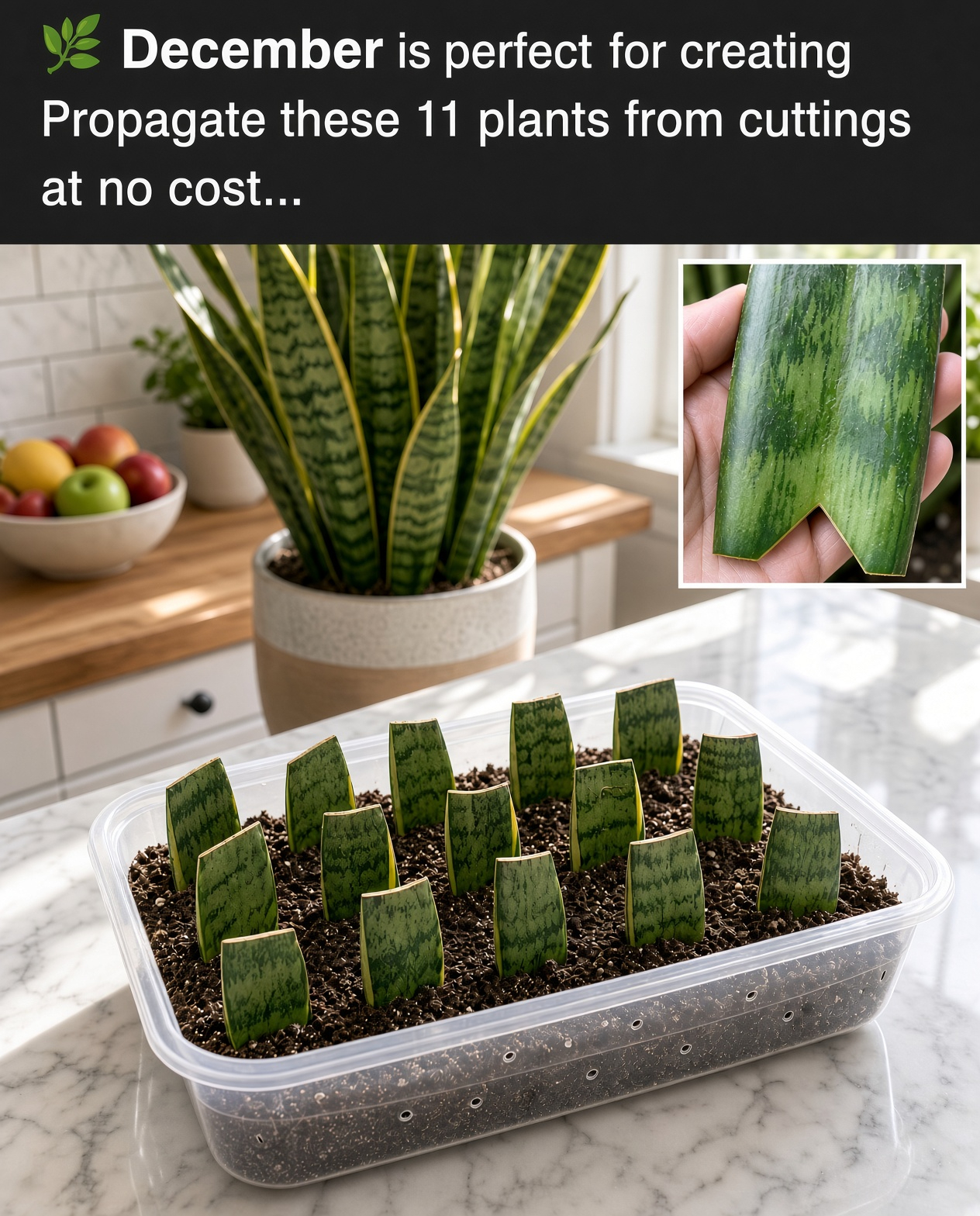
Snake plants are popular because they tolerate a range of indoor conditions and require relatively little attention. They can also be propagated from individual leaf sections.
Choose a healthy, firm leaf and cut it into sections approximately 2–3 inches long. Keep track of which end originally faced the base of the plant.
Allow the cut surfaces to dry briefly before inserting the bottom ends into a well-draining propagation mix. Keep the soil lightly moist rather than wet.
4. Spider Plant

Spider plants make propagation especially simple because mature plants produce small baby plants along long arching stems.
Look for plantlets that have started developing small roots. Carefully separate one from the parent plant and place its base in water or directly into a small pot filled with moist potting mix.
Keep the young plant in a bright location away from intense direct sunlight. If you choose water propagation, make sure only the roots and lower base remain submerged.
5. Coleus

Coleus is loved for its colorful foliage, which can feature combinations of green, burgundy, pink, purple, and cream. Fortunately, it is also relatively easy to propagate from stem cuttings.
Choose a healthy, nonflowering stem and cut a section approximately 4–6 inches long. Remove the lower leaves and place the cutting in room-temperature water.
Position the container in bright, indirect light. Roots may begin developing relatively quickly when the plant receives suitable warmth and light.
6. English Ivy

English ivy is a classic trailing houseplant that can easily be multiplied using healthy stem cuttings. Its attractive leaves make it a lovely addition to hanging baskets, shelves, and indoor arrangements.
Cut a healthy stem approximately 4–6 inches long, making the cut just below a leaf node. Remove the leaves from the lower portion of the stem before placing it in water.
Keep the cutting in a bright location with indirect light and allow the roots to develop before transplanting it into potting mix.
7. Begonias

Begonias offer a fascinating range of leaf shapes, textures, and colors. However, the best propagation method depends on the particular type you grow.
Cane begonias can be propagated using stem cuttings containing one or two nodes. These can be rooted in water or a suitable propagation mix.
Rex begonias are often propagated using healthy leaf cuttings or leaf sections. Rhizomatous begonias can also be multiplied using leaf cuttings or pieces of their rhizomes.
Tuberous begonias are generally better propagated when active growth resumes in spring, rather than forcing cuttings during winter dormancy.
8. Jade Plant

Jade plants are attractive succulents with thick, fleshy leaves and sturdy stems. They can be propagated using either individual leaves or stem cuttings.
For stem propagation, choose a healthy section and cut it cleanly from the parent plant. Allow the cut surface to dry and form a callus before placing it in a suitable succulent potting mix.
You can also gently remove a healthy leaf and allow its base to dry before placing it on the surface of the growing medium.
9. African Violet

African violets are beloved for their soft, velvety leaves and delicate flowers. They can be multiplied from healthy leaf cuttings, making them a rewarding choice for indoor gardeners.
Select a healthy mature leaf with its petiole, or leaf stalk, still attached. Trim the petiole to a manageable length and insert it into a lightly moist propagation mix.
Keep the cutting in a warm location with bright, indirect light. Small plantlets will eventually develop around the base of the leaf.
10. Holiday Cactus

Christmas and Thanksgiving cacti are especially enjoyable houseplants during the winter season. Their segmented stems and colorful flowers make them beautiful additions to indoor spaces.
To propagate a holiday cactus, gently twist off a healthy Y-shaped stem section containing two or three connected segments.
Allow the cutting to dry for approximately one day, then place its base into a lightly moist, well-draining propagation mix. Keep it somewhere warm with indirect light.
11. Inch Plant

Inch plants are known for their fast-growing trailing stems and attractive striped foliage. They are among the easiest indoor plants to propagate from cuttings.
Take a healthy stem cutting containing several leaf nodes. Remove the lower leaves and place the bare nodes in a container of water.
Keep the cutting near a bright window where it receives indirect light. Once the roots are sufficiently developed, transfer it into a suitable potting mix.
Essential Tips for Successful Winter Propagation

Even easy-to-propagate houseplants benefit from a little preparation. Before taking your cuttings, keep these simple practices in mind:
- Use clean tools: Sharp, clean scissors help produce neat cuts and reduce the risk of transferring plant diseases.
- Choose healthy growth: Select firm stems and healthy leaves rather than damaged or diseased sections.
- Understand nodes: For most stem cuttings, include at least one healthy node because this is where roots can develop.
- Remove lower leaves: Prevent foliage from sitting underwater or becoming buried in the propagation mix.
- Provide suitable light: Bright, indirect light is generally ideal for indoor cuttings.
- Maintain comfortable temperatures: Protect cuttings from cold windows, drafts, and excessive heat.
- Be patient: Rooting times vary considerably depending on the plant, season, and growing conditions.
Remember that not every cutting will root at the same speed. Some may show progress within days, while others need several weeks or longer.
Water Propagation vs. Soil Propagation: Which Is Better?
When propagating houseplants, you generally have two options: rooting cuttings in water or placing them directly into a suitable growing medium.
Water Propagation
Water propagation is especially popular with beginners because it allows you to watch roots develop. It works well for plants such as pothos, philodendron, coleus, English ivy, and inch plants.
Use a clean container, keep the appropriate nodes underwater, and replace the water regularly. Once the roots are established, transfer the cutting into potting mix if the plant is intended to grow in soil.
Soil Propagation
Rooting directly in a growing medium can help cuttings establish themselves without needing to transition from water to soil later.
This method is particularly suitable for jade plants, snake plants, and holiday cacti, which generally benefit from a well-draining propagation mix rather than sitting in water.
Choose the method according to the plant you’re propagating. There isn’t one approach that works equally well for every houseplant.
Final Thoughts
December can be a surprisingly rewarding month for indoor gardening. While outdoor plants are resting, your houseplants can provide plenty of opportunities to grow new greenery from simple cuttings.
From easygoing pothos and philodendrons to colorful coleus and beautiful African violets, there are plenty of varieties worth trying.
Start with healthy plant material, provide suitable warmth and light, and choose a propagation method that matches each plant. With patience, you can build a lovely collection of young houseplants ready to enjoy as spring approaches.