
How to reuse your morning coffee in the garden—what it can do, which plants may benefit from the finished compost, and why a little caution goes a long way.

An illustrative garden collage showing composting and a range of ornamental and edible plants.
What coffee grounds really do
Spent coffee grounds contain organic matter and a modest amount of nitrogen, along with smaller quantities of other nutrients. Their greatest everyday value is as one ingredient in a diverse compost pile. As microorganisms break the material down, the resulting compost can contribute organic matter that supports soil structure and moisture management.
Grounds are often called a “green” compost material because of their nitrogen content. Balance them with “brown” carbon-rich materials such as dry leaves, straw or shredded uncoated cardboard. A balanced pile decomposes more reliably than a heap made mostly of coffee grounds.
Plants that may benefit from coffee-ground compost
The plants below are not proven to need coffee grounds specifically. They may benefit from mature, well-made compost that includes a moderate amount of spent grounds, just as they may benefit from other finished compost. Match soil pH, sunlight, drainage and feeding to each plant rather than choosing amendments by plant name.
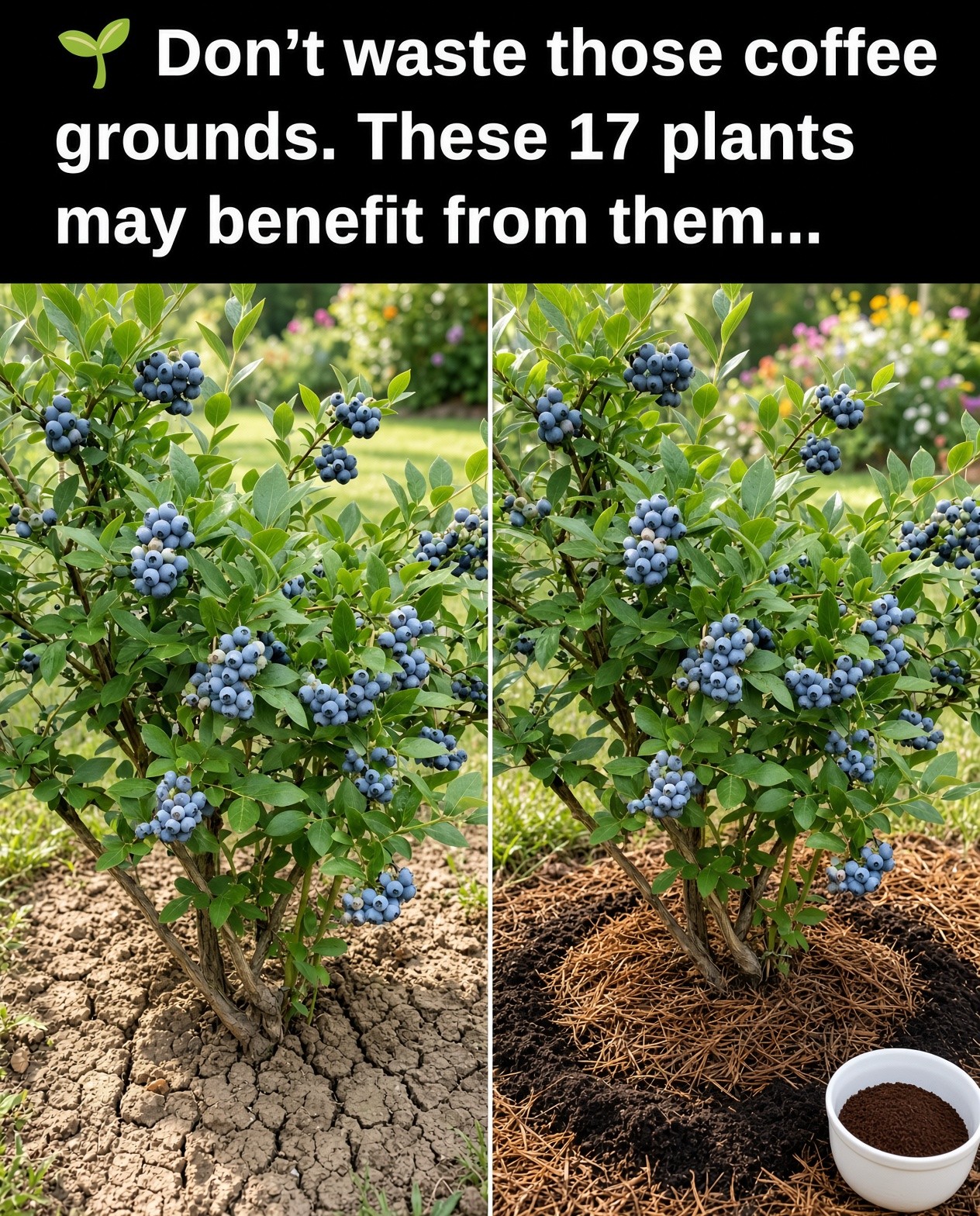
1. Blueberries
Blueberries need acidic soil, generally around pH 4.5–5.5 depending on the cultivar and local guidance. Composted organic matter can improve soil condition, but spent coffee grounds should not be relied on to lower pH. Test the soil and use a recommended amendment such as elemental sulfur only when a test indicates it is needed.
2. Azaleas and rhododendrons
These acid-loving shrubs prefer well-drained, humus-rich soil. A modest amount of finished compost can improve soil structure, but coffee grounds do not reliably acidify the root zone. Keep mulch away from direct contact with stems.
3. Hydrangeas
Hydrangeas benefit from evenly moist, well-drained soil and a generous organic mulch. Flower color in some bigleaf hydrangeas is influenced by aluminum availability and soil chemistry—not simply by adding coffee grounds. Use a soil test and variety-specific advice before trying to change flower color.
4. Roses
Roses grow best in fertile, well-drained soil with consistent moisture. Finished compost containing a moderate amount of grounds can be used as part of normal soil-building practice. Avoid piling fresh grounds around the crown or treating them as a rose-specific bloom booster.
5. Tomatoes
Tomatoes need sun, steady watering and balanced nutrition. They can grow well in beds improved with mature compost, but fresh grounds placed around tomato stems are not a proven shortcut to bigger harvests. Too much nitrogen can encourage leafy growth at the expense of fruiting.
6. Leafy greens such as lettuce and spinach
Leafy crops appreciate fertile soil with good moisture retention. Incorporate finished compost before planting rather than placing fresh grounds in seed rows. Keep the seedbed fine and free of clumps so small seeds can germinate evenly.
7. Cabbage-family crops
Cabbage, kale and related crops use nutrients steadily while forming leaves and heads. Mature compost can help maintain soil organic matter, but it should be one part of a balanced fertility plan. Avoid excess nitrogen late in growth if it produces soft, overly leafy plants.
8. Fruit trees and berry bushes
Established fruit plants benefit from healthy soil, a suitable mulch layer and consistent irrigation. Finished compost may be spread over the root zone, keeping it away from trunks and stems. Use only a modest amount and consider the plant’s specific pH and nutrient requirements.
9. Flowering annuals and perennials
Many flowering plants respond well to improved soil structure and organic matter. Use mature compost sparingly according to the plant’s needs; do not assume that more compost—or more coffee grounds—means more flowers.
10. Indoor foliage plants
Most houseplants are better served by a suitable potting mix and a measured, complete houseplant fertilizer than by coffee grounds added to the pot. Grounds can compact on the surface, encourage mold or fungus gnats when kept damp, and interfere with watering. Add compost to outdoor beds rather than scattering kitchen grounds in houseplant containers.
How to use coffee grounds safely
- Collect spent grounds. Use grounds left after brewing, not coffee mixed with sugar, flavored syrups, cream or other food waste.
- Let them cool. Never add hot grounds to a compost pile or around plants.
- Mix with other materials. Combine with dry leaves, shredded cardboard, garden trimmings and other compost ingredients. Do not let grounds become the bulk of the pile.
- Keep the pile aerated and moist. It should feel like a wrung-out sponge, not waterlogged. Turn or mix it periodically to introduce oxygen.
- Wait for maturity. Use compost when it is dark, crumbly and earthy-smelling, with the original ingredients largely unrecognizable.
- Apply modestly. Spread finished compost as a thin top-dressing or mix a moderate amount into the upper soil layer before planting. Keep it away from plant crowns and woody stems.
When to avoid coffee grounds
- Directly on seedlings or freshly sown beds: fresh grounds can inhibit germination and early growth in some plants.
- As a thick mulch: fine grounds can cake together, restrict air and water movement, and form a crust as they dry.
- As a soil acidifier: used grounds are generally near-neutral and their pH varies; they are not a dependable way to acidify soil for blueberries or azaleas.
- In large quantities: excessive fresh grounds can harm plant growth and disrupt the composting process.
- In worm bins in large amounts: avoid dumping in concentrated quantities; maintain a varied worm-bin diet and follow local vermicomposting guidance.
Coffee-ground gardening myths
Myth: Grounds make soil acidic
Reality: Brewing removes much of the coffee’s soluble acidity. Used grounds do not reliably lower garden soil pH.
Myth: They are a complete fertilizer
Reality: They contain some nutrients, but not in a balanced or predictable enough amount to feed plants alone.
Myth: They repel slugs and pests
Reality: There is no dependable evidence that a ring of grounds is an effective garden pest barrier.
Myth: Every plant loves them
Reality: Fresh grounds can suppress growth in some species. Compost first and use moderation.
Quick reference
| Garden use | Recommendation |
|---|---|
| Compost ingredient | Yes; mix with a diverse range of brown and green materials. |
| Thick surface mulch | No; grounds can compact and impede water and air. |
| Seed-starting mix | Avoid fresh grounds; use a purpose-made seed-starting medium. |
| Acidifying soil | No; test soil and use a suitable amendment if needed. |
| Houseplant pot topping | Generally avoid; use an appropriate potting mix and fertilizer. |
Frequently asked questions
Which plants like coffee grounds the most?
No plant depends on coffee grounds. Many garden plants can benefit from mature compost that contains a modest proportion of spent grounds, provided the compost and soil suit the plant.
Can I put coffee grounds directly on my garden soil?
It is safer to compost them first. Fresh grounds can inhibit growth in some plants, and a thick layer can compact. If you use any directly, keep the amount very small, spread it thinly and mix it with other organic material; composting remains the more reliable choice.
Do coffee grounds make hydrangeas blue?
No. Coffee grounds are not a reliable way to change soil pH or hydrangea flower color. Color response depends on the hydrangea type, soil chemistry and aluminum availability.
How often should I add coffee grounds?
There is no universal schedule. Add small amounts to a balanced compost pile as they become available, rather than applying a repeated layer directly to plants.
Are coffee grounds good for all vegetables?
No. Fresh grounds have reduced growth or germination in some tested crops. Use mature compost in moderation and follow crop-specific soil and fertility recommendations.
Can I use coffee grounds from flavored coffee?
Plain spent grounds are simplest. Avoid grounds contaminated with dairy, sugar, syrups or artificial sweeteners; those additions can attract pests and complicate composting.