
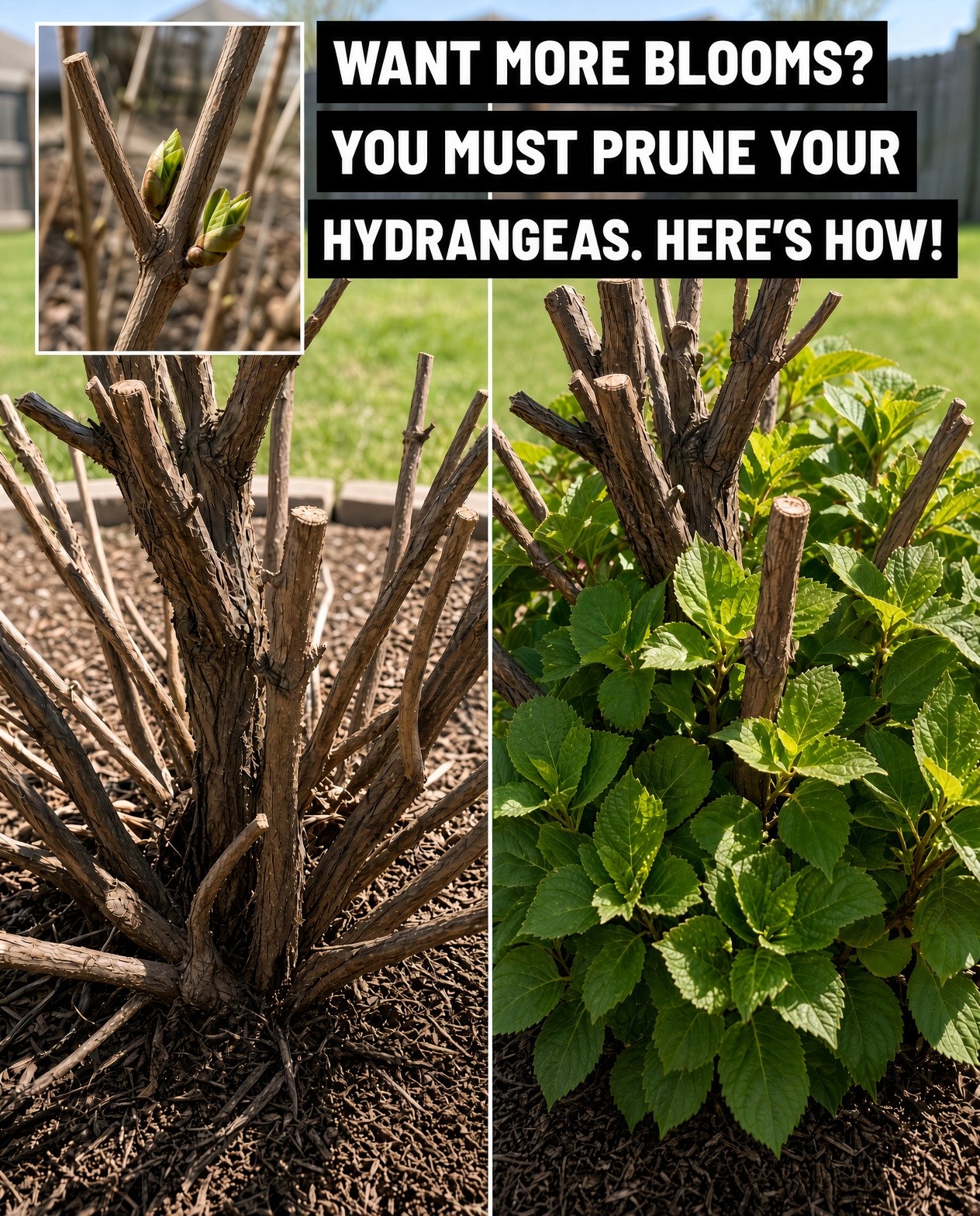
Prune hydrangeas at the right time and you can keep their shape while protecting next season’s flowers. The secret is knowing whether your shrub blooms on old wood, new wood, or both.
Hydrangeas are among the most beautiful flowering shrubs in a home garden, but pruning them can feel confusing. One plant may need only a light trim after flowering, while another benefits from a stronger cut in late winter. The difference comes down to when each type forms its flower buds. Cut at the wrong time and you may remove the buds you hoped would become next summer’s blooms.
This practical guide explains how to recognize the main hydrangea groups, when to prune each one, and how to make clean cuts without taking away more growth than necessary. Most hydrangeas do not need a severe annual haircut.
Hydrangea Pruning at a Glance
| Type | Flowering wood | Usual pruning time | Approach |
|---|---|---|---|
| Bigleaf / mountain | Usually old | Just after flowering | Light trim |
| Oakleaf | Old | After flowering | Minimal shaping |
| Panicle | New | Late winter / early spring | Shape as needed |
| Smooth | New | Late winter / early spring | Can tolerate firmer cuts |
| Reblooming bigleaf / mountain | Both | Light spring or post-flush trim | Preserve healthy wood |
| Climbing | Old | After flowering | Minimal trimming |
Identify your hydrangea first
The most important rule of hydrangea pruning is to identify the type of plant before cutting. Different hydrangeas form flower buds at different times. Old wood means stems produced during the previous growing season; these stems carry buds through winter. New wood means stems produced in the current season, which form flower buds later that year. Reblooming types can flower on both. If you do not know your plant’s identity, check its label or ask a local nursery. Until you are sure, avoid hard pruning and remove only clearly dead or damaged stems.

Bigleaf and mountain hydrangeas
Bigleaf hydrangeas (Hydrangea macrophylla) include familiar mophead and lacecap shrubs with large leaves and rounded or flattened flower clusters. Mountain hydrangeas (H. serrata) look similar but are often more compact. Traditional varieties bloom on old wood, so next season’s buds are already developing after the current flowers fade. Prune these shrubs soon after flowering. Remove faded flowerheads just above a healthy pair of buds, and remove dead, damaged, or weak stems at their base. If the shrub is crowded, remove one or two of the oldest stems at ground level rather than shortening every branch. This opens the plant while preserving much of its flowering framework.

Oakleaf hydrangeas
Oakleaf hydrangea (Hydrangea quercifolia) is recognized by deeply lobed leaves resembling oak leaves. It produces elongated white flower clusters and often develops attractive burgundy, bronze, or red autumn foliage. It blooms on old wood and usually needs little pruning. Shape it after flowering if necessary. Remove dead or damaged branches and shorten only shoots growing awkwardly or blocking a path. For an older crowded shrub, remove a small number of the oldest stems at ground level over several seasons. Avoid cutting the whole plant back hard, because this removes stems carrying next year’s flower buds and spoils its natural form.

Panicle hydrangeas
Panicle hydrangeas (H. paniculata) produce cone-shaped flower clusters that often open white or creamy green and may turn pink as they age. They bloom on new wood, so flower buds form on shoots produced during the current growing season. Prune in late winter or early spring while dormant and before strong new growth begins. Remove dead, damaged, crossing, or weak stems first. Then shorten remaining branches to a framework suited to the plant’s natural size. Established panicle hydrangeas tolerate shaping, but they do not need to be cut to the ground every year. A sturdy framework helps support heavy flowerheads and reduces flopping.

Smooth hydrangeas
Smooth hydrangeas (H. arborescens), including ‘Annabelle’-type plants, produce rounded flower clusters and bloom on new wood. Prune in late winter or early spring before new shoots expand. Remove dead or damaged stems and thin congested growth. Established plants can be cut back more firmly to control height, but very low pruning may produce long, soft stems that struggle to hold large flowerheads upright. Leaving a taller framework can provide support. Young plants should be allowed time to establish before severe pruning. If the shrub already has a pleasing shape and flowers well, a simple cleanup may be enough.

Reblooming hydrangeas
Some newer bigleaf and mountain cultivars are reblooming: they can flower from buds on old wood early in the season and produce additional blooms on new growth later. This does not mean they can be pruned heavily at any time. Keep pruning light. Remove dead or damaged wood when it is clear which stems did not survive winter, deadhead spent flowers just above healthy buds, and thin only weak or crowded branches. Early spring pruning can delay the first flush, while pruning after the first flush may reduce later reblooming. Check the cultivar label; if unsure, treat it like an old-wood hydrangea and preserve healthy stems.

Climbing hydrangeas
Climbing hydrangeas (H. anomala subsp. petiolaris) are woody vines that attach to walls, fences, and tree trunks. They are valued for white lacecap flowers and generally bloom on old wood. They do not need routine annual pruning. After flowering, shorten shoots that extend too far beyond the area you want covered, and remove dead or damaged growth. Retain flowering side shoots near the main framework, because cutting the whole vine back can reduce the next display. Allow young plants to establish before major shaping, and check that the support is sound and the vine is not growing into gutters or windows.

Use clean tools and careful cuts
Use sharp bypass pruners for smaller branches and loppers for thicker stems within their rated capacity. Clean blades before starting, especially if you have been working on a plant showing disease. Make cuts just above a healthy pair of buds when shortening a stem. Remove dead stems near the base, and avoid leaving long stubs or cutting so close that buds are damaged. Step back regularly to assess the shrub’s overall shape. The goal is not to turn every hydrangea into a tight ball; it is to remove unhealthy growth, improve structure, and preserve the stems needed for flowering.

Avoid common pruning mistakes
The most common mistake is pruning every hydrangea at the same time. A spring haircut may suit a panicle hydrangea but can remove flower buds from traditional bigleaf or oakleaf varieties. Do not cut a shrub back hard simply because it looks untidy in winter. Many hydrangeas hold dried flowerheads and stems through the cold season. Do not assume a plant is dead because it is slow to leaf out in spring; wait for growth and inspect stems first. Excessive cutting often removes potential flowering wood. Most hydrangeas need less pruning than gardeners think. If the shrub is healthy, well-shaped, and flowering well, a light cleanup—or no pruning—may be best.

Frequently Asked Questions
When should hydrangeas be pruned?
Old-wood types are usually pruned just after flowering. Panicle and smooth hydrangeas, which bloom on new wood, are generally pruned in late winter or early spring. Reblooming types need a light touch.
Can I prune hydrangeas in autumn?
Avoid major autumn pruning, especially on old-wood varieties, because next year’s flower buds may already be on the stems. Remove only clearly dead, diseased, or broken material.
Should I cut hydrangeas to the ground?
Usually not. Some established smooth hydrangeas tolerate hard pruning, but cutting other types to the ground can remove flower buds or weaken the plant.
Why does my hydrangea have leaves but no flowers?
Possible causes include pruning at the wrong time, winter damage to old-wood buds, insufficient light, or other growing stresses.
Do hydrangeas need pruning every year?
No. Many need only occasional removal of dead, damaged, or crossing stems. Prune to maintain health, size, and shape rather than following a rigid annual haircut.
Final Thoughts
Successful hydrangea pruning is less about cutting a lot and more about cutting at the right time. Bigleaf, mountain, oakleaf, and climbing hydrangeas generally need their old stems protected because those stems carry next season’s buds. Panicle and smooth hydrangeas bloom on new growth and can be shaped while dormant in late winter or early spring. Reblooming varieties offer extra flexibility, but still benefit from a light hand.
Use clean tools, remove unhealthy growth first, and step back often to preserve the plant’s natural form. If your hydrangea already looks healthy and flowers reliably, there may be very little to do. A thoughtful, minimal approach is often the surest way to enjoy a fuller display next season.