
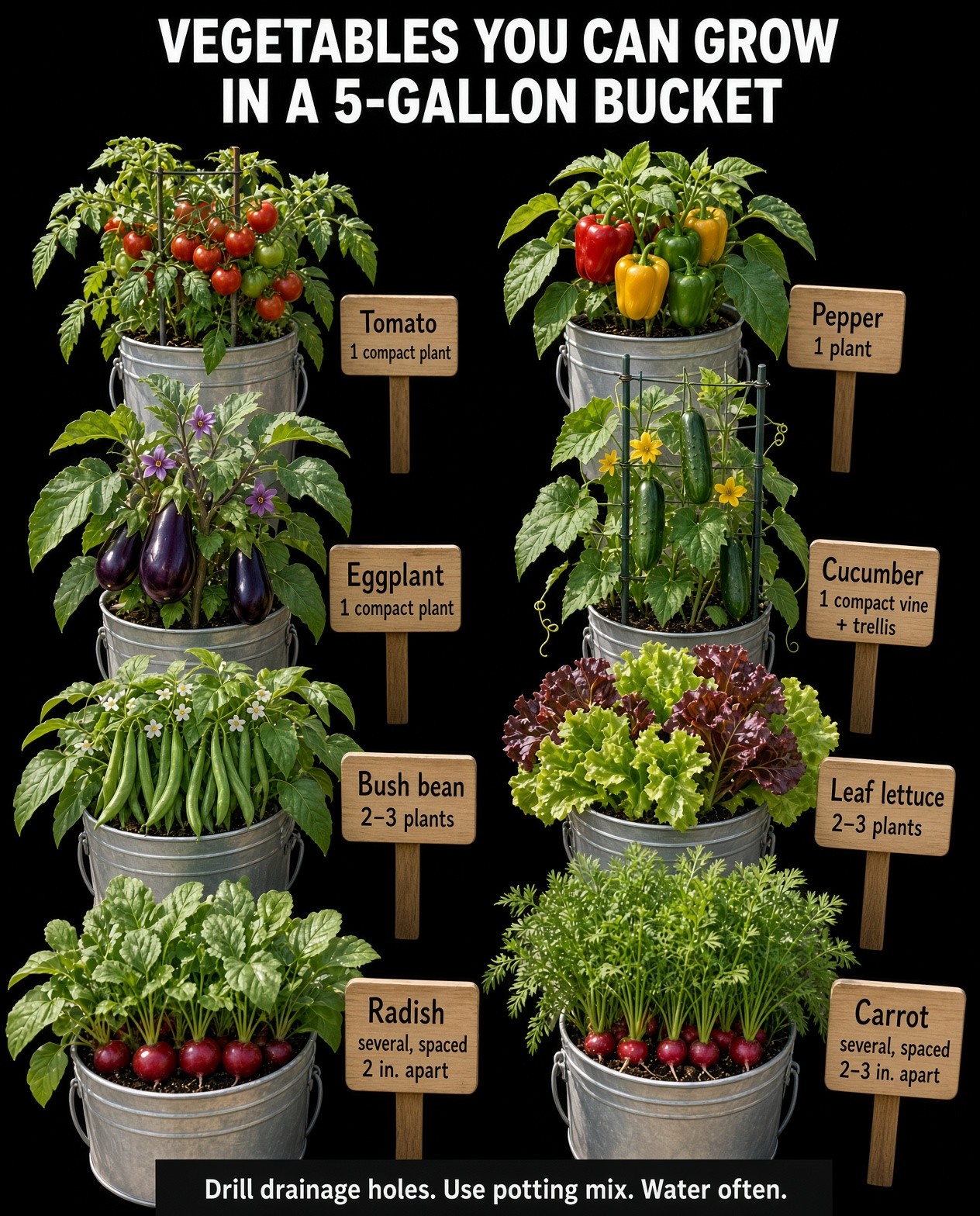
A sunny patio, balcony or doorstep can become a productive mini garden. With a food-safe bucket, a free-draining potting mix and the right crop choices, you can harvest fresh vegetables without digging a traditional garden bed.

A selection of vegetables suited to container growing, shown in five-gallon buckets.
Five-gallon buckets are inexpensive, portable and easy to arrange in a small space. They are not suitable for every crop or every variety, however. Choose compact plants, give large fruiting vegetables enough room, and remember that containers dry out faster than garden beds. The following 12 crops are useful options, with a few important differences in how much space each one needs.
12 vegetables you can grow in a 5-gallon bucket
1. Tomatoes
Best: compact or determinate varietiesTomatoes are among the most rewarding bucket crops. Choose patio, dwarf, bush or determinate varieties rather than a vigorous, sprawling indeterminate plant. Grow one tomato plant per bucket, provide a sturdy cage or stake early, and position it where it receives around six to eight hours of direct sun. Keep moisture consistent to reduce stress-related problems such as blossom-end rot and fruit cracking.
2. Peppers
Best: bell, jalapeño and compact sweet peppersSweet and hot peppers grow well in warm, sunny containers. One plant per five-gallon bucket is a sensible starting point. Use a loose potting mix, avoid letting the container dry completely during flowering and fruiting, and add a small support if branches become heavy with fruit. Peppers appreciate warmth but may need afternoon shade during extreme heat.
3. Cucumbers
Best: bush or patio varietiesCucumbers can thrive in a bucket if you select a compact type and give vines a trellis. Train the plant upward to save floor space and keep leaves off damp soil. A five-gallon container is a practical minimum for many compact varieties, but larger containers can improve moisture stability. Check water daily in hot weather because cucumber fruits can become misshapen when plants experience irregular moisture.
4. Lettuce
Best: leaf and cut-and-come-again typesLettuce has relatively shallow roots and is an excellent choice for a bucket. You can sow a small patch of loose-leaf varieties and harvest outer leaves as they grow, or plant a few compact heads with suitable spacing. Lettuce tolerates cooler conditions and some light shade. In hot weather, move it out of harsh afternoon sun and sow successive batches for a longer harvest.
5. Spinach
Best: cool-season varietiesSpinach is well suited to container culture, especially in spring and autumn. Sow seeds directly into the mix and thin seedlings so mature plants have room to develop. Keep the mix evenly moist and harvest outer leaves regularly. Warm temperatures can cause spinach to bolt, so time sowing for cooler weather rather than expecting a bucket to overcome summer heat.
6. Bush beans
Best: compact bush beansBush beans need less vertical space than pole beans and can produce a useful crop in a five-gallon container. Sow seeds directly after the weather has warmed, following the packet’s spacing instructions. Avoid crowding: good airflow helps leaves dry after watering. Pick pods while they are young and tender to encourage continued production.
7. Carrots
Best: short-rooted or round varietiesCarrots need depth and loose soil more than a wide canopy. Choose a bucket deep enough for the mature root length and grow short, round or container-friendly varieties. Fill it with fine, stone-free potting mix and sow thinly. Thin seedlings carefully so roots do not compete. If the container is shallow, long-rooted varieties may fork or remain stunted.
8. Radishes
Best: quick-maturing typesRadishes are fast, beginner-friendly crops. Their small roots make them suitable for a bucket, and successive sowings every couple of weeks can provide repeated harvests. Keep the mix consistently moist; dry conditions can make roots woody or excessively pungent. Harvest promptly when roots reach the size listed on the seed packet.
9. Eggplant
Best: compact or patio varietiesEggplants enjoy warmth and sunshine and can grow in a five-gallon bucket, although larger containers give substantial plants more room. Grow one plant per bucket, stake it if necessary, and water consistently while fruits develop. Harvest when the skin is glossy and the fruit is firm. Overripe eggplants can become dull, seedy and bitter.
10. Swiss chard
Best: compact or rainbow chardSwiss chard is productive, attractive and tolerant of a range of conditions. A five-gallon bucket can support one or a few plants depending on the variety and spacing. Harvest the outer stalks and leaves while leaving the central growing point intact. Chard can provide repeated pickings over a long season when watered and fed appropriately.
11. Kale
Best: dwarf and compact kaleKale is a useful cool-season leafy crop. Choose a compact variety and avoid planting too many seedlings in one bucket. Give it good light, water when the upper mix begins to dry, and harvest the lower leaves as the plant grows. In warm climates, provide some afternoon protection and watch for caterpillars and aphids.
12. Green onions
Best: bunching onionsGreen onions make excellent use of container space because they have modest root systems and can be planted in rows or small clusters. Sow seeds or set young plants according to packet directions. Keep the mix lightly moist and harvest individual stems as needed. They can also be tucked around the edges of a larger container, provided the main crop still has adequate room.
How to set up a five-gallon bucket garden
1. Choose a safe bucket
Use a clean, food-grade bucket. Never reuse a container that held paint, solvents, pesticides, detergents or other chemicals. Avoid buckets with unknown histories.
2. Add drainage holes
Drill several holes through the base so excess water can escape. Raise the bucket slightly on pot feet or bricks so holes are not blocked. Do not rely on a sealed bucket.
3. Use container mix
Fill with a quality potting mix designed for containers. It should retain moisture while allowing air and water to move through it. Garden soil alone is often too dense.
4. Match the crop
Plant one large fruiting vegetable per bucket. Smaller greens and onions can be planted more densely if you follow spacing guidance for the variety.
Sunlight, watering and feeding
Give fruiting crops plenty of sun
Tomatoes, peppers, eggplants and cucumbers generally perform best with about six to eight hours of direct sunlight. Leafy greens such as lettuce, spinach, kale and chard can tolerate somewhat less sun, particularly where afternoons are hot. Place buckets where you can reach them easily to water and inspect plants.
Check moisture often
Containers have a limited volume of mix, so they can dry much faster than garden beds. Push a finger about an inch into the mix; if it feels dry at that depth, water thoroughly until a little drains from the bottom. During hot, windy weather, large plants may need daily watering. Avoid leaving buckets standing in saucers full of water.
Feed according to the mix and crop
Some potting mixes contain starter fertilizer; others do not. Read the label before adding more. As plants grow and begin flowering or producing fruit, use a fertilizer intended for vegetables and follow its label rate. Overfeeding can damage roots or encourage excess leafy growth at the expense of fruit.
Support and harvest regularly
Install tomato cages, stakes or cucumber trellises before roots fill the bucket. Harvest leafy crops and beans regularly, and pick fruiting vegetables when they reach the expected size and color. Frequent harvesting can help keep some crops productive.
Common bucket-gardening mistakes to avoid
- No drainage: Waterlogged roots can suffocate and rot. Always make sure excess water can escape.
- Using garden soil: Heavy soil can compact in a bucket. Choose a suitable container mix.
- Overcrowding: Too many plants compete for light, water and nutrients. Follow spacing guidance.
- Choosing oversized varieties: Look for labels such as bush, dwarf, patio or compact where appropriate.
- Inconsistent watering: Allowing plants to wilt repeatedly can reduce quality and yield.
- Ignoring heat: Dark buckets can become hot in strong sun. Monitor root-zone temperatures and consider a light-colored outer cover or afternoon shade during heatwaves.
Make a small garden productive
You do not need to plant all 12 vegetables at once. Start with two or three crops you enjoy eating and that suit your climate and season. A tomato or pepper bucket can provide a summer centerpiece, while lettuce, spinach, radishes and green onions can fill smaller spaces and deliver quicker harvests. Keep notes on watering, sunlight and harvest dates; the best combination is the one that thrives in your own conditions.
Frequently asked questions
Can I grow vegetables in any five-gallon bucket?
How many vegetables can I plant in one bucket?
Do five-gallon buckets need full sun?
How often should I water bucket vegetables?
Can I reuse the potting mix?