
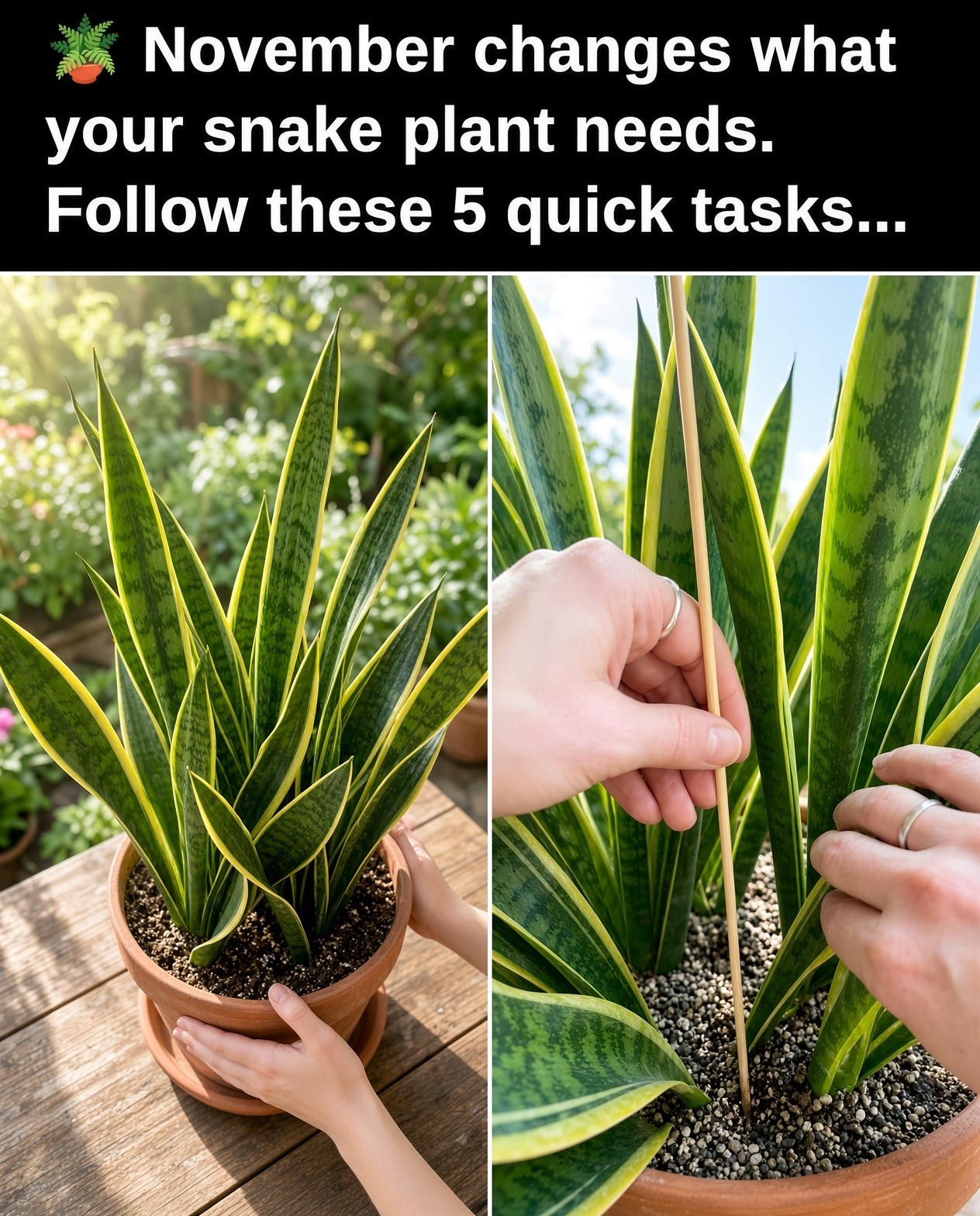
A little seasonal adjustment helps your snake plant stay firm, healthy and trouble-free while daylight fades and indoor temperatures fluctuate.
By Garden Editorial Team · November care guide

A visual guide to simple winter care for snake plants.
Snake plants (Dracaena trifasciata, formerly Sansevieria trifasciata) are resilient houseplants, but their tolerance does not make them immune to winter problems. Shorter days and cooler conditions slow growth, so the plant uses water and nutrients more slowly. The safest November routine is simple: check before watering, keep temperatures steady, make the most of available light, pause feeding and ensure excess water can escape.
1. Water only when the potting mix has dried out
Overwatering is one of the most common causes of snake plant decline. Its thick leaves store moisture, and in lower winter light the plant may use water very slowly. A pot that needed frequent watering in summer can remain damp for much longer in November.
Do not water simply because a certain number of days has passed. Press a finger several centimetres into the mix or insert a clean wooden skewer toward the bottom of the pot. If it comes out dark, cool or coated with damp soil, wait. When the mix is dry throughout, water thoroughly until excess drains from the bottom, then let the pot finish draining.
2. Keep the plant away from cold drafts and sudden heat
Snake plants are tropical in origin and dislike cold exposure. A windowsill can become chilly overnight, while a nearby radiator, fireplace or heating vent can create hot, dry air. Repeated temperature swings are more stressful than a stable room temperature.
Choose a spot with fairly steady indoor warmth, ideally around 18–27°C (65–80°F). Keep leaves from touching cold glass and move the pot away from exterior doors that open frequently. Avoid placing it directly in the stream of hot air from a heater. If you move the plant, make one sensible relocation rather than shifting it repeatedly to chase patches of sunlight.
3. Make the most of weaker daylight
Snake plants tolerate lower light, but tolerance is not the same as vigorous growth. As days shorten, a plant that sat comfortably several metres from a window may receive too little light to maintain strong growth. Move it closer to a bright window where it receives indirect daylight, while avoiding harsh, sudden exposure to intense direct sun.
Dust can also collect on the upright leaves and dull their surface. Wipe each leaf gently with a soft, slightly damp cloth, supporting it with your other hand. This keeps the foliage looking fresh and removes a layer of dust that can intercept light. Do not use leaf shine products, and do not mist the plant as a substitute for watering.
4. Pause routine fertilizer until active growth returns
During the darker months, snake plants generally grow slowly and need little additional nutrition. Continuing to fertilize on a summer schedule can leave unused mineral salts in the potting mix. In time, excess salts may contribute to brown leaf tips or root stress.
For most indoor plants, stop routine feeding in late autumn and resume in spring when new growth is visible and light levels improve. If your plant is kept under strong grow lights and is actively growing year-round, a very dilute feed may be appropriate, but avoid fertilizing a stressed or recently repotted plant.
5. Check drainage holes and remove trapped water
Even careful watering can cause problems if water cannot leave the container. Make sure the pot has unobstructed drainage holes and that the inner nursery pot is not sitting in a cachepot full of water. After watering, allow the pot to drain freely and empty the saucer or decorative outer pot.
If water sits on the soil surface or drains unusually slowly, the mix may be compacted or the holes may be blocked. Clear loose debris gently without pushing deeply into the root ball. If the mix has broken down and stays wet for too long, plan to replace it with a loose, fast-draining cactus or succulent mix when conditions are suitable. Use a container with drainage and avoid moving to an oversized pot.
November snake plant mistakes to avoid
- Do not water on a fixed weekly schedule. Soil dryness and room conditions matter more than the calendar.
- Do not mist the leaves. Snake plants cope with ordinary indoor humidity, and misting does not solve dry roots.
- Avoid unnecessary repotting. Wait until spring unless there is an urgent problem such as rot or failed drainage.
- Do not cut healthy leaves for appearance. Remove only damaged or rotten foliage with clean tools.
- Do not leave water in the saucer. Standing water deprives roots of air and increases rot risk.
How to tell whether your snake plant is struggling
Soft, yellowing leaves combined with wet soil often point to excess moisture or root problems. Wrinkled or slightly limp leaves with very dry soil may indicate that the plant needs water. Brown tips can have several causes, including inconsistent watering, accumulated salts or physical damage, so assess the whole plant rather than reacting to one symptom. If rot is suspected, remove the plant from its pot, inspect the roots and cut away any soft, dark tissue with a clean blade before repotting into fresh, free-draining mix.
Frequently asked questions
How often should I water a snake plant in November?
There is no universal interval. In many homes, watering may be needed only every few weeks or less, but pot size, soil, light and temperature all affect drying time. Water only when the mix has dried throughout.
Can a snake plant survive in a dark room during winter?
It can tolerate low light for a time, but prolonged darkness is not ideal. Place it in the brightest suitable indirect light available. A grow light can help if natural daylight is very limited.
Should I fertilize my snake plant in winter?
Usually not. Pause feeding while growth slows and resume in spring when the plant is actively growing. Indoor plants under strong supplemental light may be an exception.
Do snake plants need extra humidity?
No special humidity treatment is usually necessary. They tolerate typical household air and do not need routine misting.
Is a snake plant safe for pets?
No. Snake plants contain compounds that can cause gastrointestinal upset if chewed or eaten by cats or dogs. Keep the plant out of reach and contact a veterinarian if a pet ingests it.