
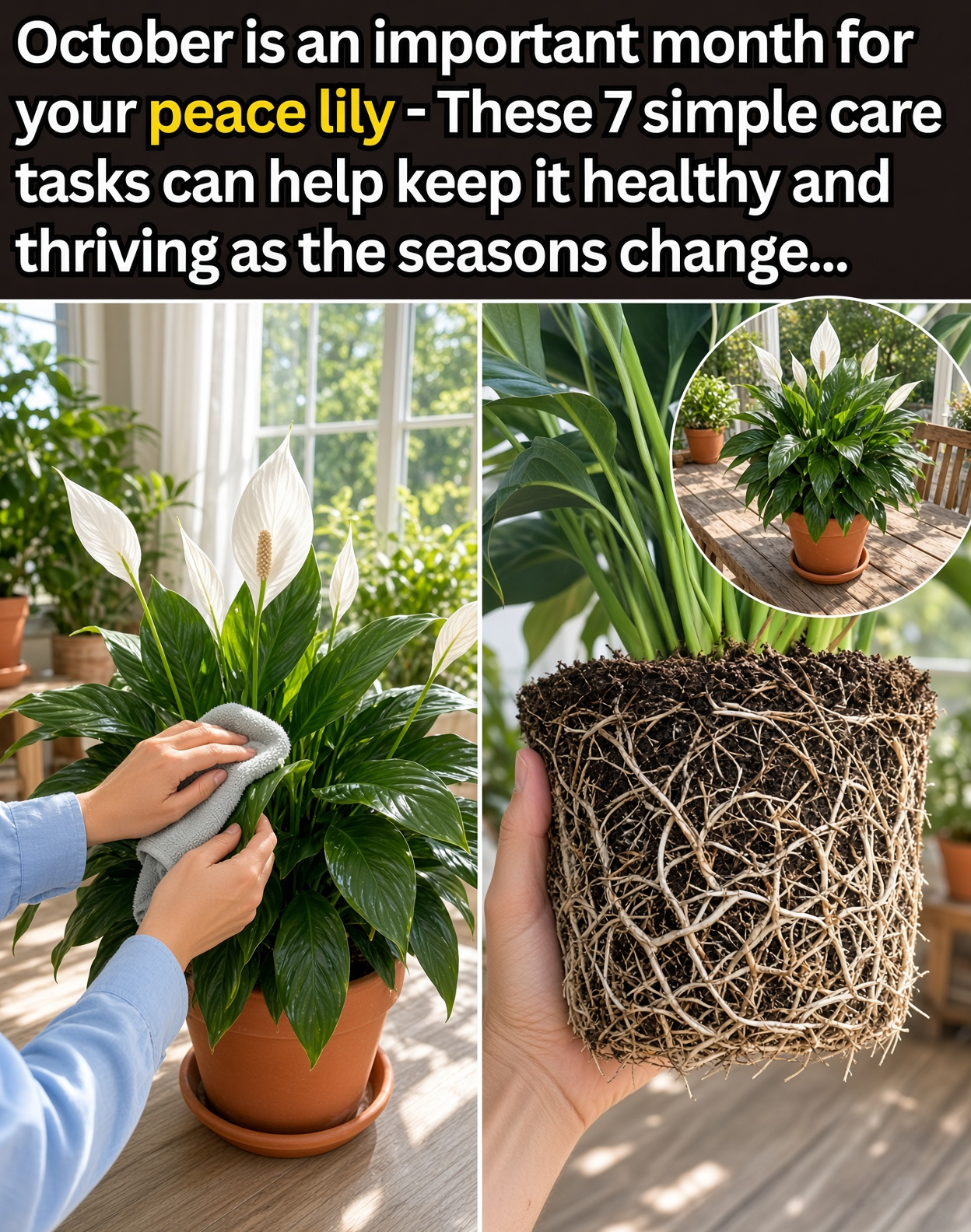
The good news is that you don’t need a complicated routine. A few simple adjustments can help your peace lily stay healthy and attractive through autumn and winter.
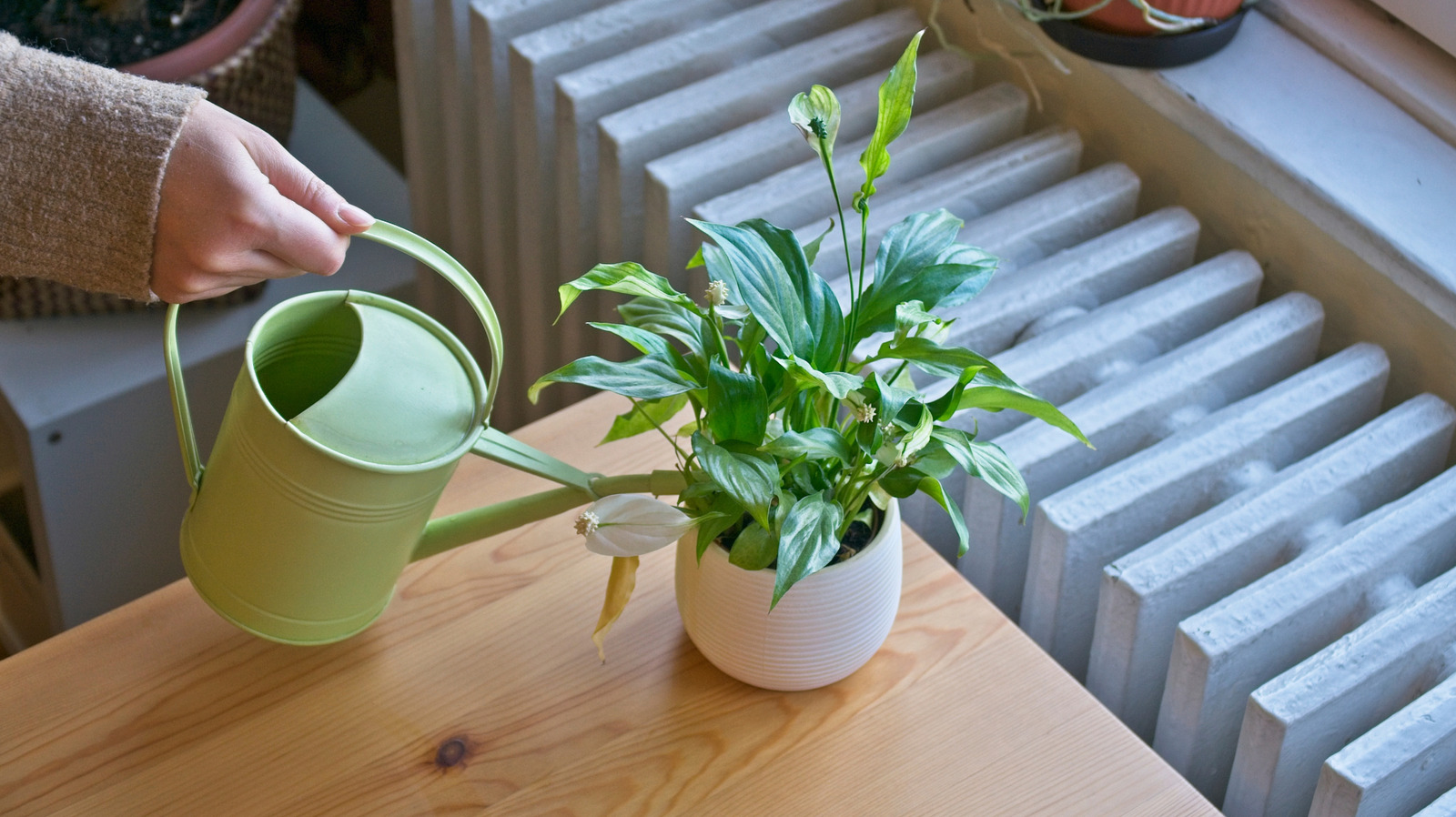
1. Adjust Your Watering as October Arrives
One of the first things to change in autumn is your watering routine.
During summer, bright light and warmer temperatures can make the potting mix dry relatively quickly. In October, shorter days and cooler indoor conditions may slow evaporation. If you continue watering according to the exact schedule you used in July or August, the soil may stay wet for too long.
Instead of watering because a certain number of days have passed, check the soil first.
Push your finger about an inch into the potting mix. If that area still feels noticeably moist, wait before watering. When the upper layer has started to dry, water thoroughly and allow excess water to drain through the bottom of the container.
Peace lilies prefer relatively consistent moisture, but their roots should not sit in permanently saturated soil. Poorly aerated, constantly wet conditions can contribute to root problems.
Important: Don’t use drooping leaves alone as your signal to water. Peace lilies are famous for dramatic wilting when thirsty, but drooping can also occur when roots are stressed. Check the soil before adding more water.
October tip: If your peace lily suddenly needs water less often than it did during summer, that can be completely normal. Its growing environment has changed.
2. Move Your Peace Lily Toward Brighter Indirect Light
Peace lilies are often called low-light plants, but that doesn’t mean they prefer a dark room.
They can tolerate lower light than many houseplants, but bright, indirect light generally supports stronger growth. As autumn progresses, a location that was bright enough in summer may become surprisingly dim.
If your plant is several feet away from a window or sitting in a particularly dark corner, consider moving it closer to a bright window for fall and winter.
A location with filtered or indirect light is usually a good choice. Gentle morning sunlight may be tolerated, but avoid suddenly moving a plant from deep shade into intense direct sunlight. A rapid change can scorch leaves.
Light is particularly important if you want your peace lily to flower. A plant may survive in relatively dim conditions while producing attractive green foliage but very few flowers.
You can also rotate the pot occasionally if the light comes mostly from one direction. This helps encourage more balanced growth.
October tip: Think of “low-light tolerant” as the ability to survive in lower light—not a sign that darkness is ideal.
3. Reduce Fertilizer as Growth Slows
As daylight decreases, many indoor peace lilies naturally slow their growth. That means they generally don’t need the same amount of fertilizer they needed during their strongest spring and summer growth.
If you’ve been feeding your plant regularly throughout the growing season, October is a good time to reduce or stop routine fertilizing as growth slows.
A peace lily growing under strong artificial grow lights may continue growing actively, so its needs can be different. But a plant relying mainly on natural autumn and winter daylight usually doesn’t need to be pushed into producing new growth.
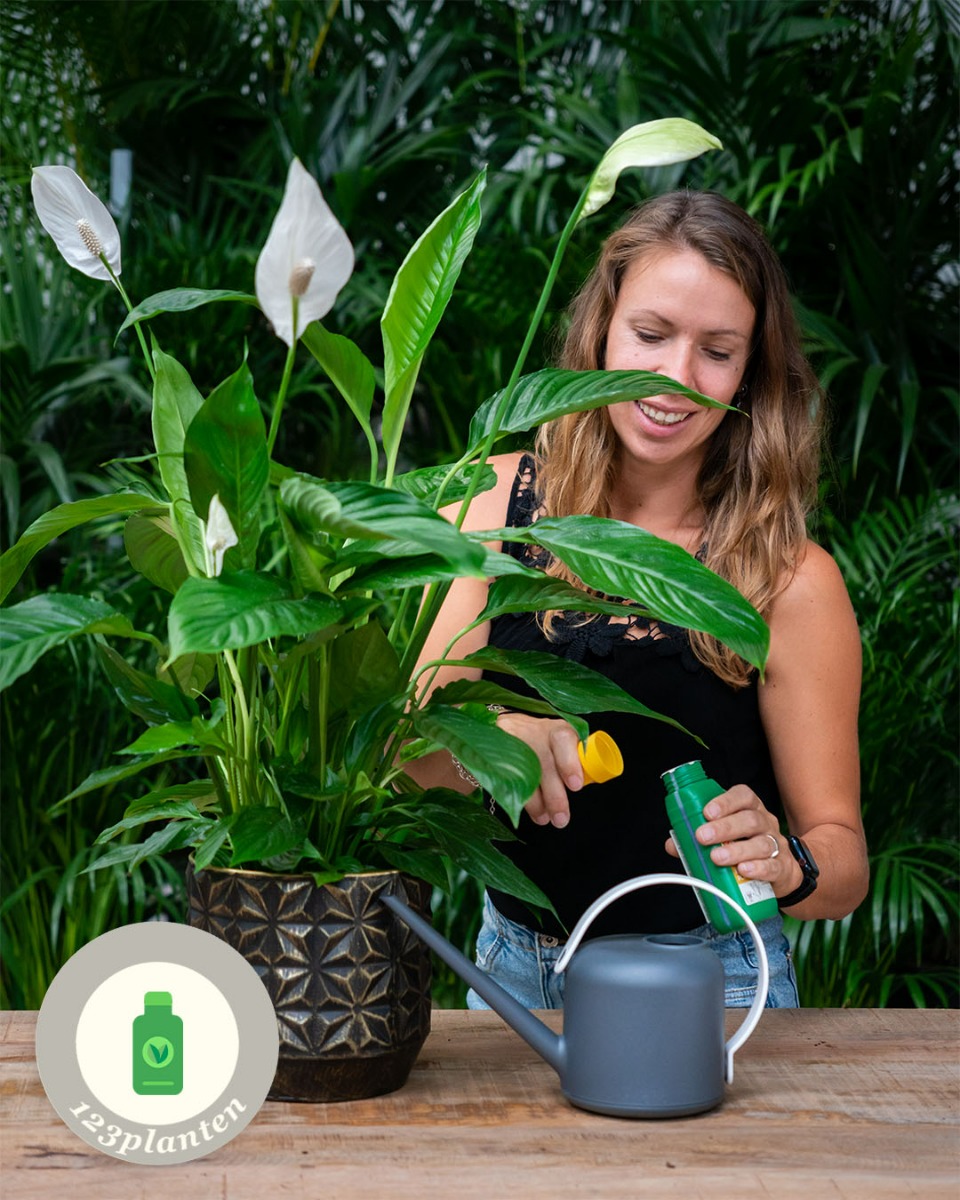
Too much fertilizer can leave mineral salts behind in the potting mix. Over time, this buildup can stress the roots and contribute to brown leaf tips.
For that reason, don’t automatically reach for fertilizer whenever the plant looks unhappy. Yellowing, brown tips, wilting, and slow growth can have many causes, including watering, light, drainage, humidity, temperature, or root problems.
October tip: If your peace lily is healthy but simply growing more slowly, you don’t necessarily need to correct anything. Seasonal slowdown can be normal.
4. Protect It From Dry Indoor Air
Another important October change happens when indoor heating begins running.
Radiators, furnaces, and forced-air heating can make indoor air considerably drier. Peace lilies appreciate moderate humidity, and very dry conditions may contribute to crispy leaf edges and brown tips.

Try not to place the plant directly beside a radiator or in the path of a heating vent. The combination of warm moving air and low humidity can be stressful for the foliage.
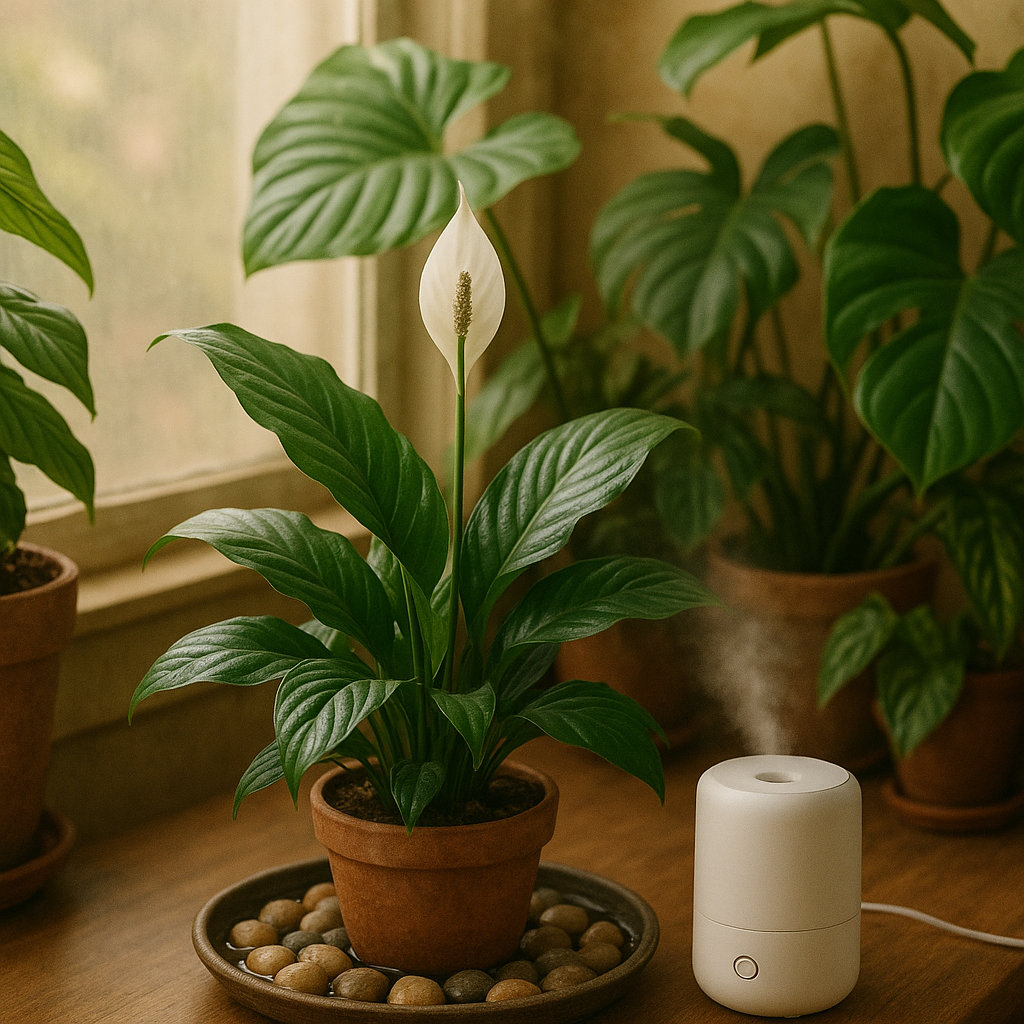
If the air in your home becomes very dry, a humidifier can provide a more consistent increase in humidity. Grouping several houseplants together can also create a somewhat more humid microenvironment.
A pebble tray may provide a small local benefit, provided the bottom of the pot is kept above the water rather than sitting directly in it.
Don’t rely on constant misting as the main solution. Any humidity increase from misting is temporary, and keeping foliage wet for long periods isn’t desirable.
October tip: If brown tips suddenly become more noticeable after you turn on the heating, look at the whole environment rather than assuming the plant simply needs more water.
5. Clean the Large Leaves
Peace lilies have broad, glossy leaves that are excellent at collecting household dust.
October is a convenient time to give the foliage a gentle cleaning, especially as windows stay closed more often and indoor air circulation changes.

Use a soft cloth lightly dampened with plain water. Support each leaf with your other hand while wiping so you don’t bend or tear the foliage.
There’s no need to coat the leaves with mayonnaise, oil, milk, or commercial homemade shine mixtures. A naturally healthy peace lily already has attractive foliage, and removing dust is enough to improve its appearance.
Cleaning also gives you an opportunity to inspect the plant closely. Look underneath the leaves and around the places where leaf stems meet the main plant.
These hidden areas can reveal pests before they spread throughout the plant.
October tip: Make leaf cleaning part of your autumn inspection rather than treating it as purely cosmetic maintenance.
6. Inspect for Pests Before Winter
Fall is an excellent time to check your peace lily carefully for unwanted visitors.
This is especially important if the plant spent the summer outdoors, sat near open windows, or shares space with several other houseplants.
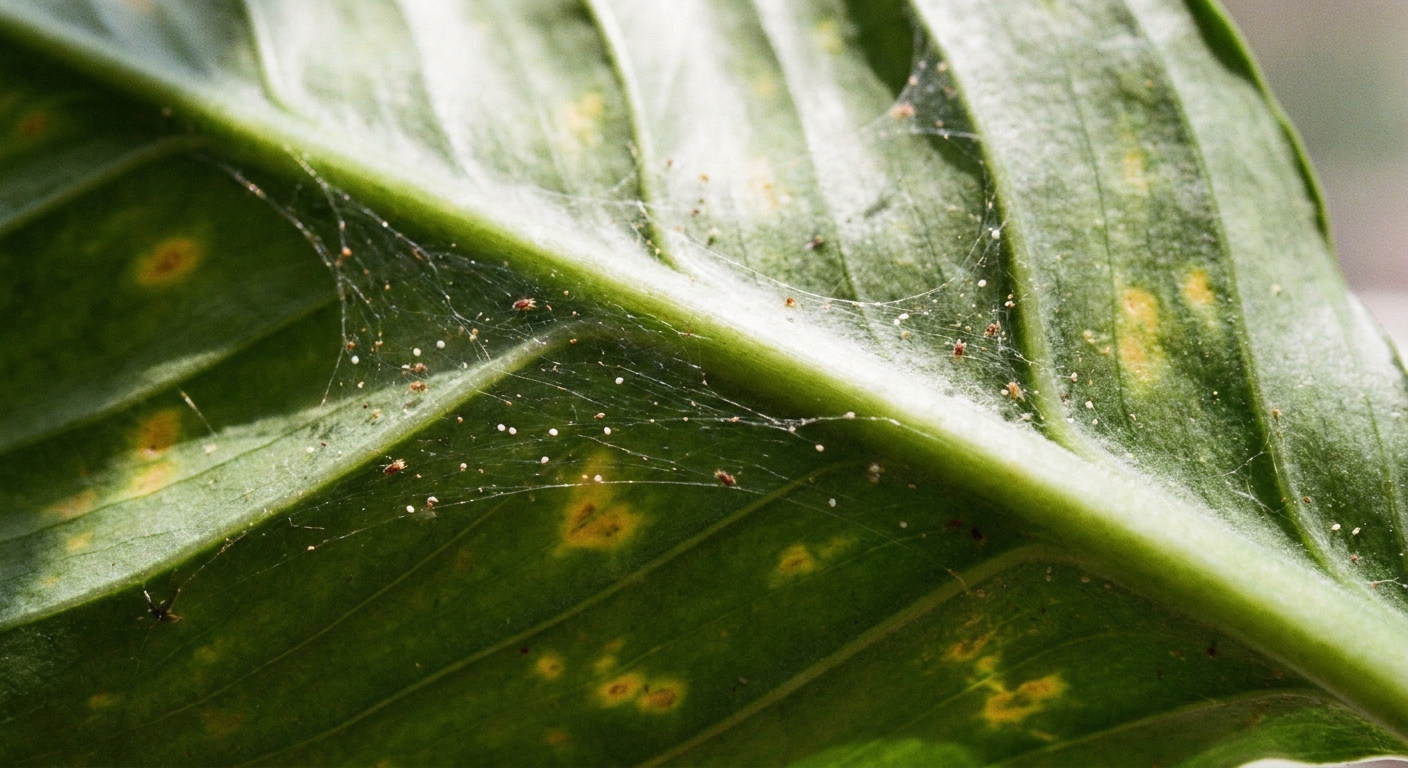
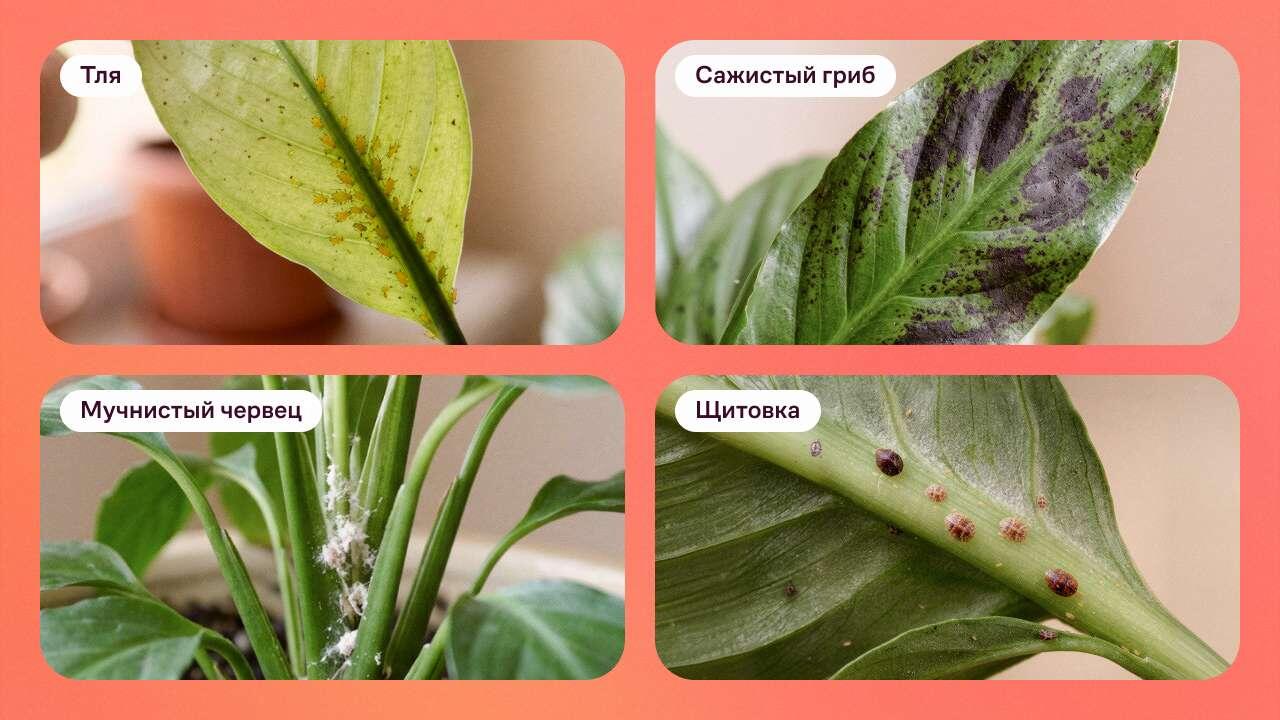
Check beneath the leaves, along the stems, and around the base of the plant. Possible houseplant pests include spider mites, mealybugs, scale insects, aphids, and fungus gnats.
Spider mites deserve particular attention when indoor heating begins because warm, dry conditions can favor them. Fine webbing, pale speckling, or an unusually dusty-looking leaf surface can be warning signs.
Mealybugs are often easier to spot because they can appear as small white, cotton-like clusters around stems and leaf joints.
Fungus gnats are different. If tiny flies repeatedly appear around the potting mix, the soil may be staying consistently wet. That doesn’t automatically mean the plant has serious damage, but it is a good reason to reconsider whether you’re watering too frequently.
If you bring a new houseplant home during autumn, inspect it carefully before placing it directly beside your established plants.
October tip: Finding a pest problem early is much easier to manage than discovering a large infestation in the middle of winter.
7. Protect Your Peace Lily From Cold Drafts
October can bring sudden temperature changes indoors, especially at night.
A peace lily sitting beside an exterior door may receive repeated bursts of cold air. A plant pressed directly against cold window glass can also experience much cooler conditions than the rest of the room.
If your plant is sitting directly against a cold window, move it slightly back while still keeping it in a bright location.
At the same time, don’t move it directly beside a radiator to compensate. The goal is a stable location away from both cold drafts and strong blasts of hot, dry air.
If your peace lily spent summer outdoors, bring it inside before temperatures become genuinely cold. Before moving it indoors, carefully inspect the leaves, stems, and pot for insects or other problems.
October tip: Peace lilies generally do better with a stable environment than with repeated dramatic changes in location.
Should You Repot a Peace Lily in October?
October itself is not a reason to repot a healthy peace lily.
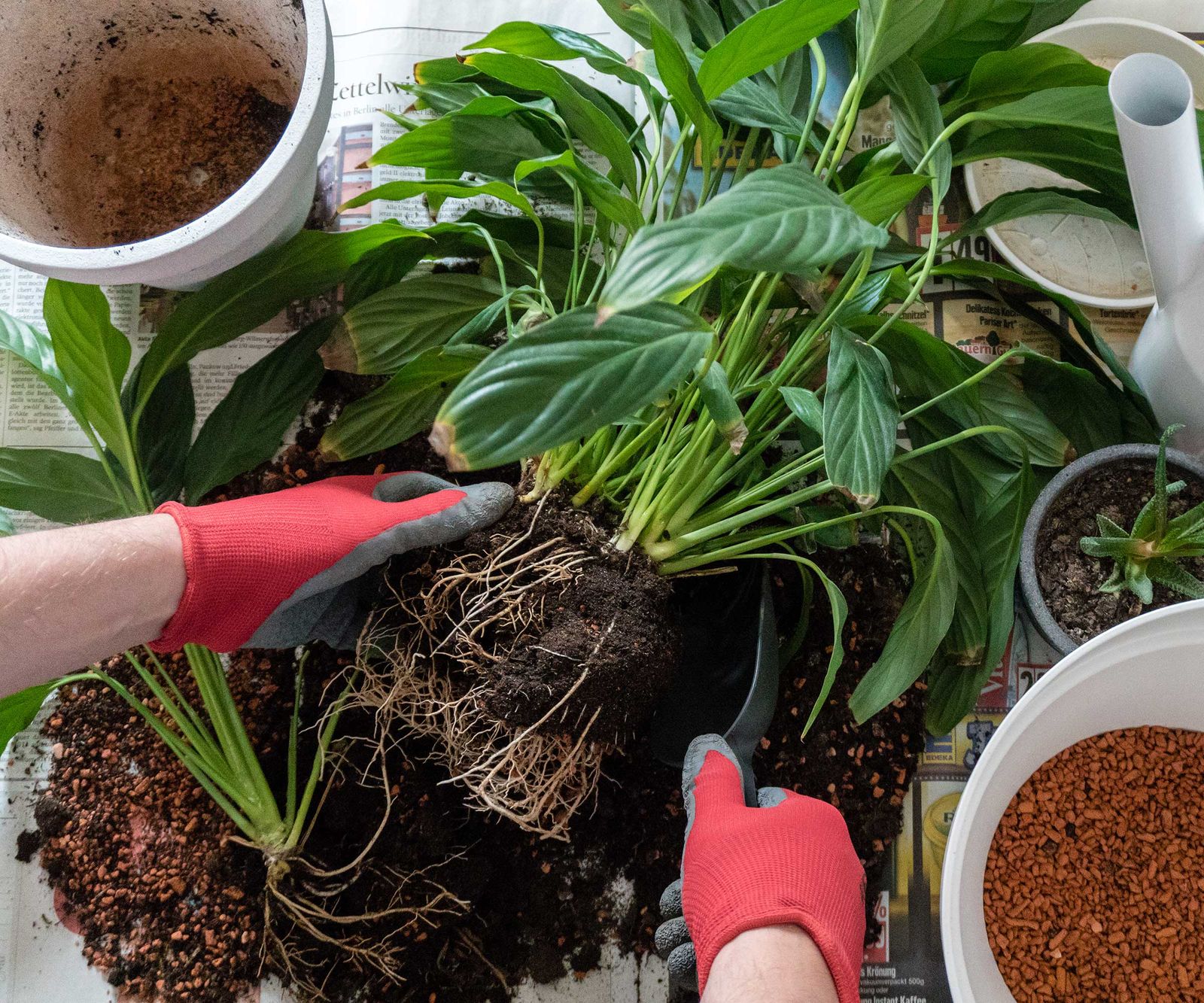
If your plant is growing well, the container drains properly, and the roots have enough room, there is usually no need to disturb it simply because the season has changed.
However, serious problems should not be ignored. A pot that stays waterlogged for unusually long periods, severely damaged roots, badly deteriorated potting mix, or a container without proper drainage may justify repotting even outside the ideal growing season.
If you do repot, don’t automatically choose a dramatically larger container. Excess potting mix can retain moisture around a relatively small root system for too long.
A modest increase in pot size is usually more sensible than placing a small plant into a huge container.
What to Do About Yellow Peace Lily Leaves
One yellowing lower leaf isn’t necessarily a reason to panic. Older leaves naturally age and eventually die.
However, if several leaves begin turning yellow at once, investigate the growing conditions.
During autumn, excessive moisture is one possibility because the potting mix can dry more slowly than it did during summer. Poor drainage, insufficient light, temperature stress, and root problems can also cause foliage changes.
Once a leaf is completely yellow or brown, you can remove it using clean scissors. Cut the leaf stalk close to its base rather than leaving a long dead stem behind.

Remember: Leaf color alone doesn’t tell you exactly what is wrong. Check the soil, light, roots, temperature, and overall environment before changing several things at once.
How to Handle Brown Leaf Tips
Brown tips are one of the most common complaints among peace lily owners.
Dry indoor air can contribute, especially after heating systems begin running, but it isn’t the only possible cause. Inconsistent watering, fertilizer salt buildup, water quality, and previous stress can also play a role.
If the brown section is only cosmetic, you can trim it carefully with clean scissors. Follow the natural shape of the leaf rather than cutting deeply into healthy green tissue.
Trimming improves the appearance of the plant, but it won’t solve the cause of the browning. If new leaves repeatedly develop brown edges, look at humidity, watering, fertilizer use, and the plant’s location.
Don’t Worry If Flowering Slows Down
Peace lilies may flower less frequently as autumn and winter light levels decrease.
Rather than trying to force flowers with extra fertilizer, concentrate on maintaining healthy foliage and roots. Bright indirect light, appropriate watering, stable temperatures, and reasonable humidity create a much better foundation for future flowering.
If an old flower has clearly finished, remove the spent flower stalk with clean scissors. Cutting the entire stalk close to the base keeps the plant looking tidy.

Simple October Peace Lily Checklist
| October task | What to check |
|---|---|
| Adjust watering | Check the soil before watering and allow excess water to drain. |
| Improve light | Move the plant toward bright, indirect light if its current spot has become too dim. |
| Reduce feeding | Don’t push slow autumn growth with unnecessary fertilizer. |
| Watch humidity | Keep the plant away from dry heating vents and radiators. |
| Clean foliage | Wipe dust gently from the large leaves with a soft damp cloth. |
| Inspect for pests | Check leaf undersides, stems, and leaf joints. |
| Avoid drafts | Protect the plant from cold windows, exterior doors, and strong heating airflow. |
Final Thoughts
October care for a peace lily is mostly about responding to the changes around the plant.
Shorter days can reduce its water use and light exposure, while indoor heating can make the air considerably drier. Instead of continuing your summer routine automatically, take a few minutes to reassess the plant.
Check the soil before watering, give it enough bright indirect light, ease back on unnecessary fertilizer, monitor humidity, clean the leaves, inspect carefully for pests, and keep the plant away from harsh drafts.
These small adjustments can help your peace lily enter winter with healthy foliage and a strong root system, giving it a much better foundation for fresh growth and flowering when conditions improve again.