
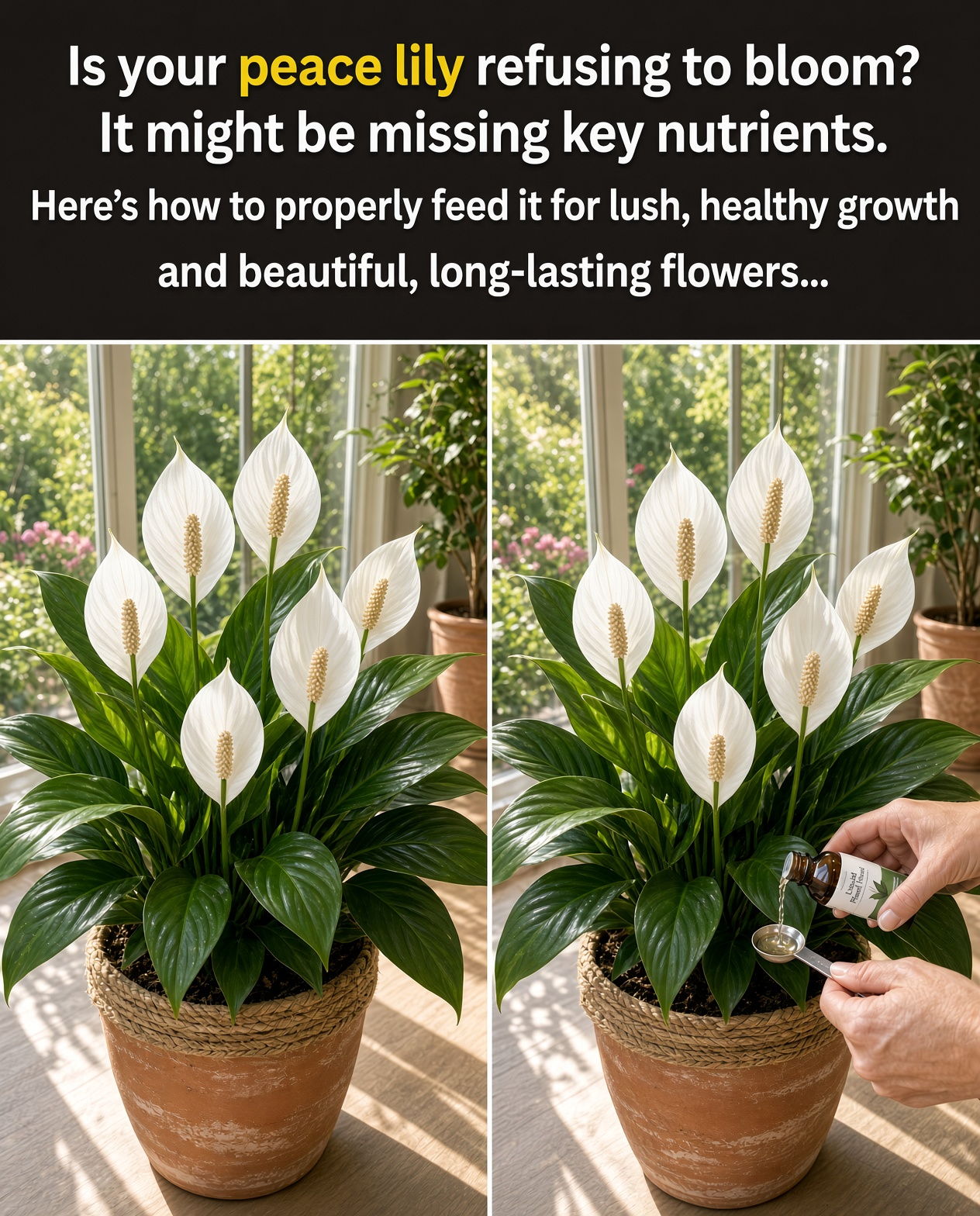
A healthy peace lily is known for its glossy green foliage and elegant white spathes. But when a plant produces plenty of leaves without flowering, or its foliage begins looking pale and tired, fertilizer may seem like the obvious solution.
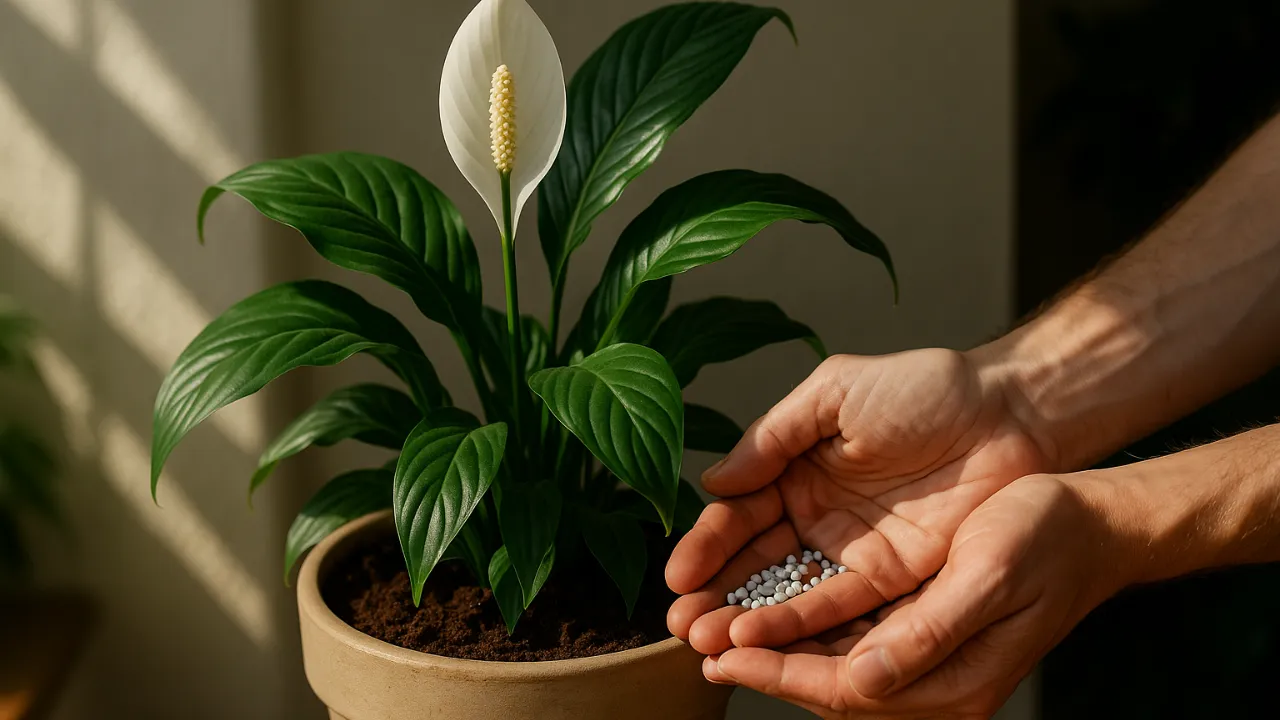
The key is to give your Spathiphyllum enough nutrients to support active growth without overwhelming its roots. With the right fertilizer, correct dilution, good light, and sensible watering, you can encourage a fuller and healthier plant.
Why Fertilizing a Peace Lily Matters
Peace lilies use nutrients to produce new leaves, maintain healthy roots, and support flowering. Plants growing in containers eventually use up some of the nutrients available in their potting mix, particularly when they have been in the same container for a long time.
Fertilizer can replenish those nutrients, but it should complement—not replace—the fundamentals of peace lily care.
Light, water, drainage, temperature, and root health all influence flowering. A fertilizer cannot compensate for a plant sitting in deep darkness or constantly waterlogged soil.
Understanding N-P-K Fertilizer Numbers
Most commercial fertilizers display three numbers on their packaging. These numbers represent the fertilizer’s N-P-K ratio:
- N — Nitrogen: Supports leafy and vegetative growth.
- P — Phosphorus: Plays an important role in root development and plant reproductive processes.
- K — Potassium: Supports overall plant function and helps regulate water and nutrient movement.
For a peace lily, there is no need to chase an extremely high-phosphorus “bloom booster.” A balanced fertilizer used at a diluted rate is generally a safer approach for an indoor plant.
Extension guidance specifically recommends low-dose feeding because peace lilies are sensitive to excess fertilizer salts.
What Is the Best Fertilizer for a Peace Lily?
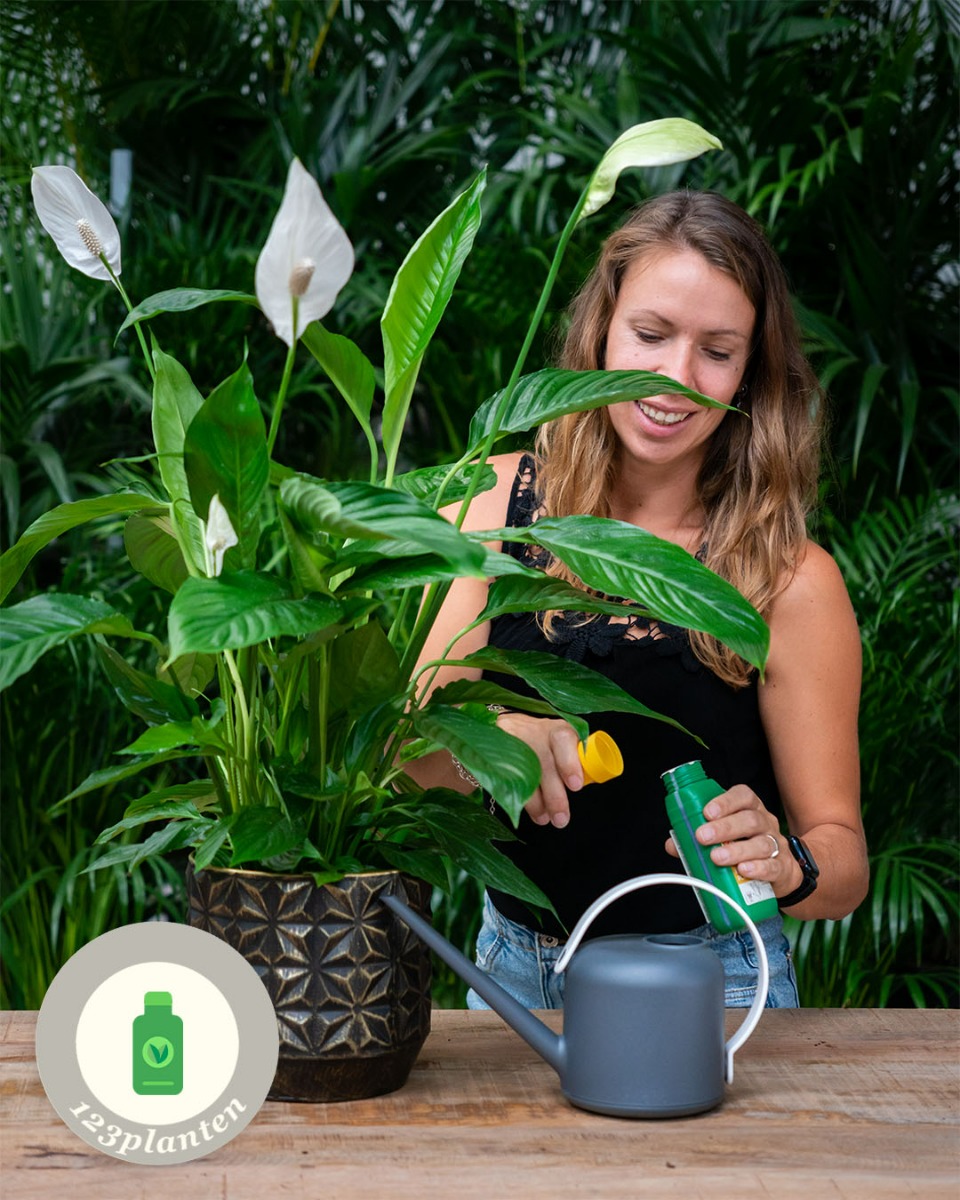
A balanced liquid houseplant fertilizer is one of the easiest options because it can be diluted and applied evenly with your normal watering routine.
Formulas such as 10-10-10 or 20-20-20 can work when used at a reduced concentration. North Carolina State University recommends using fertilizer at approximately one-quarter of the labeled strength for peace lilies, while Clemson Extension similarly recommends a quarter-strength balanced liquid fertilizer.
This is especially important indoors because nutrients that are not absorbed by the plant can accumulate in the potting mix.
Liquid Fertilizer
Liquid fertilizer gives you excellent control over the amount of nutrients you apply. You simply dilute the product according to the appropriate reduced strength and incorporate it into your watering routine.
For a sensitive plant such as a peace lily, that control is a major advantage.
Slow-Release Fertilizer
Slow-release granules are convenient because they release nutrients gradually. However, they offer less control once they have been incorporated into the soil.
If the plant suddenly becomes stressed or enters a period of slower growth, you cannot immediately stop the nutrients already present in the potting mix.
Organic Fertilizers
Organic products can also be used for houseplants. Options may include products based on fish, seaweed, or other organic materials.
Whatever type you choose, the same principle applies: follow the label and avoid excessive application.
How Often Should You Fertilize a Peace Lily?
Peace lilies generally need more nutrients during periods of active growth and much less during darker, cooler periods.
The exact schedule depends on the plant’s light, temperature, growth rate, potting mix, and fertilizer concentration. Clemson Extension recommends a balanced liquid fertilizer approximately every six to eight weeks during spring and summer when used at quarter strength.
Other horticultural guidance uses somewhat more frequent low-dose applications. The safest approach is therefore to use a weak fertilizer solution and observe how your plant responds.
Spring and Summer
When your peace lily is actively producing new leaves or flowers, this is the main feeding period. A diluted balanced fertilizer can be used periodically during active growth.
Autumn and Winter
As natural light decreases and growth slows, reduce or pause fertilizing. There is little benefit in continuously adding nutrients when the plant is not actively using them.
Continuing heavy feeding during slow growth can increase the risk of mineral buildup in the potting mix.
Step-by-Step: How to Fertilize a Peace Lily
Step 1: Check the Plant First
Before reaching for fertilizer, inspect the peace lily.
Look at the leaves, check the soil moisture, and consider how much light the plant receives. If the plant is severely wilted, sitting in soggy soil, or suffering from root problems, fertilizer is not the first thing it needs.
Step 2: Water if the Soil Is Very Dry
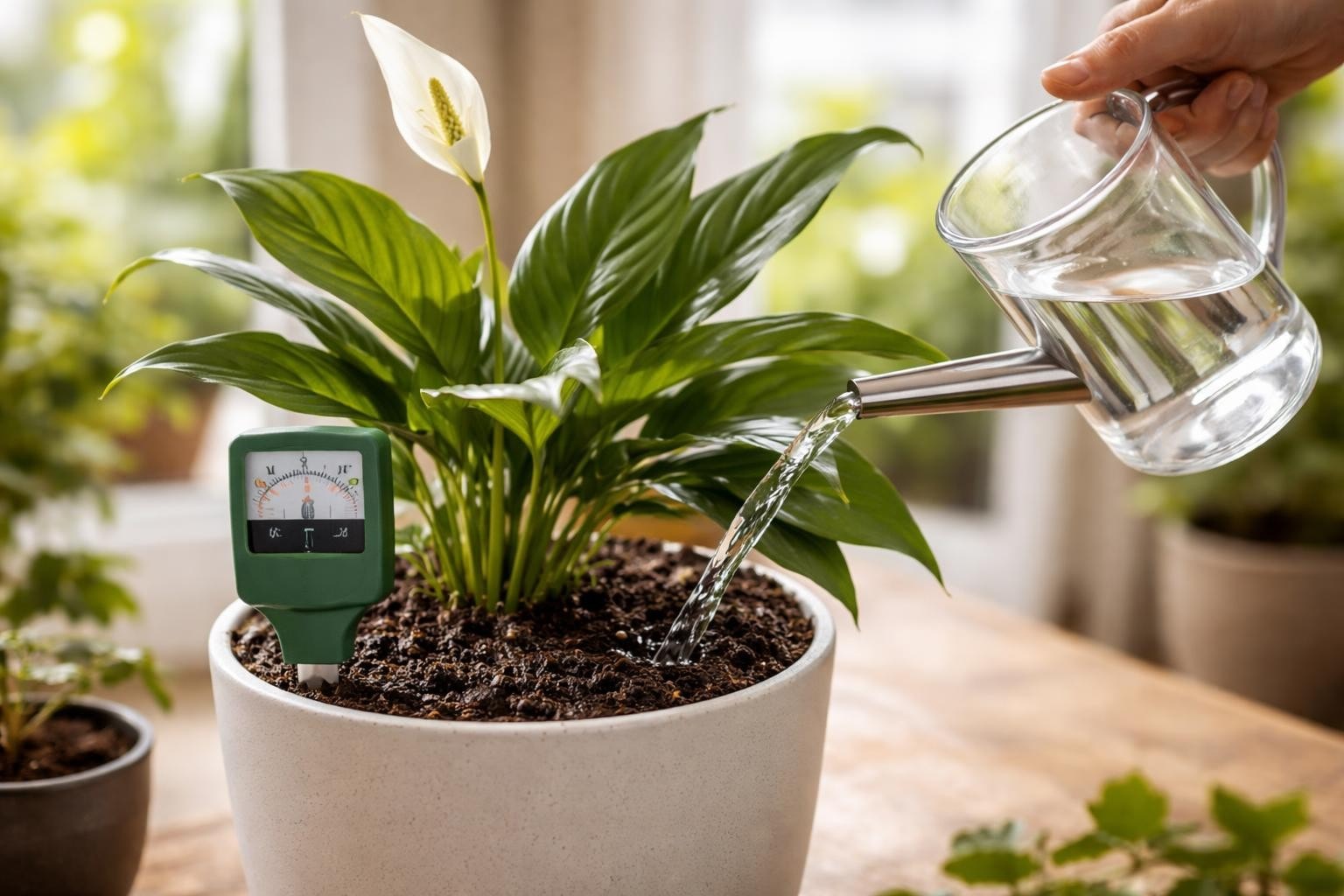
Avoid applying concentrated fertilizer to extremely dry potting soil. If the plant needs watering, hydrate it appropriately first rather than combining severe dryness with a strong fertilizer solution.
Peace lilies prefer evenly moist soil but should not sit in standing water.
Step 3: Dilute the Fertilizer
Prepare the fertilizer at a reduced concentration. For a balanced liquid fertilizer, quarter-strength is a useful conservative starting point for peace lilies.
For example, if the label specifies a particular amount for full-strength feeding, use approximately one-quarter of that amount rather than applying the full dose.
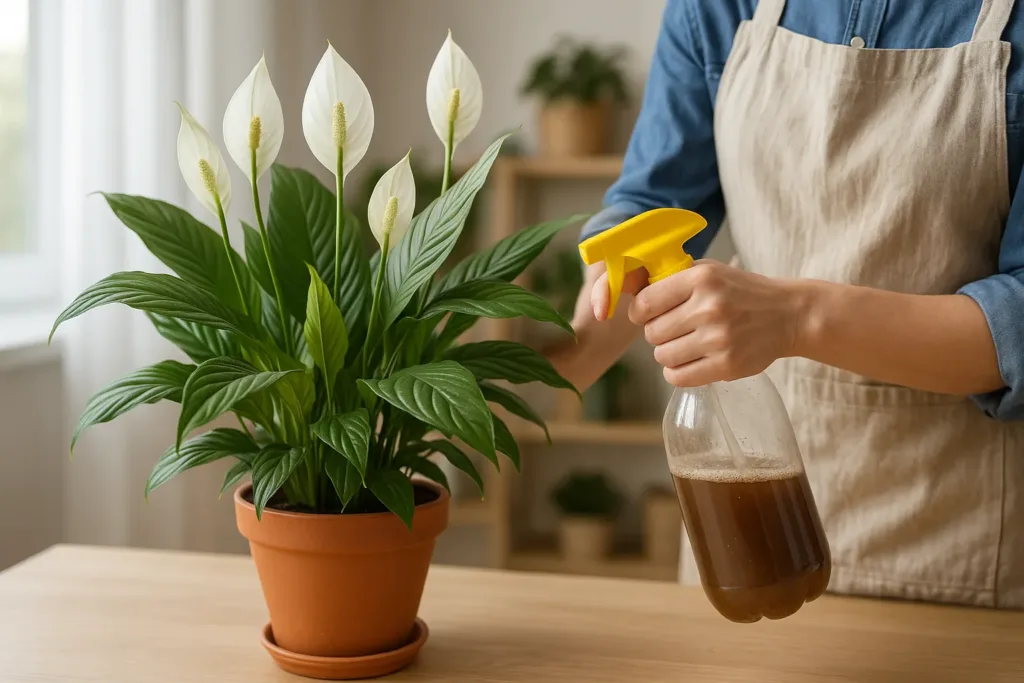
Step 4: Apply It to the Soil
Pour the diluted solution evenly over the potting mix. Try to distribute it around the container rather than concentrating everything in one small spot.
Avoid deliberately soaking the foliage with fertilizer solution. Applying nutrients to the root zone gives you much better control.
Step 5: Let Excess Water Drain
Make sure the container has drainage holes and allow excess water to escape freely after watering.
Do not leave the pot sitting in a saucer full of fertilizer solution. Standing water can deprive roots of oxygen and contribute to root problems.
North Carolina State University specifically recommends flushing the soil between fertilizer applications to reduce the risk of salt accumulation.
How to Tell If Your Peace Lily Is Over-Fertilized
One of the biggest mistakes with peace lilies is assuming that more fertilizer automatically means more flowers.
Excess fertilizer can cause soluble salts to build up in the potting mix. Those salts can damage roots and eventually show up as problems on the foliage.
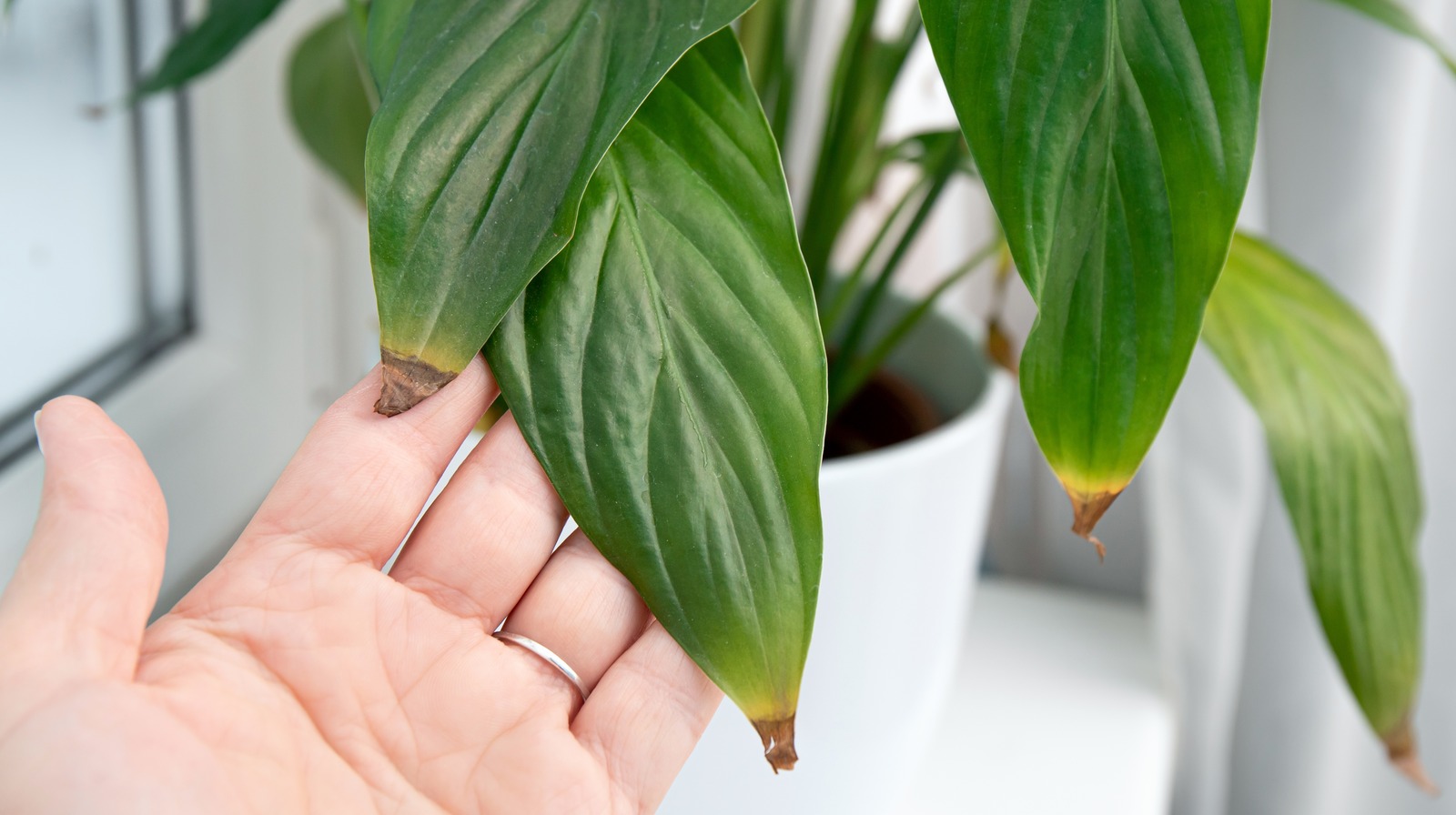
Brown Leaf Tips
Brown or crispy leaf tips can occur for several reasons, including fertilizer buildup, dry air, watering problems, or other environmental stress.
If brown tips appear after a period of heavy fertilizing, salt accumulation should be considered.
White Crust on the Soil
A pale or whitish crust around the soil surface or container rim can indicate mineral or fertilizer salt accumulation.
Wilting Despite Moist Soil
If the plant is dramatically wilting while the potting mix remains wet, do not automatically add more water or fertilizer. Root damage, poor drainage, or other problems may be preventing normal water uptake.
What to Do If You Used Too Much Fertilizer
If you suspect excessive fertilizer has accumulated in the potting mix, the solution is generally to stop feeding and flush the soil thoroughly with clean water.
Place the pot somewhere that allows water to drain freely. Slowly run plenty of clean water through the potting mix and allow it to drain completely.
NC State Extension recommends flushing the soil between fertilizer applications to help manage fertilizer salts.
Afterward, empty the saucer and allow the plant to recover. Do not immediately add another dose of fertilizer.
Signs Your Peace Lily May Need Nutrients
Not every yellow leaf means the plant needs fertilizer. Older leaves naturally age, while yellowing can also result from watering problems, insufficient light, root stress, or other environmental issues.
However, if a plant has been growing in the same potting mix for a long time and produces consistently weak new growth, depleted nutrients may be part of the problem.
Pale New Growth
New leaves that consistently emerge unusually pale may indicate a nutritional issue, although light exposure and root health should also be checked.
Slow New Growth
If the plant is receiving suitable light and water but produces very little new foliage during its normal growing period, it may benefit from a gentle feeding routine.
Few or No Blooms
A lack of flowers does not automatically mean the plant needs more fertilizer. Light is especially important. Peace lilies can survive in low light, but brighter indirect light generally provides better conditions for flowering.
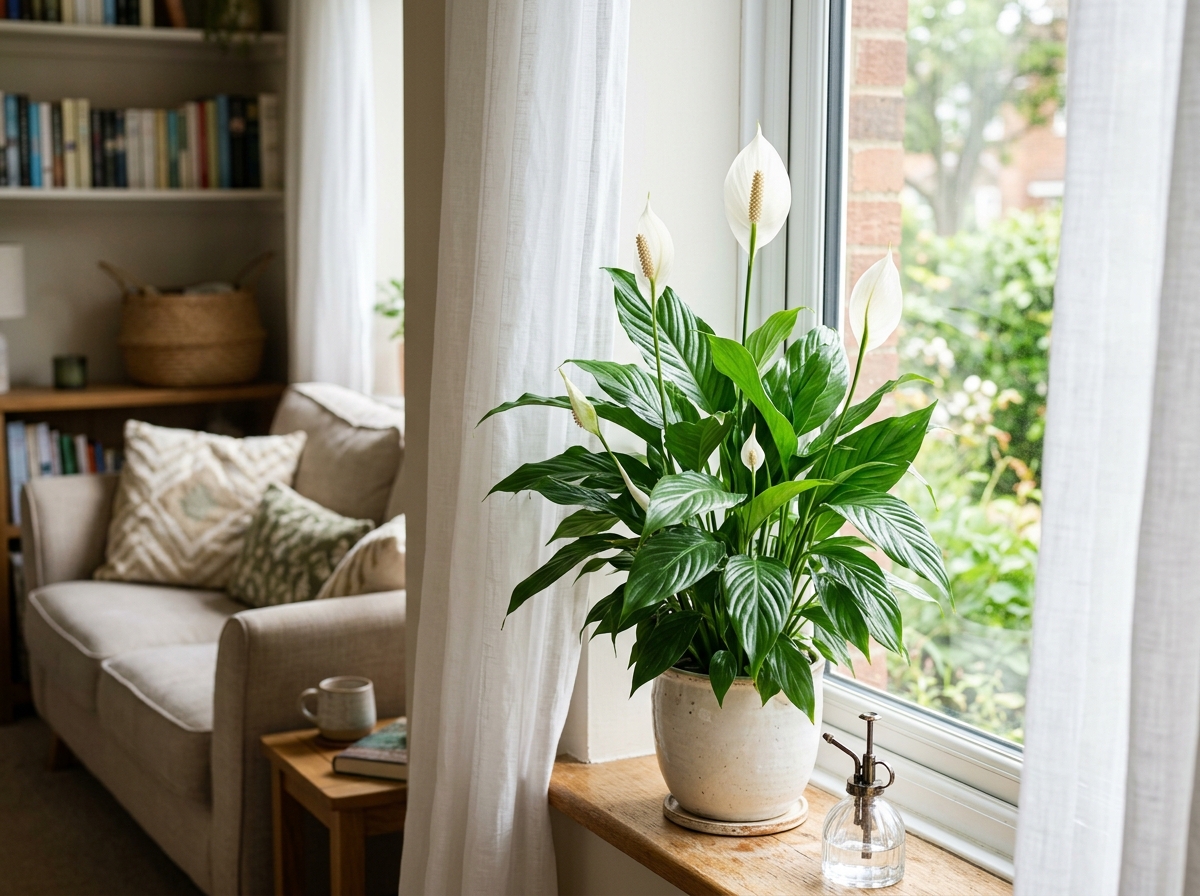
Light Matters More Than Extra Fertilizer for Blooms
If your peace lily has beautiful green foliage but refuses to flower, first examine its lighting conditions.
Peace lilies tolerate lower light, but very dark locations can limit flowering. A position near a bright window with filtered or indirect light is generally more suitable.
Do not place the plant in harsh direct sunlight for long periods, as strong direct rays can scorch the foliage.
Think of fertilizer as support for a healthy plant—not as a substitute for sufficient light.
Water Quality Can Also Affect the Leaves
Peace lilies can sometimes develop brown tips when exposed repeatedly to certain minerals in water. Fluoride sensitivity is one issue noted in horticultural guidance, particularly when brown tips persist despite otherwise good care.
If your plant repeatedly develops brown tips, consider trying filtered, rain, or distilled water for a period and observe the new growth. There is no need to assume that bottled or distilled water is mandatory for every peace lily.
The more important priorities are proper drainage, appropriate watering, and avoiding excessive fertilizer.
Keep the Leaves Clean
Peace lily leaves are broad and naturally collect dust indoors. A layer of dust can make the foliage look dull and interfere with the plant’s ability to use available light efficiently.
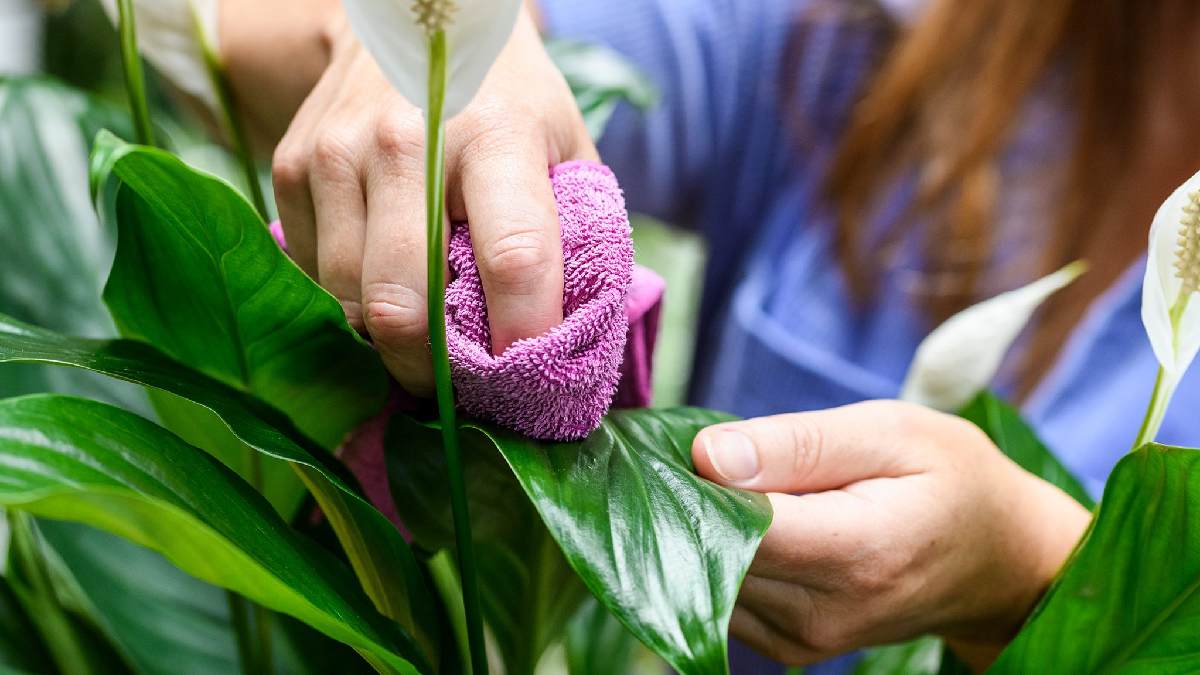
Once in a while, gently wipe the leaves with a clean, damp cloth. Support the leaf underneath while cleaning so you do not bend or tear the blade.
Regular cleaning can also make it easier to notice pests, discoloration, or other problems at an early stage.
Peace Lily Fertilizing Mistakes to Avoid
1. Using Full-Strength Fertilizer
Peace lilies are not heavy feeders. Full-strength fertilizer can be unnecessarily harsh and may cause salt buildup.
2. Fertilizing Every Time You Water
Adding fertilizer to every watering can provide much more nutrition than the plant needs. Use a sensible feeding interval instead.
3. Fertilizing a Severely Stressed Plant
If the plant is suffering from root rot, severe drought, temperature stress, or another major problem, fertilizer is unlikely to solve the underlying issue.
4. Assuming More Phosphorus Means More Flowers
Flowering depends on multiple factors. Increasing phosphorus dramatically is not a guaranteed way to force a peace lily into bloom.
5. Ignoring Salt Buildup
Repeated fertilizer applications without occasional thorough watering can allow minerals to accumulate in the potting mix. Flushing the soil periodically helps reduce that risk.
A Simple Peace Lily Feeding Schedule
| Season | What to Do |
|---|---|
| Spring | Begin gentle feeding as active growth resumes. |
| Summer | Continue diluted fertilizer periodically while the plant is actively growing. |
| Autumn | Reduce or stop feeding as growth and available light decline. |
| Winter | Usually pause regular fertilizing while the plant is resting in lower light. |
How to Get More Blooms Without Over-Fertilizing
If your goal is a peace lily covered in white spathes, focus on the complete growing environment rather than fertilizer alone.
- Give it bright, indirect light.
- Keep the potting mix evenly moist but not soggy.
- Use a container with good drainage.
- Feed lightly during active growth.
- Avoid excessive fertilizer.
- Protect it from cold drafts and hot air vents.
- Clean dusty leaves occasionally.
- Check the roots and pot if growth suddenly slows.
Peace lilies are tropical plants that prefer warm conditions, indirect light, and consistently appropriate moisture.
Final Thoughts
Fertilizing a peace lily is less about giving it as much food as possible and more about giving it the right amount at the right time.
A balanced liquid houseplant fertilizer, diluted to a gentle strength and used during active growth, is a practical choice. Avoid heavy applications, watch for signs of salt buildup, and flush the potting mix when necessary.
And remember: if your peace lily has lots of healthy leaves but no flowers, don’t immediately reach for stronger fertilizer. Check the light first. A bright, indirect location, proper watering, healthy roots, and sensible nutrition work together to create the lush foliage and beautiful blooms you want.