
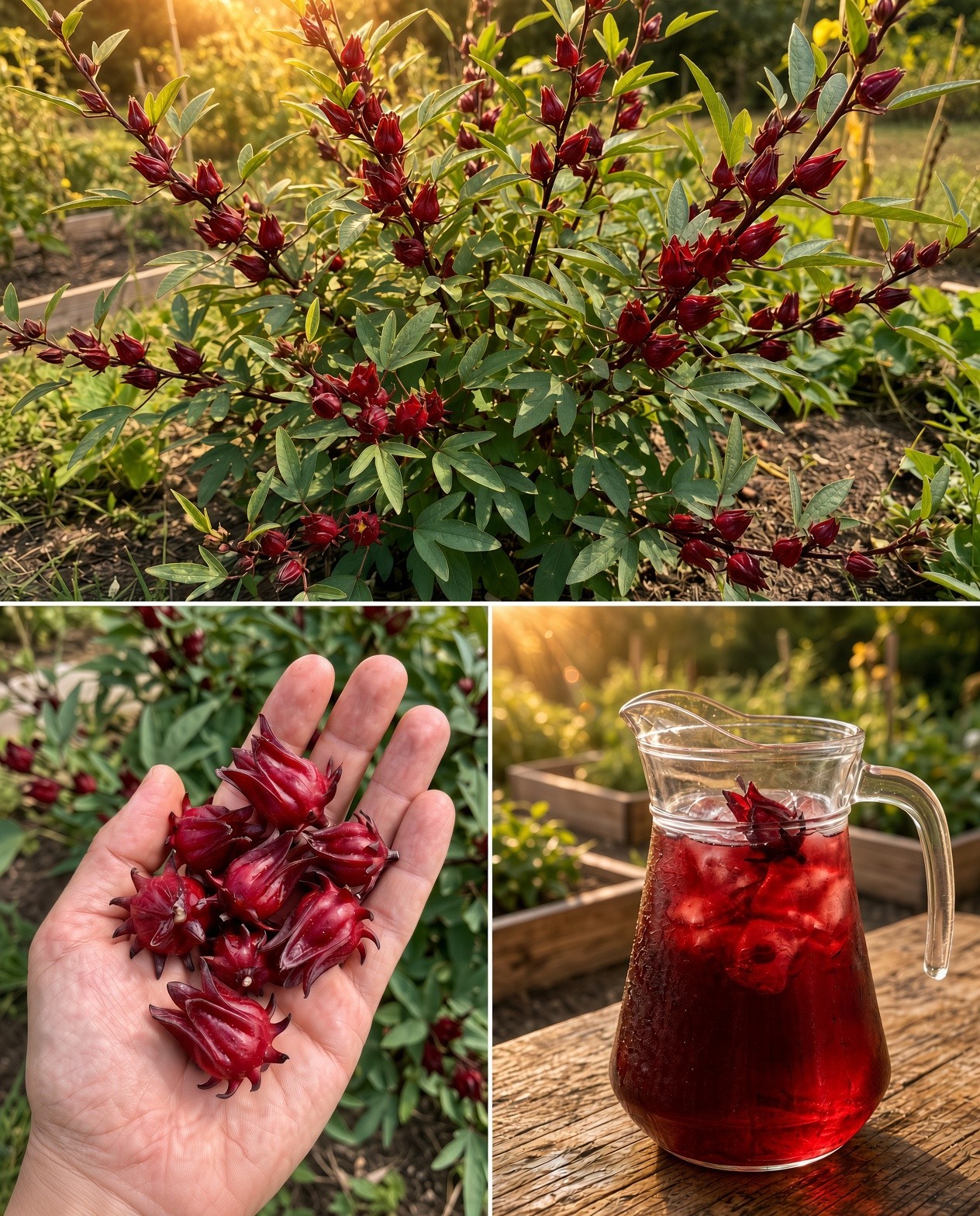
Roselle (Hibiscus sabdariffa) is a warm-climate plant famous for its deep red calyces and pleasantly tart flavor. It is used around the world in teas, chilled drinks, syrups, preserves and savory dishes. Beyond its culinary value, roselle has attracted scientific interest because its calyces contain anthocyanins and other plant compounds. Here is a practical, evidence-conscious guide to growing, harvesting and using roselle without overstating what the research can prove.
What Is Roselle?
Roselle, or Hibiscus sabdariffa, is a warm-climate plant best known for its deep red, fleshy calyces. Those calyces are the part most often dried for tart herbal drinks, while the leaves can also be used in some traditional cuisines. The plant is valued as both a food crop and an ornamental addition to a sunny garden. Its naturally vivid color comes from anthocyanin pigments and other plant compounds, which have made roselle popular in beverages and preserves.

1. Make a Tart Roselle Tea
One of the simplest ways to use roselle is as an infusion. Dried calyces can be steeped in hot water to produce a deep ruby-red drink with a naturally sour, fruity flavor. It can be served warm or chilled, and lemon, mint, ginger or a little sweetener can be added according to taste. Roselle tea is a food and beverage first; claims that it treats a disease should not be substituted for medical care.

2. Turn the Tea Into a Chilled Summer Drink
Because roselle has a naturally bright acidity, it works especially well as a cold drink. Prepare a concentrated infusion, let it cool, then dilute it with cold water and serve over ice. Fresh citrus, berries or mint can add another layer of flavor without masking the characteristic tang of the calyces.

3. Make a Simple Roselle Syrup
Roselle can also be turned into a vivid syrup for homemade drinks and desserts. Simmer the calyces in water, strain out the plant material and combine the flavored liquid with sugar. Reduce it gently until it reaches the desired consistency, then cool and refrigerate. Use the syrup in sparkling water, fruit desserts or yogurt rather than treating it as a medicinal tonic.

4. Prepare Roselle Jam or Jelly
The tart flavor of roselle makes it useful in preserves. The calyces can be cooked with fruit, sugar and an appropriate setting agent to create a bright jam or jelly. Follow a tested food-preservation recipe when canning rather than relying on an improvised formula, because acidity, sugar concentration and processing time all affect food safety.

5. Use Dried Calyces as a Natural Food Color
Dried roselle has a striking red-purple color that can brighten culinary preparations. Finely ground calyces or a concentrated infusion can contribute color and acidity to drinks, syrups, desserts and sauces. The result is especially attractive when paired with foods that benefit from a tart note.

6. Add Young Leaves to Savory Dishes
Roselle is not limited to its calyces. In some cuisines, young leaves are cooked as a tangy green and added to soups, stews and sauces. If you grow roselle for food, identify the plant correctly and use only clean, appropriately grown leaves. Their flavor is noticeably more acidic than many common leafy greens.

7. Grow Roselle for Its Ornamental Value
Roselle earns a place in the garden even before harvest. It develops attractive foliage and distinctive red calyces, creating a bold late-season display in warm climates. Give it a sunny location, fertile soil and consistent moisture while it is actively growing. In cooler climates it is often grown as a warm-season annual.

8. Harvest the Calyces at the Right Stage
For culinary use, harvest the fleshy calyces after the flowers have faded and the calyces have developed their characteristic red color. Handle them carefully and remove damaged material. Fresh calyces can be used promptly, while clean, fully dried material can be stored for later infusions.

9. Dry Roselle for the Pantry
Drying is a practical way to preserve a harvest. Spread cleaned calyces in a single layer in a clean, well-ventilated drying environment and make sure they are completely dry before storage. Keep dried roselle in an airtight container away from heat, moisture and strong light. Any sign of mold or persistent dampness means the material should be discarded.

10. What the Research Says About Blood Pressure
Roselle has been studied for possible effects on blood pressure, and some human studies and reviews have reported modest reductions. However, the evidence is not strong enough to treat roselle as a replacement for prescribed hypertension medication. NCCIH describes the evidence as limited and the effects as small, while a recent safety review also highlights possible herb-drug interactions. Anyone taking blood-pressure medicine should discuss regular medicinal use with a healthcare professional.

11. Roselle Contains Plant Antioxidants
Roselle calyces contain anthocyanins, organic acids and other phytochemicals that contribute to their color and flavor. Laboratory and clinical research has investigated these compounds for antioxidant and cardiometabolic effects. That research is interesting, but antioxidant activity in a laboratory is not the same thing as proving that a food or tea prevents or treats a disease in people.

12. Be Careful With Concentrated Preparations
A cup of roselle tea used as a food or beverage is different from a concentrated extract, capsule or large medicinal dose. The strength and composition can vary substantially between products. A 2026 systematic scoping review found that the safety evidence is still incomplete and identified potential interactions with some medicines. Extra caution is appropriate during pregnancy or breastfeeding and when taking medicines for blood pressure, blood sugar or other chronic conditions.

13. Enjoy Roselle as a Food, Not a Miracle Cure
The most straightforward way to appreciate roselle is as a flavorful plant with a long culinary history. Its calyces make colorful drinks and preserves, its young leaves can be used in appropriate dishes, and the plant itself can add interest to a warm-season garden. Keeping those practical uses separate from unproven medical promises makes roselle easier to enjoy responsibly.

Final Thoughts
Roselle is a versatile crop with striking red calyces, a naturally tart flavor and a long history of use in foods and beverages. Modern research has explored possible blood-pressure and metabolic effects, but the evidence remains mixed and does not justify presenting roselle as a cure. Grow it in suitable warm conditions, harvest the calyces carefully, preserve them properly and enjoy the plant primarily as a food and beverage ingredient.

Image note: Images are sourced from Wikimedia Commons. Individual files have their own licensing terms; check each Commons file page for attribution requirements before commercial publication.