
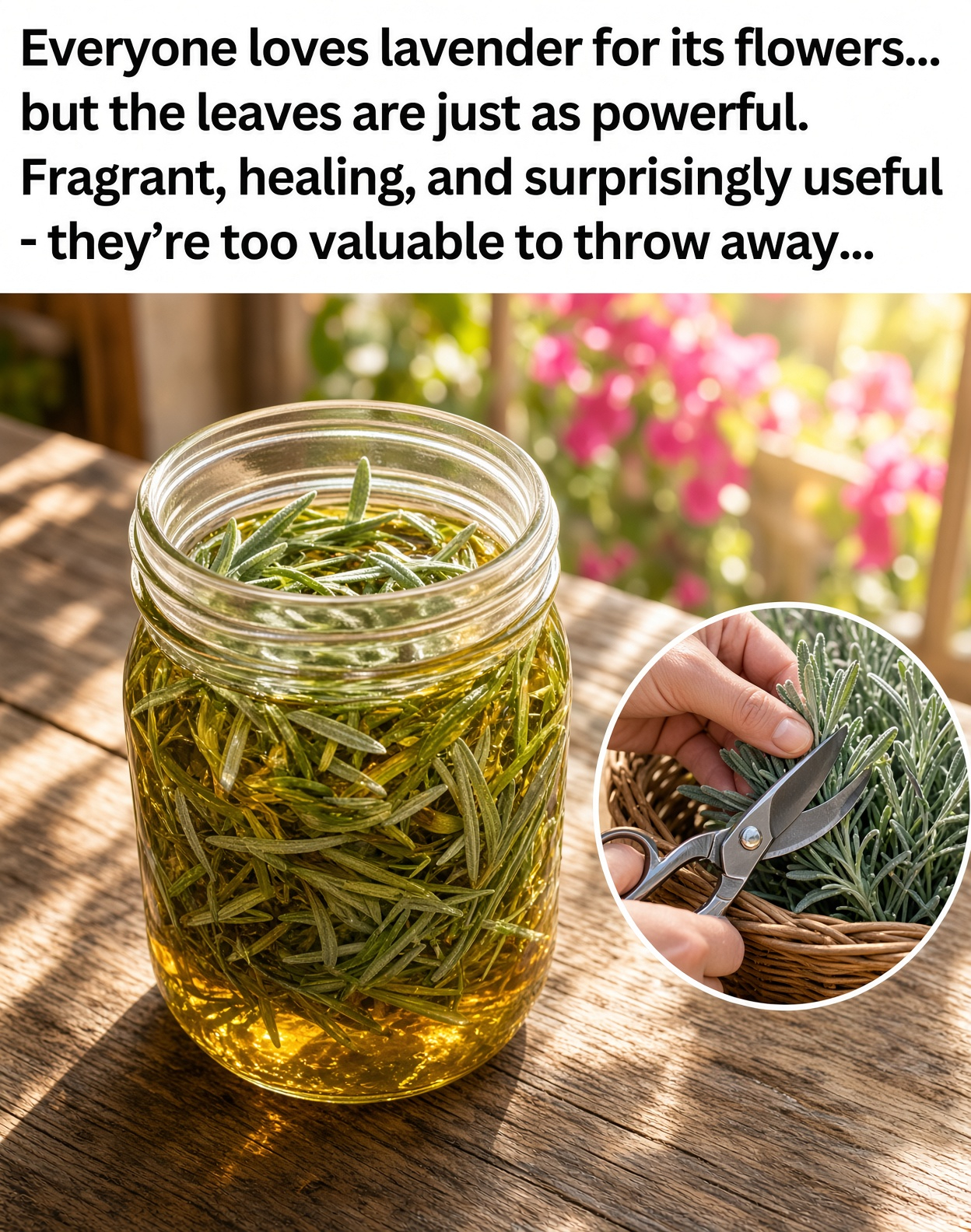
Lavender flowers usually get all the attention, but the narrow, fragrant leaves are worth saving too. If you regularly trim your lavender plants, you may have been throwing away useful foliage without realizing how many ways it can be repurposed.
Lavender leaves have a more herbal, resinous flavor than the flowers, so they aren’t something you’ll want to use by the handful. But when used carefully, they can add fragrance to homemade projects, contribute a subtle herbal note to food, and turn routine garden trimmings into something useful.

Before using lavender leaves, however, there is one important rule: only use plant material that you know is appropriate for the intended purpose. For anything edible, choose culinary lavender that has been grown and handled for food use rather than ornamental plants that may have been treated with pesticides. Purdue Extension specifically recommends culinary lavender for cooking.
1. Add a Small Amount to Homemade Herb Blends
One of the easiest ways to experiment with lavender leaves is to treat them like a strongly flavored herb.
Finely chopped fresh leaves can be combined with familiar Mediterranean herbs such as rosemary, thyme, or oregano. The result is especially interesting when used as a seasoning for roasted vegetables or other savory dishes.
The key is restraint. Lavender has a powerful flavor, and too much can quickly overwhelm a recipe. Culinary sources recommend using lavender sparingly because its concentrated floral and herbal character can become unpleasant when overused.

Simple herb-blend idea
- Finely chop a few young lavender leaves.
- Combine them with rosemary and thyme.
- Add the mixture to roasted vegetables.
- Start with a tiny amount and adjust only if needed.
This is particularly useful when you’ve just finished pruning your lavender and have a handful of fresh, clean leaves left over.
2. Infuse Vinegar for a Fragrant Homemade Cleaner
Lavender leaves can also be used in household projects. One simple idea is to infuse white vinegar with dried lavender foliage to create a pleasantly scented cleaning solution.
Fill a clean glass jar loosely with dried lavender leaves, then cover them completely with white distilled vinegar. Close the jar and leave it in a cool, dark place for a couple of weeks. Strain the plant material afterward and transfer the infused vinegar to a suitable spray bottle.
The lavender doesn’t magically turn vinegar into a disinfectant, so don’t treat a homemade infusion as a replacement for a properly labeled disinfecting product. Instead, think of it as a fragrant household cleaning ingredient for appropriate everyday cleaning jobs.
3. Dry Lavender Leaves for Sachets
If you love the smell of lavender but don’t want to waste the leaves after pruning, drying them is one of the simplest options.
Spread the leaves and small stems in a thin layer somewhere warm, dry, and well ventilated. Alternatively, tie small bundles and hang them upside down. Allow the plant material to dry completely before storing it.
Once dry, place the leaves into small breathable fabric bags to make simple aromatic sachets. Tuck them into a linen cupboard, drawer, or storage box where you want a gentle herbal scent.
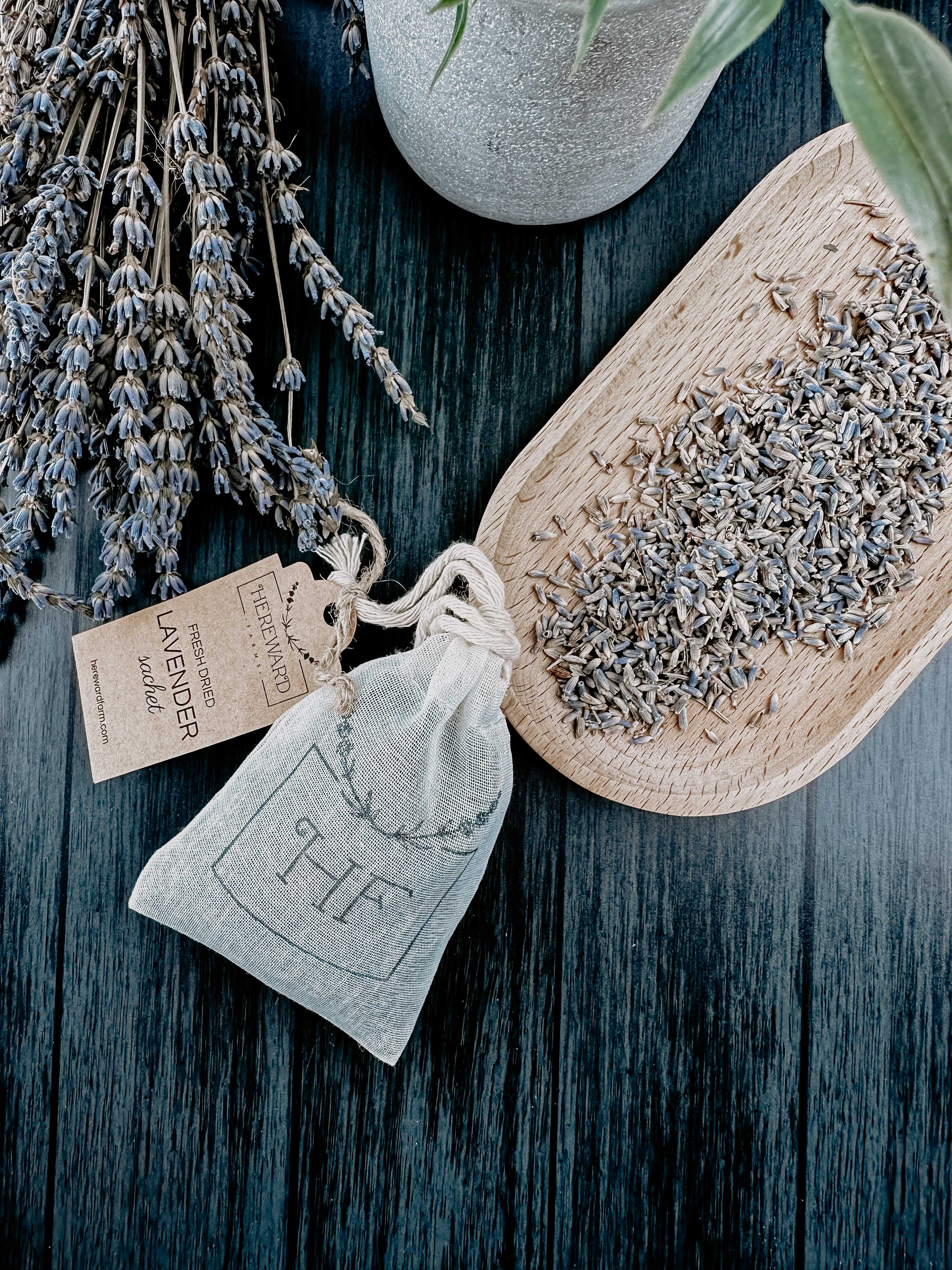
UC Agriculture and Natural Resources notes that lavender leaves are fragrant and can be dried along with sprigs for cooking and crafting.
4. Make a Fragrant Drawer or Closet Sachet
You don’t need a complicated recipe to make a useful lavender sachet.
Place completely dried leaves, small stems, and a few dried lavender flowers into a cotton or muslin pouch. Tie the opening securely and put the sachet inside a drawer, closet, or storage chest.
The leaves can provide an additional herbal scent alongside the stronger fragrance of the flowers. If you have both flowers and foliage available, mixing them together is a practical way to use more of the plant instead of discarding the trimmings.
Refresh the sachet occasionally by gently squeezing or shaking it to release more of the natural aroma.
5. Experiment With Lavender-Infused Sugar or Salt
Lavender is especially interesting in the kitchen when used as an infusion rather than added directly in large quantities.
For a simple lavender sugar, combine a small amount of thoroughly dried culinary lavender with granulated sugar and allow the mixture to sit in a sealed container. The aromatic oils gradually perfume the sugar, which can then be used in baking or drinks.
Lavender salt works on a similar principle. Combine a small amount of finely dried culinary lavender with coarse salt and use the mixture as a finishing seasoning.
For the strongest and most traditional culinary flavor, lavender flowers are generally preferred. Some cooks do experiment with leaves, but their flavor is more resinous and can become bitter more quickly.
6. Add a Little Lavender to Homemade Bath or Craft Projects
Not everything you make with lavender has to be edible.
Dried lavender leaves can be included in homemade aromatic craft projects, especially when combined with dried flowers and other fragrant herbs. You can use the mixture to fill sachets, decorative bowls, or small fabric pouches.
This is a particularly good way to use foliage that isn’t suitable for the kitchen because you aren’t relying on it as a food ingredient.
For skin-contact projects, however, remember that natural does not automatically mean irritation-free. Lavender-containing topical products can cause allergic skin reactions in some people, according to the National Center for Complementary and Integrative Health.
7. Compost the Leaves When They Aren’t Suitable for Reuse
Sometimes the best use for lavender leaves is still the compost pile.
If the foliage has been exposed to garden chemicals, is diseased, badly damaged, or simply isn’t appropriate for culinary or craft use, don’t feel obligated to find another purpose for it.
Healthy untreated lavender trimmings can be added to a balanced compost pile in reasonable amounts. Chop larger stems into smaller pieces so they break down more readily.
Composting also gives you a useful way to recycle larger quantities of lavender after pruning. You don’t need to save every leaf.
Can You Eat Lavender Leaves?
Lavender leaves are edible in some culinary contexts, but that doesn’t mean every lavender plant should go straight into your kitchen.
The safest approach is to use lavender specifically identified as culinary or food-grade and grown without unsuitable pesticide treatments. Purdue Extension recommends culinary lavender for food preparation and notes that lavender has a strong flavor, so only a small amount is needed.
English lavender, Lavandula angustifolia, is widely used as a culinary lavender. Other lavender types and hybrids can have stronger, more resinous flavors, making them less pleasant for cooking.
And never substitute lavender essential oil for culinary lavender. Essential oils are highly concentrated products and aren’t interchangeable with the herb used in recipes.
How to Harvest Lavender Leaves for These Uses
If you want to save lavender leaves, harvest clean, healthy growth rather than collecting random fallen material from around the plant.
- Choose healthy, untreated lavender plants.
- Cut clean stems with sharp pruning shears.
- Remove damaged or discolored foliage.
- Wash fresh leaves if they are intended for food use.
- Use fresh leaves immediately or dry them thoroughly for later projects.
- Store dried material in a clean, airtight container away from moisture.
Purdue Extension recommends gently washing fresh lavender leaves and flowers before use and gives drying and storage guidance for lavender.
Fresh vs. Dried Lavender Leaves
| Use | Fresh Leaves | Dried Leaves |
|---|---|---|
| Herb blends | Good for small amounts | More concentrated |
| Sachets | Not ideal | Excellent choice |
| Craft projects | Limited | Very practical |
| Infused sugar or salt | Less convenient | Better suited |
| Compost | Yes | Yes |
Final Thoughts
Lavender leaves may not be as famous as the flowers, but they don’t have to end up in the trash after pruning. From aromatic sachets and craft projects to carefully measured culinary experiments, there are several practical ways to make use of the foliage.
The most important thing is to match the plant material to the job. Use only known culinary lavender for food, avoid essential oils as cooking ingredients, and choose untreated, healthy foliage whenever possible.
So the next time you trim your lavender, don’t automatically throw every leafy stem onto the compost pile. Save a small handful, dry it properly, and you may find that those overlooked leaves have more uses than you expected.