
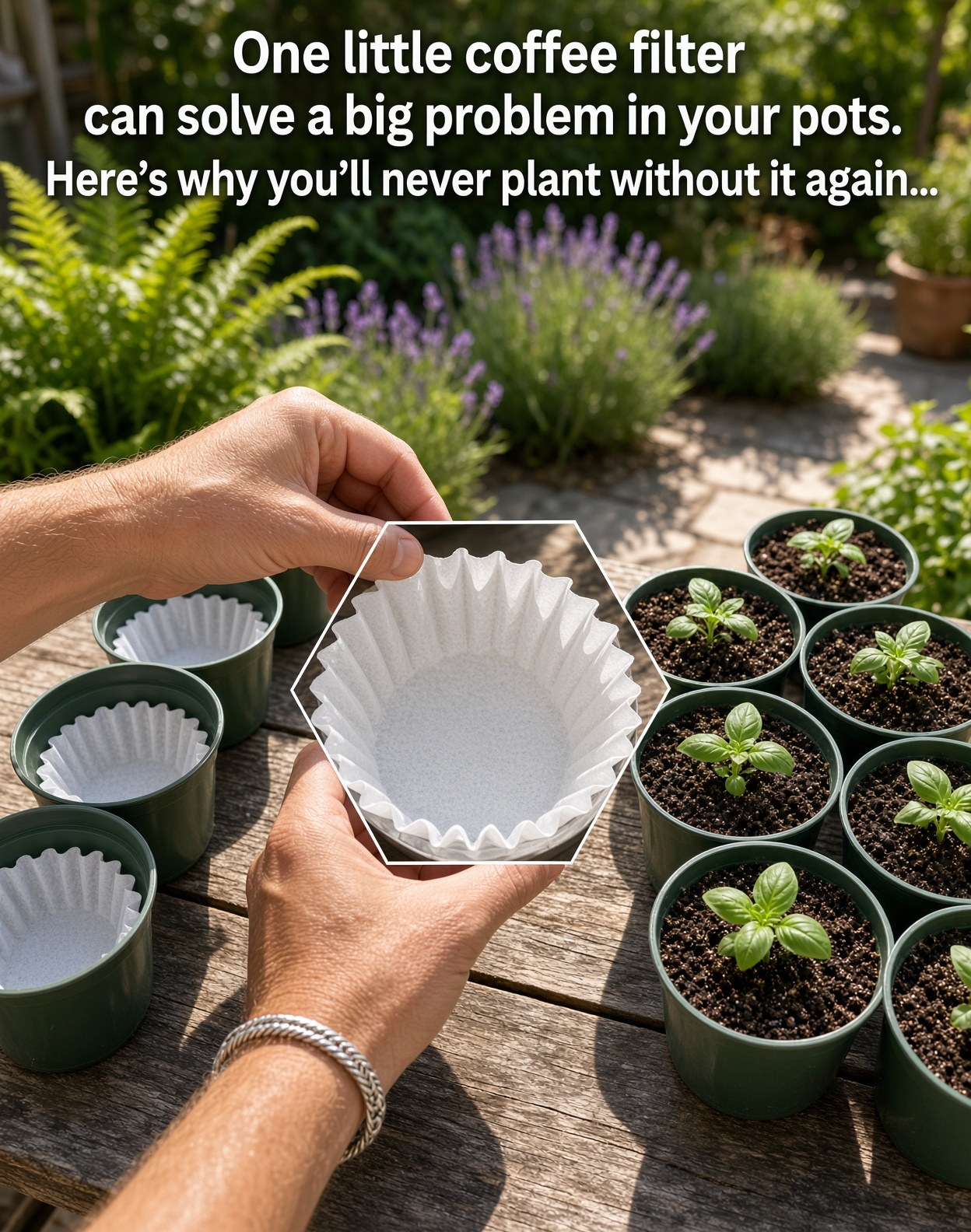
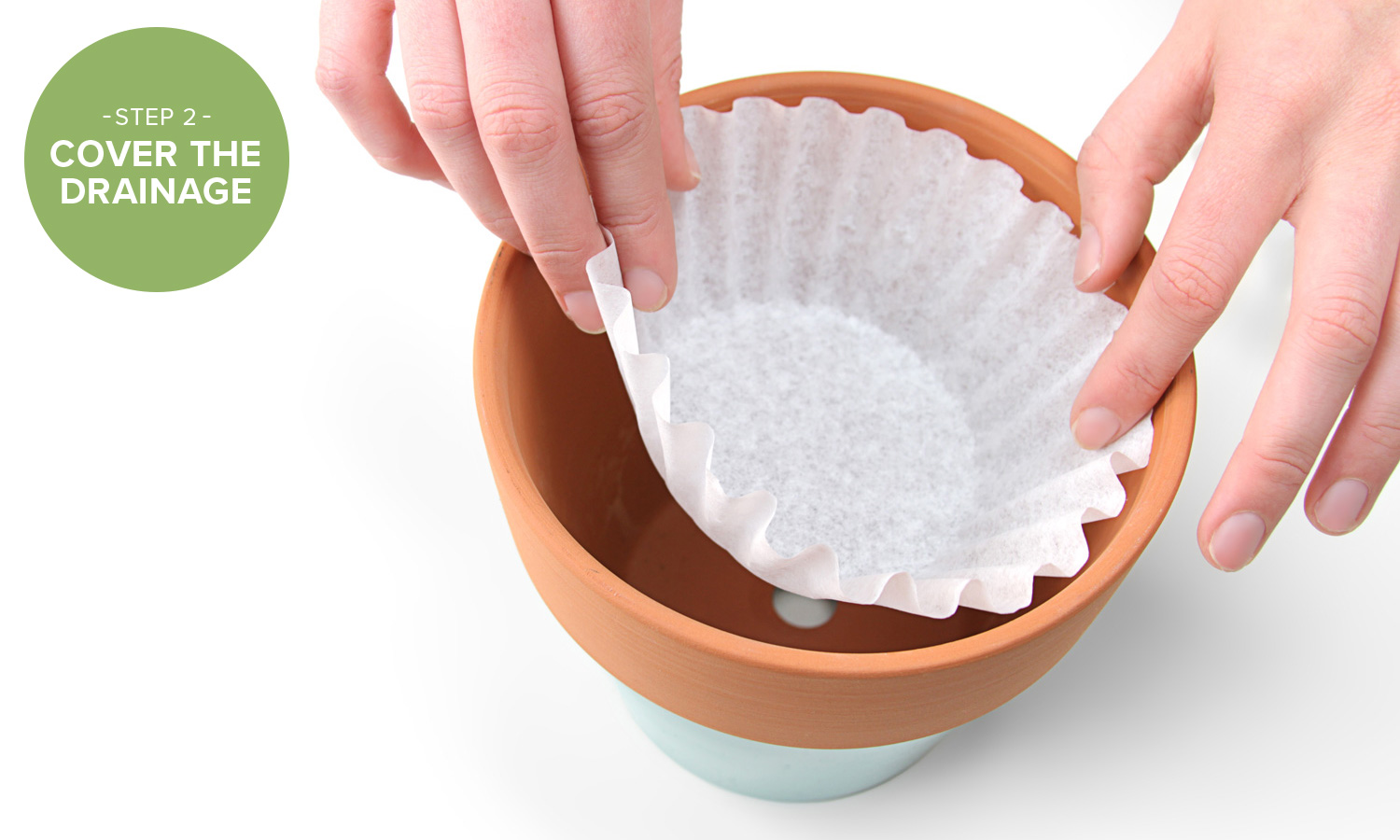
The trick is incredibly simple: place a coffee filter over the drainage opening before adding your potting mix. The paper creates a porous barrier that helps keep loose soil inside the container instead of allowing it to wash away every time you water.

It is important to understand what this gardening hack actually does. A coffee filter does not magically improve a plant’s health or create drainage where none exists. Its main job is to help retain potting mix while keeping the drainage pathway open.
Why Do Flower Pots Need Drainage Holes?
Before using a coffee filter, make sure your container actually has a drainage hole. Excess water needs somewhere to leave the pot. Without adequate drainage, water can remain around the roots and reduce the amount of oxygen available to them, increasing the risk of root problems.
However, large drainage holes can create a different problem. Loose potting mix may fall through the opening, particularly during the first few waterings after repotting. Over time, losing small amounts of soil can lower the soil level and leave a mess underneath the container.
What Does a Coffee Filter Do in a Flower Pot?
A paper coffee filter acts much like a very simple screen. Its porous material allows water to pass through while helping hold back fine particles of potting mix. This is particularly useful with containers that have one relatively large hole in the bottom.
This means you can water your plant normally without immediately watching part of the potting mix disappear through the bottom. The filter also helps reduce the amount of muddy water and loose soil that can collect underneath an indoor planter or on a patio.
How to Put a Coffee Filter in a Flower Pot
1. Choose a Pot With Drainage
Start with a clean container that has one or more drainage holes. If your pot has several small holes, a filter may not be necessary because very little soil is likely to escape. The trick is most useful when the opening is large enough for loose potting mix to fall through.
2. Select a Plain Paper Coffee Filter
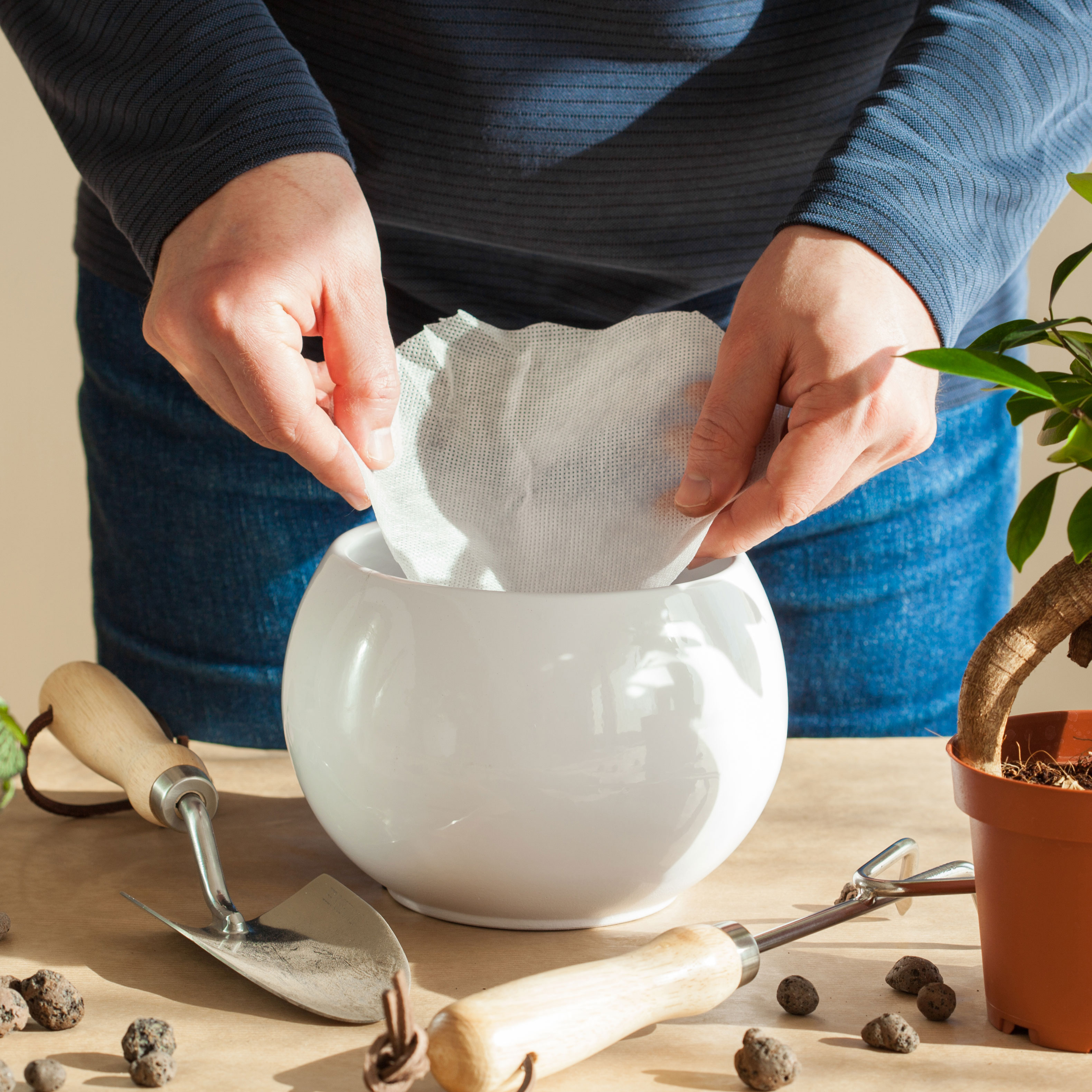
A regular paper coffee filter is all you need. Basket-style filters work well for wider containers, while cone filters can be opened out or trimmed to fit the bottom of a smaller pot.
You do not need to create a thick layer of paper. One filter is normally sufficient. The goal is to cover the opening, not to plug it. The potting mix will hold the filter in place once you fill the container.

3. Position the Filter Over the Hole
Place the coffee filter flat against the inside bottom of the pot. Make sure the drainage hole is completely covered, but do not push the paper tightly into the opening or pack it with several layers.
There is no need to tape, glue, or otherwise attach it. Once you add potting mix, the weight of the soil will keep the filter in position.
4. Add Quality Potting Mix
After positioning the filter, add a quality potting mix suitable for the plant you are growing. Avoid filling containers with dense garden soil because container plants generally perform better in a growing medium designed specifically for pots.
The coffee filter should remain underneath the growing medium. You do not need to add gravel beneath the soil simply because you are using a filter. The filter itself is intended to retain soil while allowing water to escape through the drainage opening.
5. Add Your Plant
Once the container has enough potting mix to support the root ball, place the plant in the center and fill around it. Keep the plant at approximately the same depth at which it was previously growing.
Gently firm the potting mix around the root ball. There is no need to press it down aggressively. A loose, well-structured growing medium allows water and air to move around the roots more effectively.
What Happens When You Water the Plant?
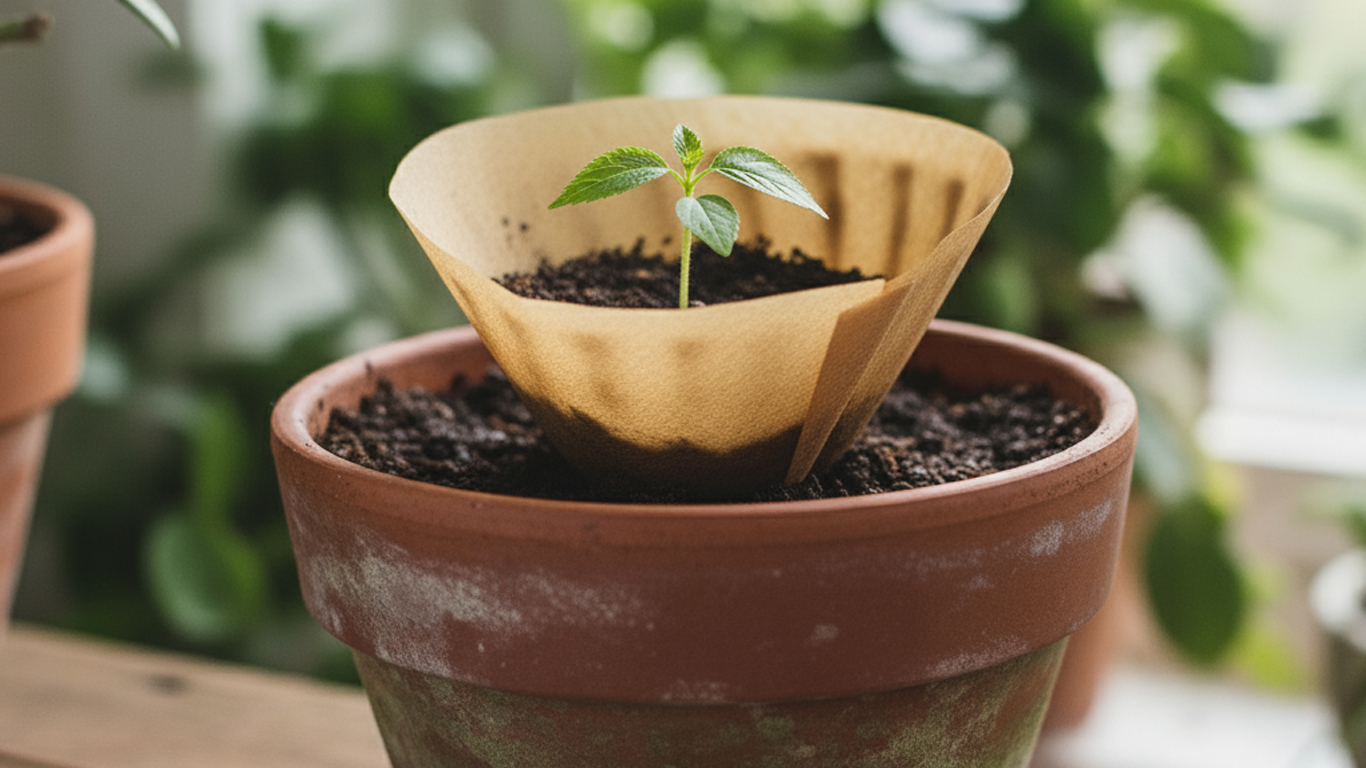
When you water the newly planted container, moisture moves through the potting mix and eventually reaches the drainage opening. The paper filter helps stop loose particles from escaping while still providing a pathway for excess water to leave.
This is particularly useful during the first several waterings after repotting, when the fresh potting mix can be loose and easily disturbed. As the plant settles and its roots develop, the growing medium generally becomes more stable.
Does a Coffee Filter Improve Drainage?
Not exactly. The drainage hole and the potting mix are the important parts of a container’s drainage system. A coffee filter is primarily a soil-retaining barrier. It should never be used to cover a container that has no drainage opening.
The University of Illinois Extension explains that drainage holes are critical for allowing excess water to leave containers and notes that a coffee filter can be placed over a large opening when soil is falling through. Small drainage holes often lose very little soil and may not need a filter at all.
Why You Should Skip the Gravel Layer
Many gardeners have traditionally placed gravel or stones at the bottom of flower pots to supposedly improve drainage. However, adding a separate gravel layer does not necessarily make a container drain better. In fact, extension guidance explains that coarse layers beneath finer potting mix can cause water to remain higher in the container rather than improving drainage.
Instead of filling valuable root space with rocks, use a properly sized container with drainage holes and a quality potting mix. If soil is escaping through an unusually large opening, a coffee filter or another porous barrier can be placed over the hole.
Which Plants Can Benefit From This Trick?
A coffee filter can be useful for many types of container plants, including houseplants, herbs, annual flowers, small vegetables, and decorative patio plants. It is especially convenient for indoor containers where soil washing onto a shelf, windowsill, or floor creates an unwanted mess.
It can also be useful for pots placed on balconies, decks, patios, and other surfaces where muddy runoff is inconvenient. The filter is inexpensive, lightweight, and easy to replace whenever the container is repotted.
Common Mistakes to Avoid
The first mistake is using too many filters. Several layers of paper are unnecessary and can interfere with the movement of water. One appropriately sized filter is usually enough to cover the drainage opening.
Another mistake is using a coffee filter as an excuse to overwater. The filter does not make a plant immune to root problems. Always consider the plant’s individual watering requirements and allow excess water to drain away completely.
You should also avoid placing a coffee filter over a container that has no drainage hole. The filter cannot solve the fundamental problem of a sealed pot. If water cannot leave the container, the roots may remain in excessively wet conditions.
What Can You Use Instead of a Coffee Filter?
If you do not have coffee filters, there are other porous materials that can be used to keep potting mix from escaping. Fine mesh, pieces of suitable landscape fabric, or similar permeable materials can perform a comparable job as long as they allow water to pass freely.
The advantage of a coffee filter is convenience. It is inexpensive, easy to cut or fold, and readily available in many homes. Paper also eventually breaks down, meaning you do not have to worry about removing a permanent plastic barrier during every repotting.
Does the Coffee Filter Need to Be Replaced?
Usually, there is no reason to disturb the plant simply to replace the filter. Paper will gradually soften in a moist environment, and by that point the potting mix may already have settled and the roots may be helping hold it in place.
If you are already repotting the plant for another reason, simply remove any remaining pieces of old paper and use a fresh filter if the drainage opening still needs one. There is no need to dig around healthy roots just to inspect the coffee filter.
Final Thoughts
Putting a coffee filter in the bottom of a flower pot is a small gardening trick, but it can be surprisingly useful. Its main purpose is simple: keep loose potting mix inside the container while allowing excess water to escape through the drainage hole.
It is especially handy when repotting houseplants, herbs, flowers, and other container plants into pots with large drainage openings. The filter can reduce soil loss, help keep saucers and surfaces cleaner, and prevent loose potting mix from immediately washing out of the container.
Just remember that the filter is not a replacement for proper drainage. The pot still needs an open drainage hole, the growing medium needs to be appropriate for containers, and watering should match the plant’s needs. Used correctly, however, this inexpensive kitchen item can be a practical addition to your repotting routine.