
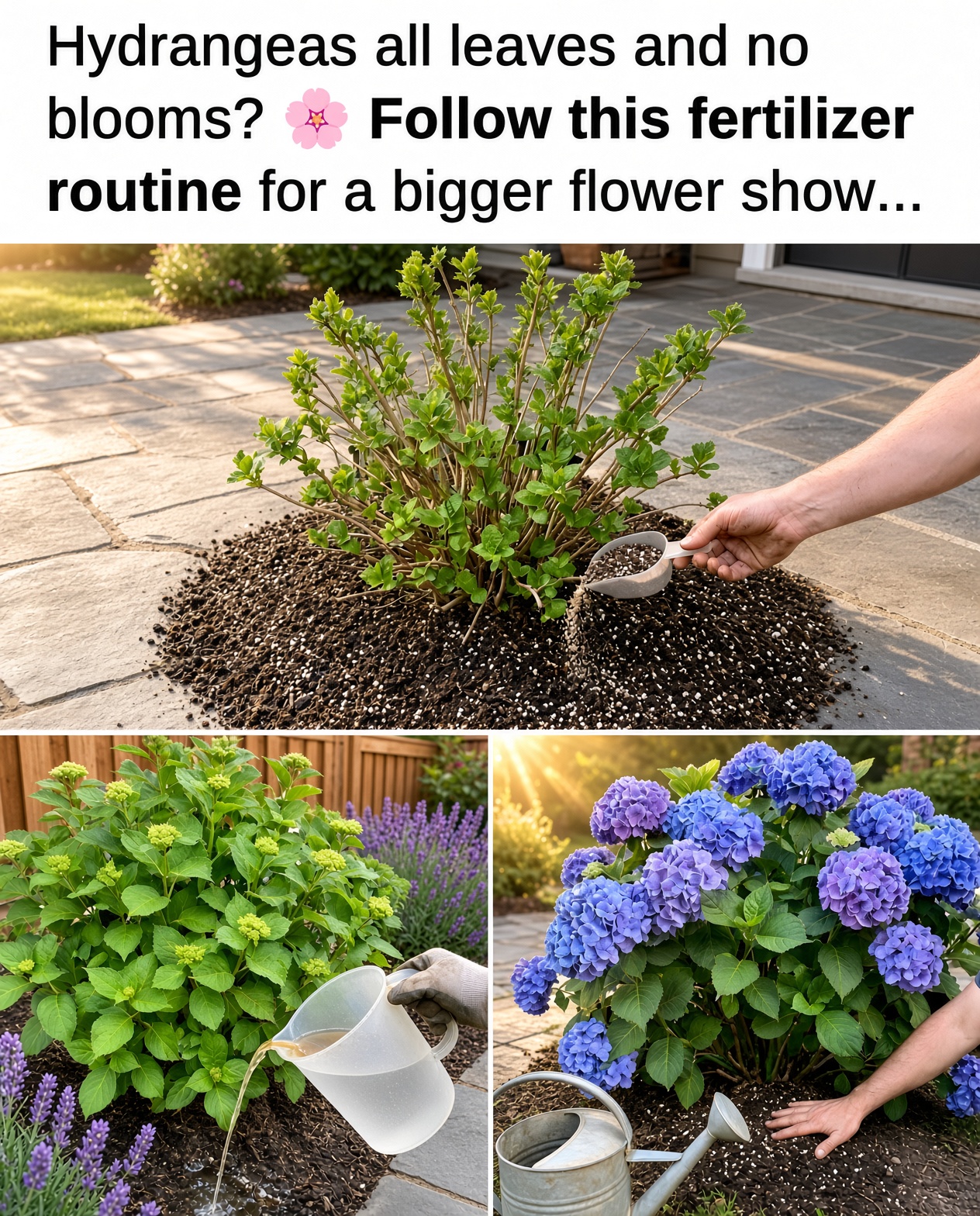
Hydrangeas do not need to be constantly fed to look their best. The right fertilizer at the right stage can support healthy growth, but too much—especially nitrogen—can produce plenty of foliage without giving you the flowers you expected. This month-by-month routine focuses on timing, moderation, soil testing, and watching the plant itself.
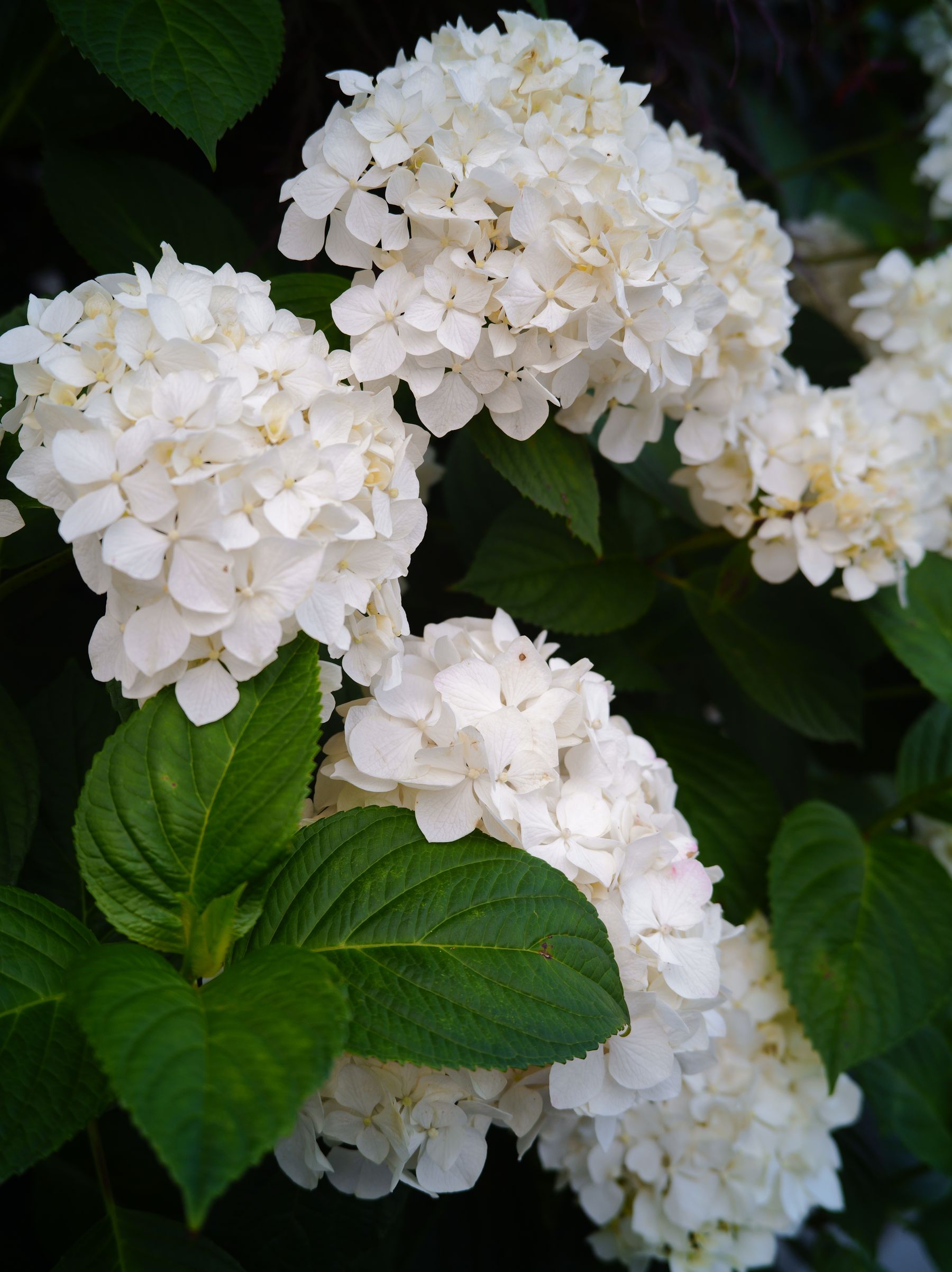
A Smarter Way to Feed Hydrangeas
Hydrangeas do not necessarily need a constant supply of fertilizer to produce healthy growth and attractive flowers. In fact, the source’s central message is that more fertilizer is not automatically better. Excess nitrogen can encourage a great deal of lush green foliage while leaving you disappointed when flowering season arrives. Before reaching for a fertilizer bag, it makes more sense to understand what the plant and soil actually need. A basic soil test can help reveal nutrient levels and pH instead of leaving you to guess. The same principle applies to watering: fertilizer should not be applied to bone-dry soil. Water the plant deeply first, then apply fertilizer according to the product label and water it in. The goal is a measured feeding routine that follows the plant’s growth cycle rather than forcing growth simply because fertilizer is available.
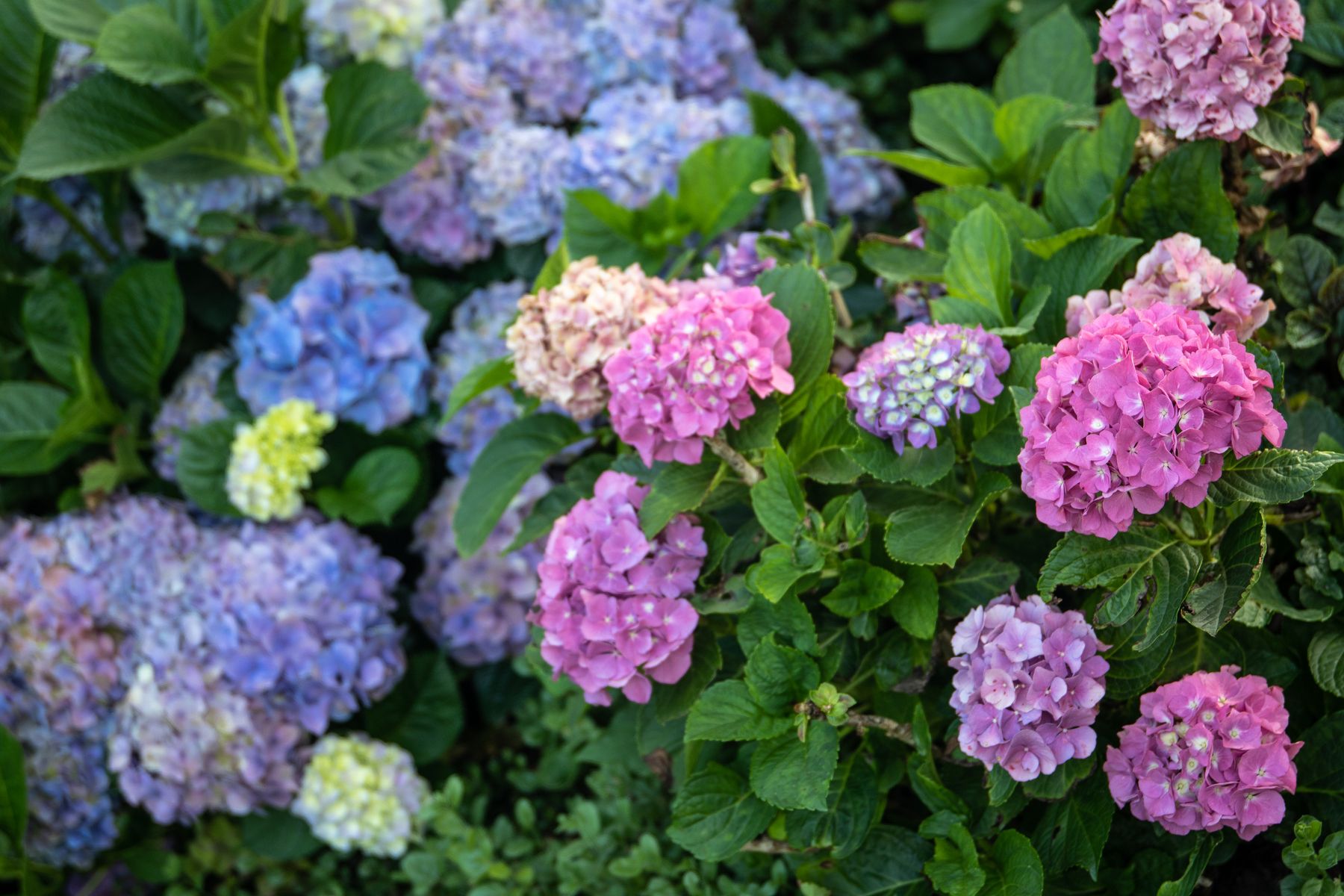
January and February: Let Dormant Hydrangeas Rest
During January and February, hydrangeas in colder climates are generally dormant and are not actively producing new shoots and leaves. The source recommends leaving fertilizer alone during this period and waiting until signs of spring growth appear. That does not mean there is nothing to observe in the garden. Dormant plants can still be checked for broken stems, winter damage, and other problems, but feeding is not the priority. The important signal to watch for is green growth returning to the branches. Because climate varies so much, gardeners should not treat a calendar date as a universal feeding command. A hydrangea in a warm region may begin growing much earlier than one covered by late winter conditions farther north. Wait for the plant to wake up and for the soil to be workable before beginning the main feeding routine.
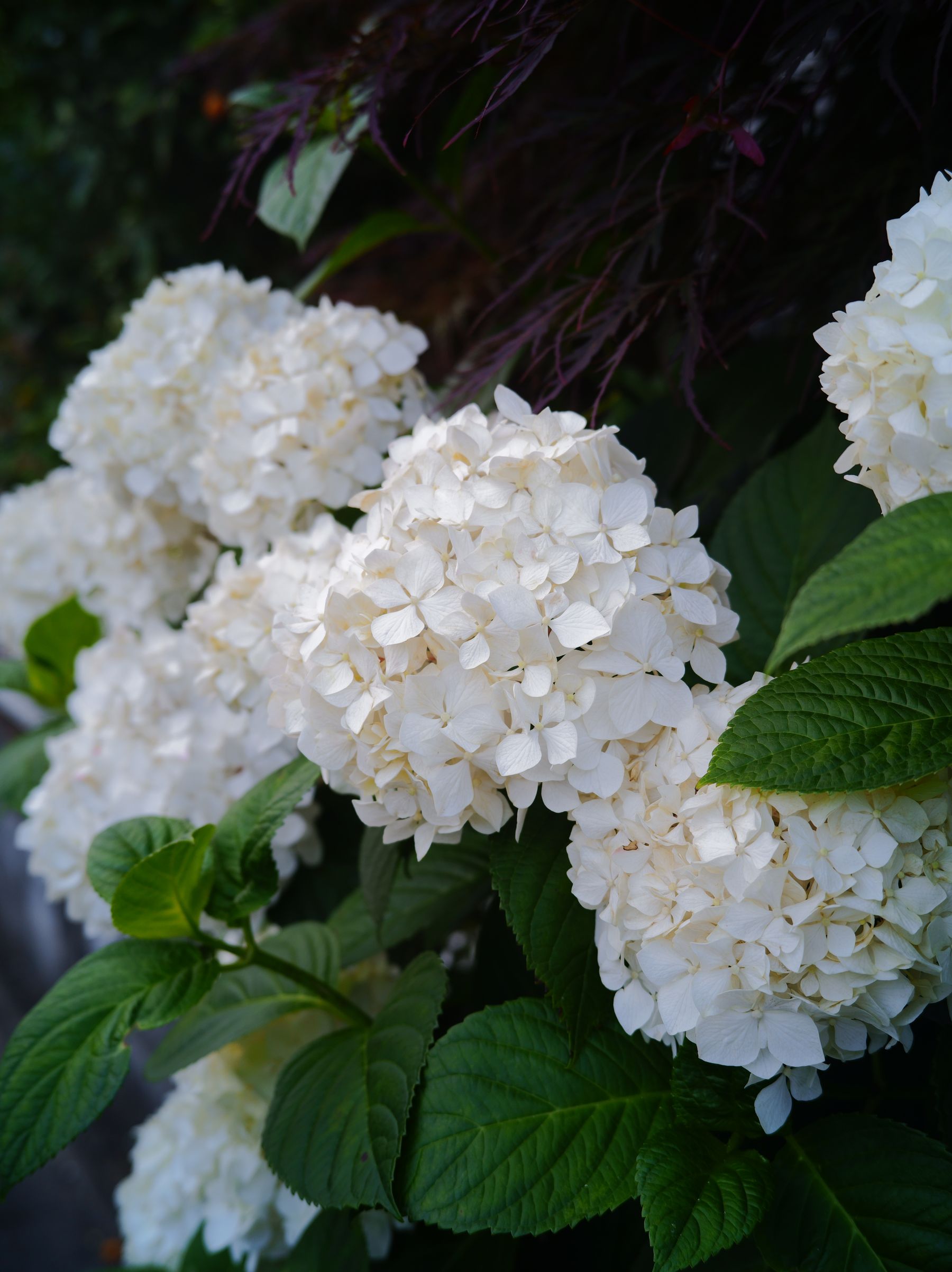
March and April: The Main Feeding Window
For many hydrangeas, March and April represent the most important feeding period, but the exact timing depends on climate and USDA growing zone. The source suggests that gardeners in Zones 8 and 9 may see active growth around March, while Zones 6 and 7 commonly reach that stage in April. In colder Zones 3 through 5, the main feeding may not be appropriate until late April or even May. Look for swelling buds, unfolding leaves, and soil that is no longer frozen or waterlogged. Once active growth is clearly underway, the source recommends a balanced slow-release fertilizer such as 10-10-10, or a gentle organic alternative, applied around the plant’s drip line at the label rate. One well-timed feeding is often presented as sufficient for healthy in-ground plants. The emphasis is on timing and moderation rather than repeated heavy applications.
Choosing Fertilizer Without Overdoing It
The fertilizer itself matters, but the source strongly discourages chasing flower production with excessive nitrogen or blindly using products marketed as “bloom boosters.” If a soil test does not show a phosphorus deficiency, adding large amounts of phosphorus is not a reliable way to force more flowers and can contribute to nutrient imbalance. A balanced fertilizer can be a simpler choice when feeding is actually needed. Apply only the amount recommended on the product label and distribute granular fertilizer around the root zone rather than piling it against the stems. Most importantly, do not feed dry, stressed roots. Water first when the soil is dry, then follow the fertilizer instructions. This measured approach reduces the risk of root stress and keeps the plant from being pushed into excessive soft growth. Fertilizer should support an appropriate growth stage, not compensate for poor watering, unsuitable light, or other basic care problems.
May and June: A Second Feeding Is Usually Optional
By May and June, healthy hydrangeas planted in the ground often do not need another heavy feeding. The source describes a second application as an optional “snack,” particularly for container-grown plants or shrubs whose growth is genuinely weak and whose soil or fertilizer instructions indicate that additional nutrition is appropriate. If a second feeding is warranted, keep it light. More fertilizer at this stage can encourage soft, leafy growth without solving the reason the plant is struggling. Pale leaves also should not automatically be interpreted as proof that fertilizer is missing. High soil pH, poor drainage, and root stress can all contribute to unhealthy-looking foliage. Checking the growing conditions first can prevent an unnecessary application. Container hydrangeas deserve special attention because nutrients can be depleted from potting media more quickly than in garden soil, but even potted plants benefit from following the fertilizer label rather than guessing at a dose.
July: The Last Call in Warmer Climates
July is the point where the feeding routine becomes much more conservative. Gardeners in warmer USDA Zones 8 and 9 may still consider a light final application if the plant is healthy and the fertilizer label or local recommendations support it. For many other gardeners, feeding is effectively finished for the season. The source is especially clear about skipping fertilizer when a hydrangea is dealing with extreme heat, drought, or persistent afternoon wilting. Pushing new growth while the plant is already under environmental stress is not a good strategy. Instead, focus on adequate moisture and protecting the plant from severe summer conditions. Fertilizer cannot make up for a root system that is struggling to supply water. If the shrub is wilting or showing signs of heat stress, correct the growing conditions first and avoid trying to stimulate additional growth with a strong feeding.
August Through December: Close the Fertilizer Bag
From August through December, the source recommends shutting down routine fertilizing for most gardeners, especially in climates with cold winters. Late-season fertilizer can encourage tender new shoots at the very time the shrub should be slowing down and preparing for dormancy. That fresh growth may be more vulnerable when the first hard freeze arrives. Instead of trying to keep the hydrangea actively growing, allow it to naturally wind down. Fall can still be a useful time for a soil test. Before the ground freezes, gardeners can check pH and nutrient levels so they have time to address soil issues before the next spring growing season. The key distinction is that testing and planning can happen in fall, while actual fertilizer feeding should generally wait until new growth returns. This helps turn the quiet season into preparation rather than unnecessary stimulation.
How USDA Zone Changes the Schedule
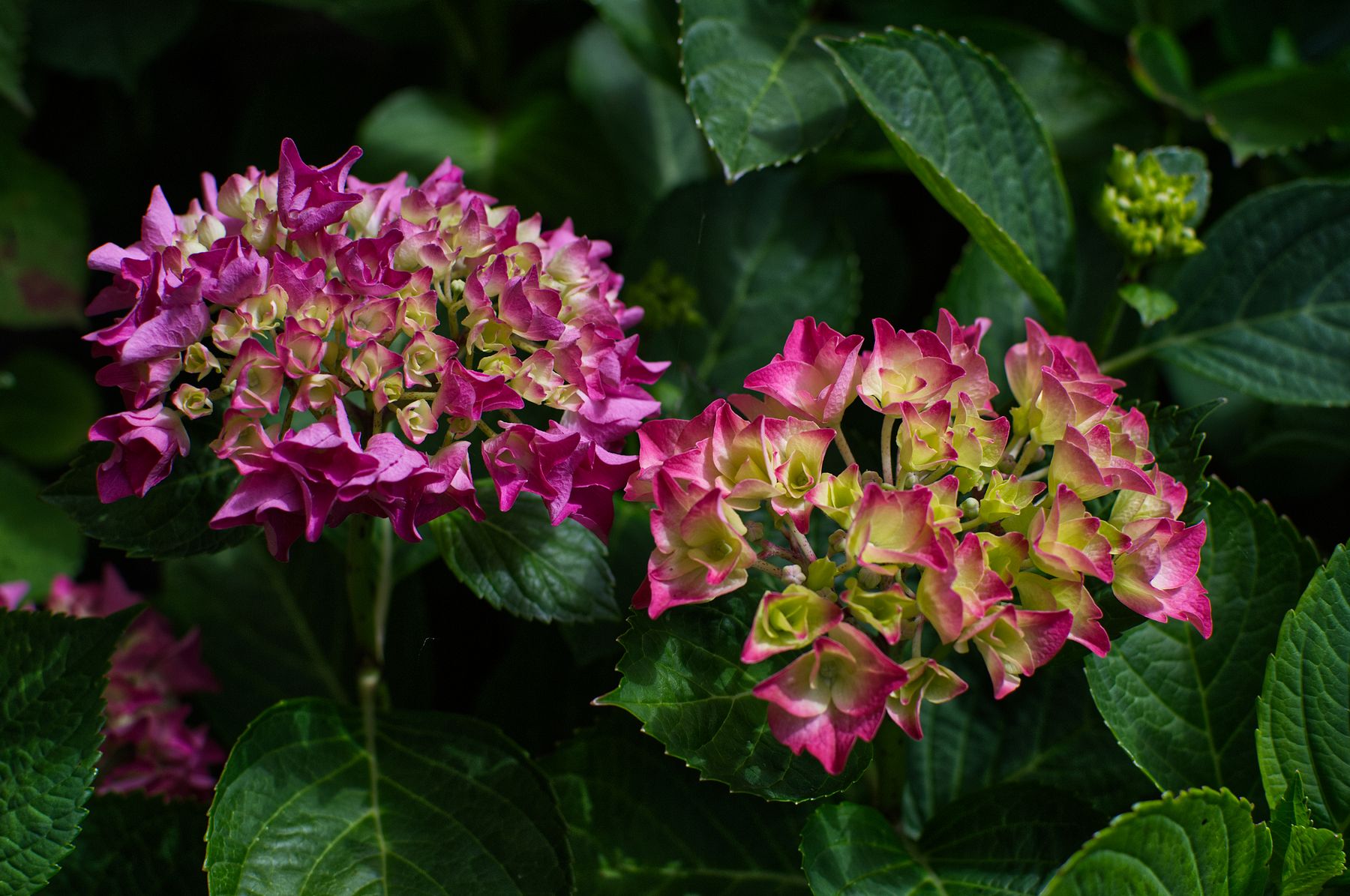
A hydrangea’s USDA zone provides a useful starting point, but the source emphasizes watching the plant itself. In Zones 3 through 5, the main feeding period commonly falls in late April or May once active growth begins, with any necessary second feeding for a container or weak plant completed by early summer. In Zones 6 and 7, the main window usually opens in March or April, while healthy in-ground plants may need nothing more afterward. In Zones 8 and 9, growth can begin as early as February or March, with a possible light late-spring feeding and, when genuinely appropriate, one final touch-up in July. These are guidelines rather than rigid rules. Bud swelling, new leaves, soil conditions, drought, heat, and the plant’s overall health all matter. Following the plant’s growth stage can be more useful than applying fertilizer simply because a certain month has arrived.
Why More Fertilizer Does Not Always Mean More Flowers
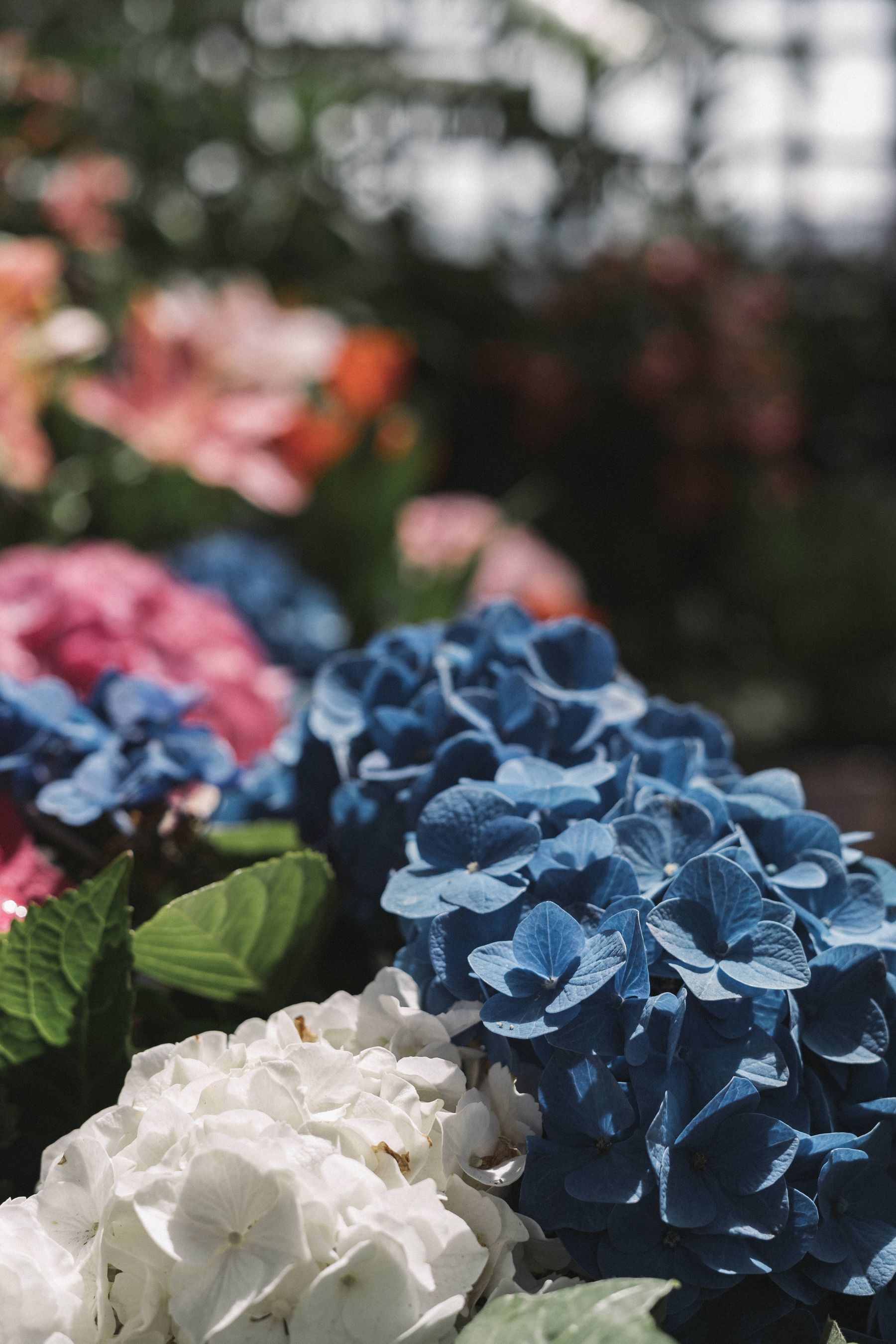
A hydrangea covered in green leaves but producing few flowers can tempt a gardener to add even more fertilizer, but the source warns against that reaction. Too much nitrogen can favor foliage, while flowering problems may have completely different causes. Some hydrangeas bloom on old wood, and pruning at the wrong time can remove flower buds that were already developing for the following season. A late freeze can also damage vulnerable buds before they open. Insufficient light, drought stress, disease, or a young plant that is still establishing can reduce flowering as well. None of these problems is automatically solved by adding more nitrogen. A better approach is to review the whole growing environment: light exposure, soil moisture, pruning timing, winter damage, and the plant’s age. Fertilizer is only one part of hydrangea care, and it works best when the fundamentals are already in place.
The Simple Hydrangea Feeding Rule to Remember
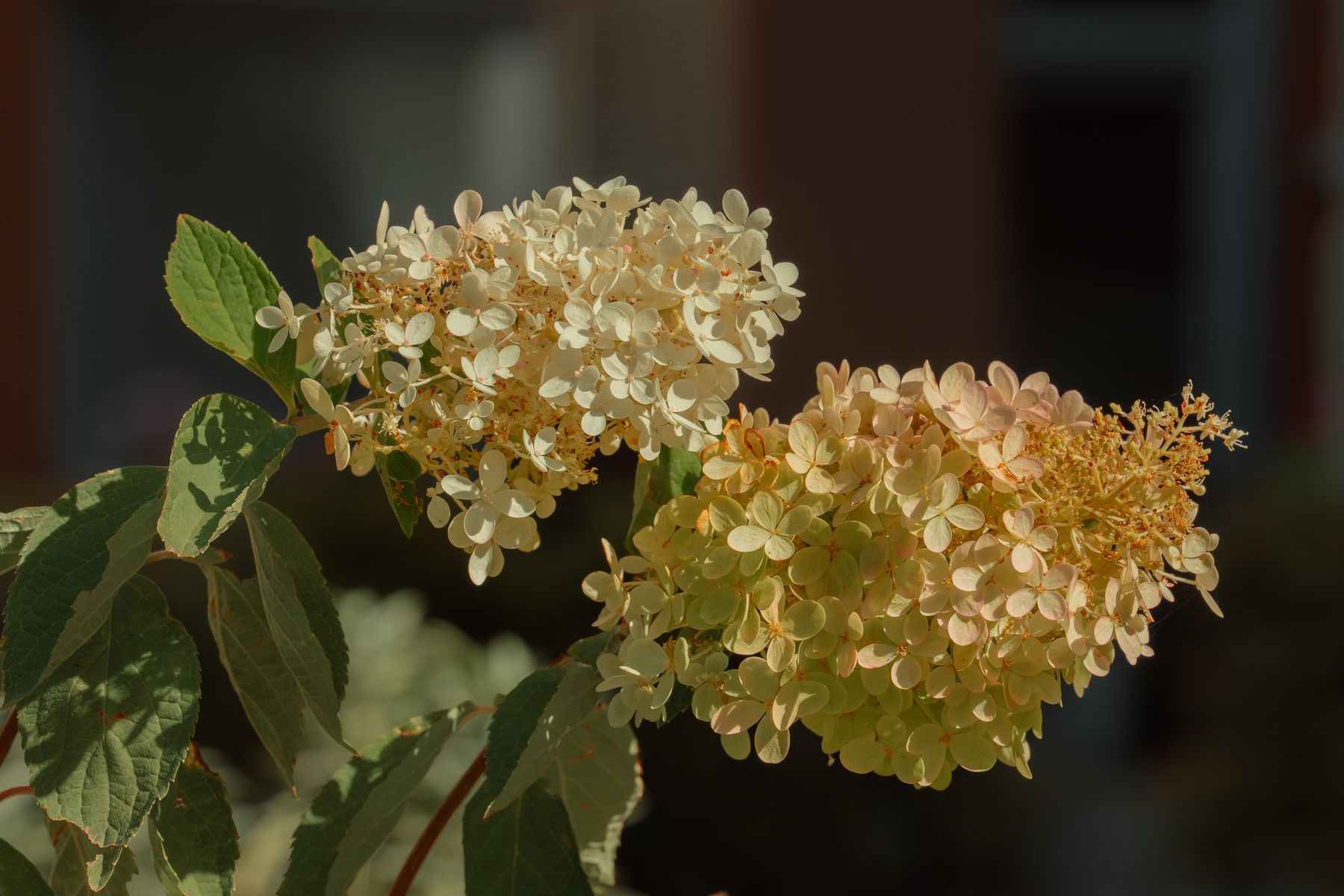
The easiest way to remember the source’s month-by-month approach is to feed hydrangeas when they are beginning strong active growth, keep applications moderate, and stop before late-season growth becomes vulnerable to winter. Test the soil rather than guessing, never fertilize dry soil, avoid unnecessary high-nitrogen feeding, and do not assume that a high-phosphorus bloom booster will create flowers when the soil does not need additional phosphorus. Healthy established hydrangeas may need surprisingly little fertilizer. When a plant is struggling, investigate the underlying cause before adding nutrients. By the end of summer, the fertilizer bag should usually be put away, while fall can be used for soil testing and planning. The result is a calmer routine: observe the plant, respond to its growth stage, and use fertilizer as a targeted tool rather than a cure-all. That approach can help support strong growth without pushing the shrub into a cycle of unnecessary feeding.