
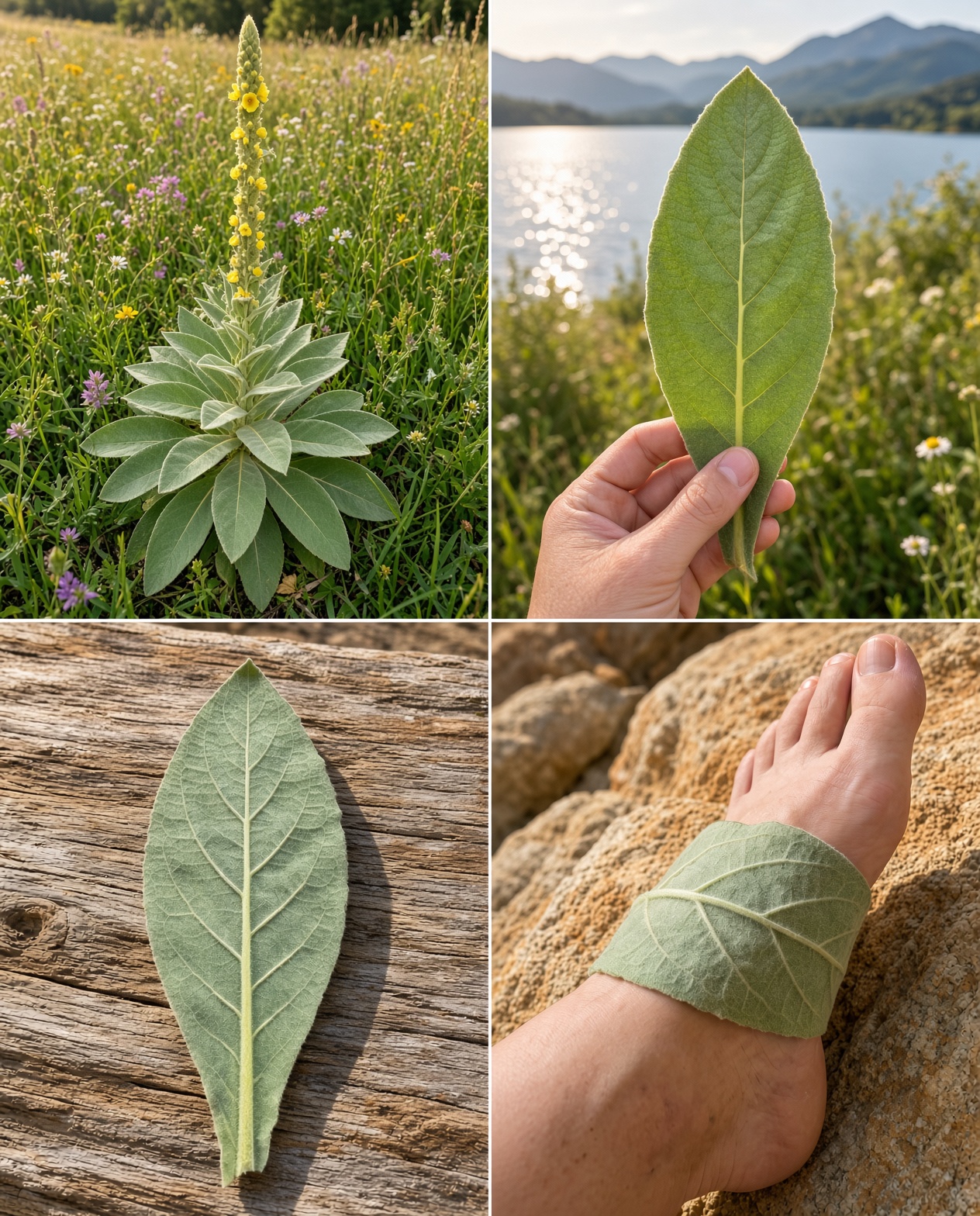
Mullein has a long history in traditional herbal practice, particularly in preparations made from its leaves and flowers. One folk practice that continues to attract attention is placing mullein preparations on the soles of the feet. The idea sounds simple, but the claims surrounding it are much broader than the evidence currently allows.

The original article presents foot application as a way to support breathing, calm coughs, reduce inflammation, encourage sleep, and ease general discomfort. Traditional records do show that species of Verbascum, including common mullein (Verbascum thapsus), have been used topically for skin complaints, wounds, swelling, and other localized problems. However, there is not good clinical evidence showing that putting mullein on the feet delivers active compounds rapidly into the bloodstream or treats respiratory illness elsewhere in the body.

What Is Mullein?
Common mullein, Verbascum thapsus, is a tall biennial plant recognized by its large, soft, woolly leaves and upright flowering stalk covered with yellow flowers. It is native to parts of Europe, North Africa, and Asia and has become established in many other regions. The plant has been used in traditional medicine in several cultures, with leaves, flowers, and preparations made from them appearing in historical remedies.

Modern reviews have identified a variety of plant constituents in mullein, including flavonoids, saponins, iridoid compounds, and phenylethanoid and phenylpropanoid glycosides. Laboratory and traditional-use research has explored antioxidant, anti-inflammatory, antimicrobial, soothing, and other biological properties. These findings are interesting, but laboratory activity is not the same thing as a proven treatment in people.

Why the Soles of the Feet Became Part of Folk Practice
The soles of the feet have a special place in many traditional healing systems. Folk remedies sometimes use the feet as a convenient location for warm compresses, herbal washes, poultices, or oils, especially when a person wants to keep a preparation in contact with the skin for an extended period.

There is also a popular modern explanation that the soles contain unusually large pores or that they provide a special pathway for herbs to travel directly to organs such as the lungs. Those explanations should be treated cautiously. The skin is an important barrier, and the fact that a substance is placed on the feet does not demonstrate that it will reach internal organs in a therapeutically meaningful amount.

What Traditional Mullein Use Does Support
Historical and ethnobotanical literature gives us a better basis for discussing topical mullein than claims about whole-body effects from the feet. Reviews of traditional use describe preparations of Verbascum being applied to the skin for problems such as irritation, eczema-like conditions, minor wounds, insect bites, swelling, and other localized complaints.

Researchers have also investigated mullein extracts for biological activities in laboratory and experimental settings. This helps explain why the plant has remained interesting to herbalists, but it does not establish that a mullein foot wrap can relieve a cough, clear mucus from the lungs, lower a fever, or improve sleep. Those stronger claims remain unproven.

How a Traditional Mullein Poultice Is Prepared
The source article describes a simple poultice made by crushing fresh or dried mullein leaves, adding warm water, placing the moist plant material inside gauze or cotton, and securing the preparation against the soles of the feet. Traditionally, a cloth or clean sock can help keep the plant material in place and reduce mess.

If someone chooses to try this as a traditional skin practice, cleanliness matters. Use correctly identified plant material, clean hands, clean cloth, and a clean preparation surface. Avoid boiling-hot material on the skin, and do not apply a poultice to broken, infected, or seriously irritated skin. A short trial on a small area is more cautious than immediately covering both feet for many hours.

What About Mullein-Infused Foot Oil?
Another traditional approach is an infused oil made by combining dried mullein flowers or leaves with a carrier oil such as olive oil. The source article describes allowing the dried herb and oil to infuse for several weeks before straining and applying the finished oil to the feet at night.

There is an important practical point here: homemade oil infusions can spoil or develop microbial growth if moisture is introduced or plant material is not properly dried. For that reason, dried herbs are generally preferable for an oil infusion, and the finished oil should be discarded if it develops an unusual smell, visible mold, cloudiness, or other signs of deterioration. Store it in a clean container and avoid introducing water into the oil.

Can Mullein on the Feet Help a Cough?
This is where it is especially important to separate tradition from evidence. Mullein has historically been used in herbal preparations associated with respiratory complaints, and experimental research has examined several biological properties of the plant. That history does not prove that applying mullein to the soles of the feet transfers enough of those compounds to the lungs to act as an expectorant or cough remedy.

If someone has a persistent, severe, worsening, or unexplained cough, a foot application should not replace medical evaluation. Difficulty breathing, chest pain, coughing blood, blue or gray lips, or severe weakness are reasons to seek urgent medical care rather than relying on a home herbal preparation.

Important Skin-Safety Considerations
“Natural” does not automatically mean risk-free. Plant material can cause irritation or allergic contact dermatitis in susceptible people. Published medical literature includes a case report involving allergic contact dermatitis associated with Verbascum thapsus. Because individual sensitivity varies, stop using a topical preparation if it causes burning, itching, redness, swelling, or a rash.

Extra care is appropriate for children, pregnant or breastfeeding people, people with significant allergies, and anyone with chronic skin conditions or an open wound. If you take medicines or have a medical condition, discuss herbal remedies with a qualified healthcare professional before using them as part of a treatment plan.

A Simple Way to Think About the Practice
For people interested in traditional herbalism, a mullein foot poultice or oil can be viewed primarily as a historical and personal-care practice rather than a proven systemic treatment. The warm compress, quiet nighttime routine, and attention to the feet may itself feel soothing, while the botanical component remains an area of ongoing scientific interest.

The most useful approach is to appreciate what the plant actually is, understand what traditional sources say, and avoid turning plausible laboratory findings into promises of medical results. Mullein is an intriguing herb with a long history, but responsible use means keeping tradition, evidence, and safety clearly separated.
