
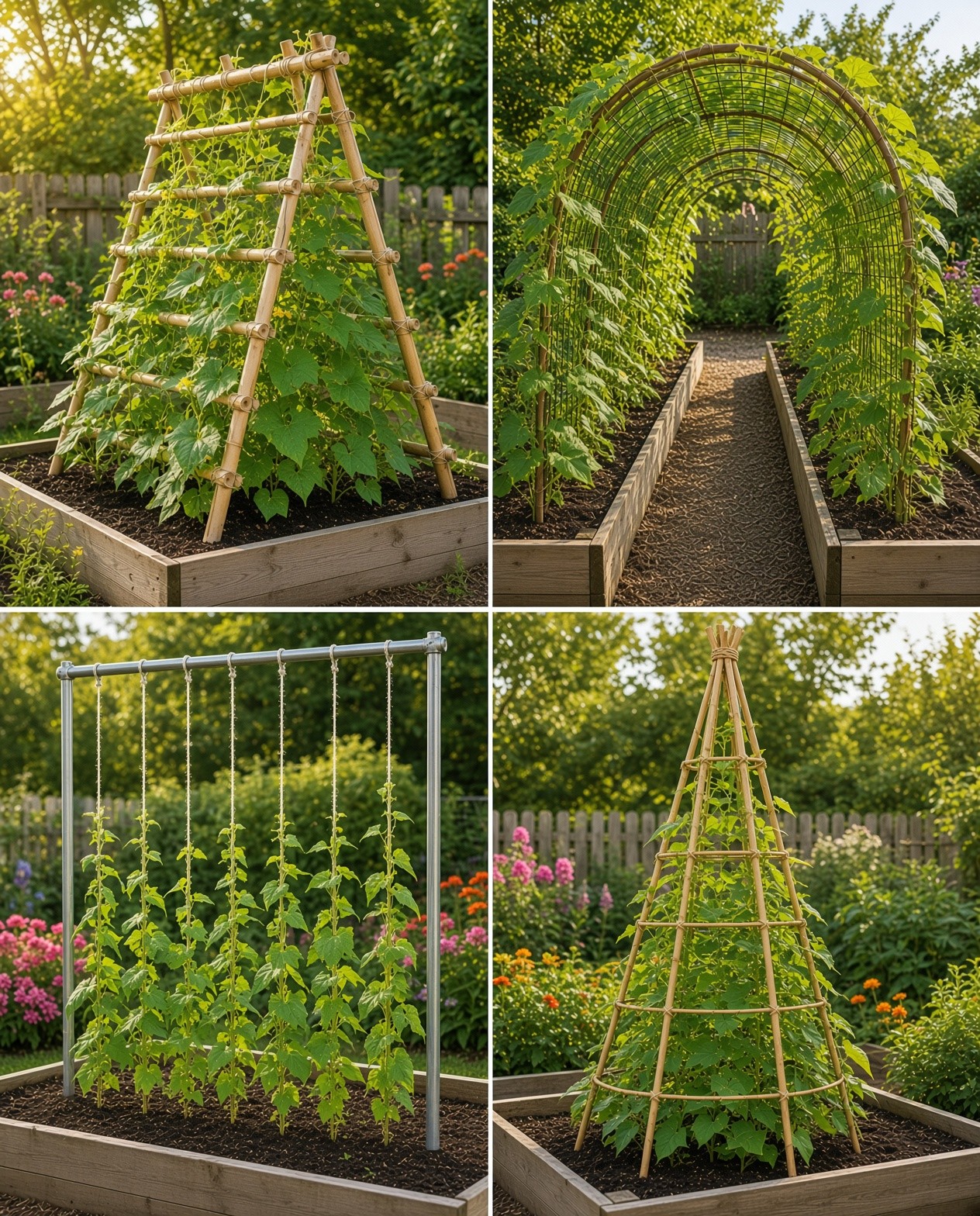
Growing cucumbers vertically is a smart way to make better use of limited garden space. A well-planned trellis can keep vines organized, improve airflow around the foliage, make fruit easier to find, and reduce the amount of plant material lying on damp soil. From simple bamboo supports to sturdy framed structures, these DIY cucumber trellis ideas offer practical options for raised beds, backyard gardens, fences, and compact growing areas.
1. Bamboo Teepee Trellis
A bamboo teepee is one of the simplest ways to get climbing cucumbers off the ground. Gather several sturdy poles, anchor their lower ends around the plant, and tie the tops together. The angled supports create a natural climbing frame while keeping the footprint small. This design works especially well in raised beds, where every inch of growing space matters.

2. Cattle Panel Trellis
For gardeners who want strength and plenty of growing room, a cattle panel makes an excellent cucumber trellis. The rigid grid can be installed vertically or gently bent into an arch. Cucumbers readily grab the openings with their tendrils, and the wide surface makes it easier to spread several vines without crowding them.

3. A-Frame Trellis
An A-frame combines stability with an efficient use of garden space. Build two simple wooden sides, connect them at the top, and add netting or wire mesh. The sloped sides give cucumber vines a broad climbing surface while creating a convenient pathway beneath or between the supports.

4. String Trellis
A string trellis is a budget-friendly option for raised beds and greenhouse growing. Attach strong garden twine to an overhead rail and run each strand down toward the base of a cucumber plant. As the vines grow, gently guide them toward the strings so their tendrils can take hold.

5. Wooden Ladder Trellis
An old wooden ladder can become a useful garden feature with almost no construction. Lean a stable ladder against a wall, fence, or secure support, then train cucumber vines around the rungs. The open spacing provides climbing points while the reused material adds a rustic look.

6. Garden Netting Wall
A simple sheet of trellis netting can turn an empty fence or frame into vertical growing space. Secure the net tightly at several points so it does not sag under the weight of mature vines and fruit. This is a practical choice when you want a large climbing surface without building a heavy wooden structure.

7. Wire Grid Trellis
Wire grid panels provide many small attachment points for cucumber tendrils. Mount the grid to strong posts or a frame and leave enough clearance behind the vines for airflow. The regular pattern also makes it easy to see developing cucumbers and spot ripe fruit during harvest.

8. Wooden Arch Trellis
A garden arch creates a dramatic vertical feature while giving cucumber vines room to climb overhead. Use two sturdy sides with a curved or angled top, then add mesh or wire where the plants can grip. Once covered in foliage, the arch can become a leafy walkway or a productive focal point.

9. Raised-Bed Corner Trellis
If your raised bed has unused corners, add a compact frame along one edge. Two upright posts and a horizontal rail are often enough to support twine or netting. This keeps cucumber vines inside the bed’s footprint instead of allowing them to sprawl across paths and neighboring plants.

10. Fence-Mounted Trellis
A sunny garden fence can double as a ready-made support for climbing cucumbers. Attach a mesh panel or a few horizontal and vertical wires to the fence, leaving enough room for vines to develop. The vertical arrangement improves visibility and can make watering, pruning, and harvesting much easier.

11. Bamboo Fan Trellis
For a decorative alternative, arrange several bamboo canes in a fan shape. Secure the narrow ends near the soil and spread the upper ends across a frame. As the cucumber grows, guide individual shoots across the canes so the plant fills the support evenly instead of forming one dense mass.

12. Reclaimed Wood Trellis
Scrap lumber can be turned into a sturdy cucumber support with a few basic cuts and fasteners. Build a rectangular frame and add horizontal slats, wire, or mesh. Reclaimed materials are especially useful when you want a custom size that fits a narrow planting bed or awkward garden corner.

13. Simple Hoop Trellis
A lightweight hoop frame is a flexible solution for gardeners who want to cover a bed with climbing vines. Insert sturdy hoops into the soil or bed edges and connect them with mesh or netting. The rounded structure supports the vines from multiple angles while keeping the growing area organized.

Vertical growing does not have to be complicated. The best cucumber trellis is often the one you can build securely, maintain easily, and fit naturally into your existing garden. Start with a simple support if you are new to growing cucumbers, then adapt the design as your plants develop. With consistent watering, sunlight, and regular harvesting, a well-supported cucumber vine can turn a small growing area into a surprisingly productive garden.