
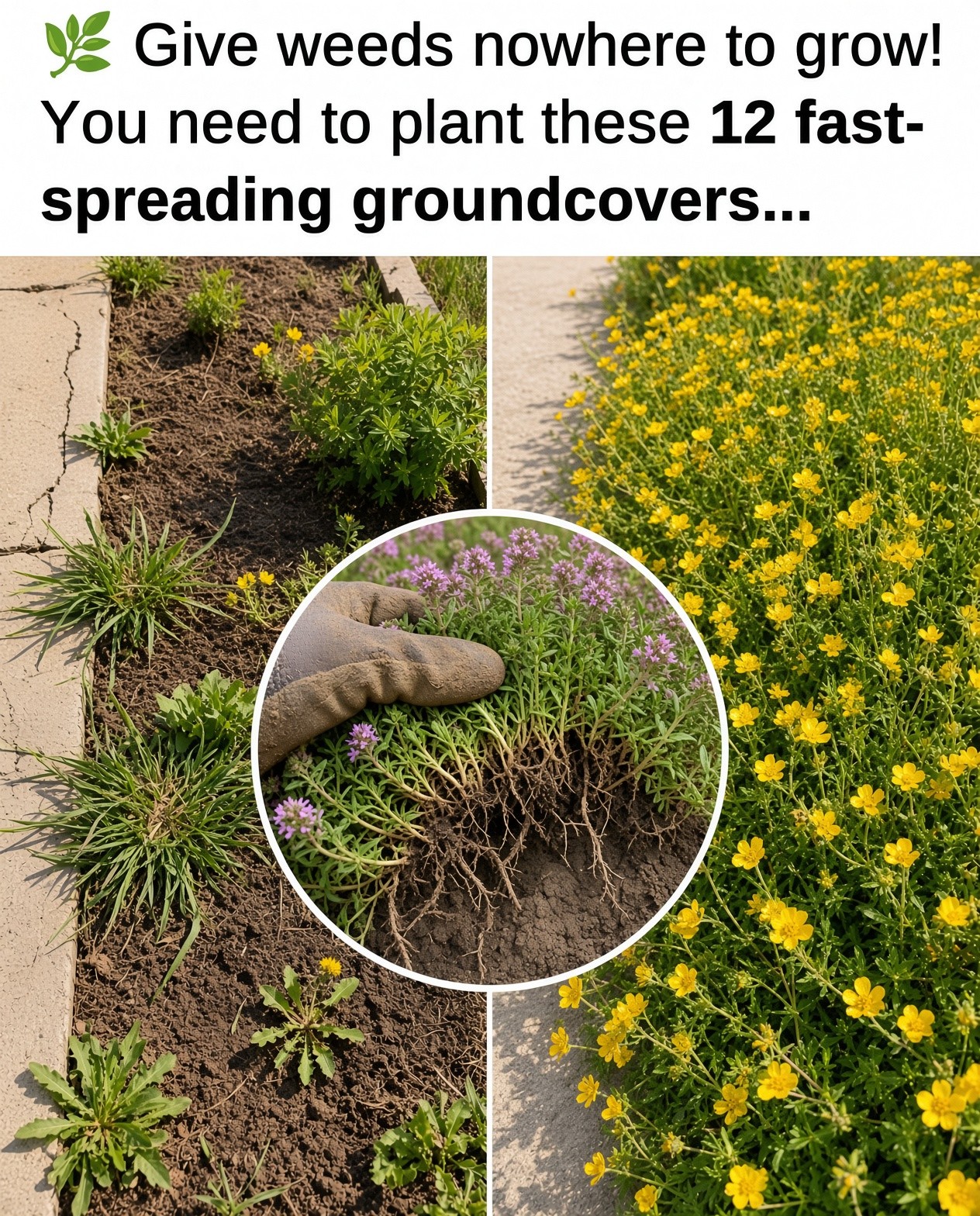
Why Groundcovers Help Keep Weeds in Check
Bare soil gives weeds an easy place to germinate, establish roots, and spread. A dense groundcover changes that equation by occupying the space first. Its foliage shades the soil surface, its roots compete for available resources, and its spreading habit gradually closes gaps where weeds would otherwise appear. Groundcovers are not a magic weed cure, but a well-chosen planting can reduce exposed soil and make routine maintenance easier. The key is matching the plant to your light, moisture, soil, and climate rather than choosing the fastest spreader without considering how it behaves. They also help soften the visual transition between larger plants, making beds look established instead of unfinished. In sloping areas, a living cover can slow the movement of rainwater and help protect loose soil from washing away.

1. Creeping Jenny
Creeping Jenny forms a low, trailing carpet of rounded leaves and can quickly fill open areas. Its bright green to yellow-green foliage makes it useful where you want groundcover to act as both a weed-suppressing layer and a visual accent. It prefers consistent moisture and can tolerate a range of conditions, but its vigorous spreading habit deserves attention. Keep it inside defined borders and check nearby beds regularly so it does not move into places where you do not want it.

2. Bugleweed
Bugleweed, also called Ajuga, creates a dense mat close to the soil and is useful in areas where you want quick coverage. Its foliage forms a strong visual carpet, while spring flower spikes add seasonal color. Bugleweed generally prefers moist, reasonably fertile soil and can handle partial shade. Because it spreads through runners, give it a clear boundary and divide or trim the patch when it begins reaching beyond its intended space.

3. Creeping Phlox
Creeping phlox combines practical coverage with a dramatic spring display. Its low stems spread across the ground and can become covered with small flowers in pink, purple, blue, or white. It performs best with good drainage and plenty of light. Once established, the dense foliage can reduce the amount of bare soil available to weeds. Avoid planting it in heavy, constantly wet soil where the roots may struggle.

4. Stonecrop
Low-growing stonecrops are tough choices for sunny, dry locations where conventional groundcovers may struggle. Their fleshy leaves store water, and their spreading growth can cover thin or rocky soil. Stonecrop is useful in rock gardens, along sunny edges, and where irrigation is limited. Good drainage is essential. Choose a species suited to your climate, and give young plants enough water while they establish before reducing irrigation.

5. Sweet Woodruff
Sweet woodruff is a shade-loving option for areas beneath trees or beside buildings where sun-loving groundcovers may perform poorly. Its delicate foliage and small white flowers create a soft carpet, while the spreading habit helps fill open soil. It prefers moisture and performs best in cool, partly shaded conditions. Because it can spread steadily, plant it where its natural expansion is useful and maintain the edges if it begins crossing into other beds.

6. Brass Buttons
Brass buttons is a low-growing plant with tiny button-like yellow flowers and finely textured foliage. It can form a close cover in suitable climates and is useful around paths, stones, and garden edges. Once established, it can tolerate periods of dryness, although new plantings need regular moisture. Choose a site that matches its climate preferences and avoid allowing it to crowd slower-growing plants that need their own space.

7. Creeping Thyme
Creeping thyme is one of the most attractive choices for sunny, well-drained ground. Its aromatic foliage stays close to the soil and can form a dense mat as the plants knit together. During bloom, tiny flowers create a colorful carpet and attract pollinators. It is useful between stepping stones and along dry borders. Start with appropriate spacing and keep weeds under control while the plants are filling in; once the mat closes, maintenance usually becomes easier.

8. Creeping Juniper
Creeping juniper provides year-round structure with blue-green or green needle-like foliage. It is a strong choice for sunny slopes, dry banks, rock gardens, and other spaces where a woody groundcover can anchor the landscape. Good drainage and adequate room to spread are important. Different cultivars vary greatly in mature width, so check the plant label before planting. Give it enough space from paths and beds so mature branches do not create constant pruning work.

9. Periwinkle
Periwinkle can spread rapidly and create a thick green layer beneath trees, shrubs, and other partially shaded areas. Its glossy leaves and blue-purple flowers give it ornamental value while its coverage leaves less open ground for weeds. The same vigor that makes it useful can also make it troublesome. In regions where it is considered invasive, choose a safer alternative. If you plant it where it is appropriate, contain the edges and monitor its spread.

10. Hostas
Hostas are not the fastest option on this list, but their large leaves can eventually create excellent shade coverage. They are helpful beneath trees and around larger shrubs where exposed soil becomes a recurring weed problem. Hostas prefer moisture and shade or filtered light, and their broad leaves create substantial ground shade once established. Give individual plants enough room to mature instead of crowding them together at planting time.

11. Clover
Clover creates a low, spreading cover and can be useful in lawns, pathways, and informal garden spaces. White clover is resilient and can remain green under conditions that leave conventional turf looking tired. Clover also fixes nitrogen through its relationship with soil bacteria, adding an ecological benefit. If you want a low-maintenance cover that supports pollinators, allow some flowering rather than mowing constantly. Keep its growth within areas where you actually want a living carpet.

12. Dichondra
Dichondra has small rounded leaves and a low, trailing growth habit that makes it attractive as a living carpet in warm climates. It is suited to sunny or lightly shaded areas where soil drains reasonably well. Once established, its overlapping stems can cover open patches and reduce the space available to weeds. It is less cold-hardy than several plants on this list, so check regional suitability before using it as a long-term groundcover.

Plant Groundcovers the Right Way
Good preparation matters more than simply choosing a fast grower. Remove existing weeds and debris before planting, improve compacted soil when necessary, and space young plants according to their mature spread. Planting too closely can create unnecessary competition, while planting too far apart leaves gaps where weeds can establish. Water new groundcovers consistently while roots develop, then adjust irrigation to the plant’s mature needs. A thin layer of suitable mulch can also help during establishment. During the first season, patience is important because the plants may look widely spaced. That open appearance is temporary if the species is suited to the site. Keep hand-weeding around young plants until the foliage closes the gaps. Watch the plants during their first few months and adjust spacing or watering if growth is uneven. Young groundcovers need enough light, moisture, and root room to establish before they can compete effectively with weeds. A little attention at the beginning usually pays off later when the planting becomes dense.

Avoid the Fast-Growth Trap
The fastest-spreading groundcover is not automatically the best groundcover. A plant that fills every gap quickly can also move into borders, lawns, paths, or natural areas where it becomes difficult to control. Before planting, check whether the species is invasive in your region and consider how aggressively it spreads by runners, seed, or roots. Choose a plant that fits the space instead of trying to force the space to fit the plant. That decision can save years of unnecessary removal work. Native or well-behaved alternatives are often easier to manage over the long term. A groundcover that grows a little more slowly but stays where you planted it can be a much better investment than an aggressive plant that requires repeated removal.

Build a Dense, Manageable Living Carpet
Groundcovers work best when they are treated as part of the garden design rather than as a shortcut for eliminating all maintenance. Choose plants according to sun, shade, soil, moisture, hardiness, and mature spread. Keep edges defined, watch vigorous species, and give slower plants time to establish. With the right match, a dense groundcover can shade bare soil, reduce opportunities for weeds, protect the surface from erosion, and add texture or flowers at the same time. The result is a garden that looks fuller while demanding less repetitive weeding. Think of the finished planting as a living layer beneath the main garden. When the species, spacing, and site all match, the result can be attractive, practical, and considerably easier to maintain than a bed of permanently exposed soil. It is also worth remembering that no groundcover completely eliminates weeds. A few weeds can still germinate in openings, especially after birds, wind, or garden activity introduces new seeds. The goal is to reduce the number of exposed spaces and make the remaining weeds easier to spot and remove. With thoughtful choices, the living carpet becomes part of the landscape itself, not simply a weed-control shortcut. That makes the garden easier to enjoy and easier to care for throughout the growing season.