
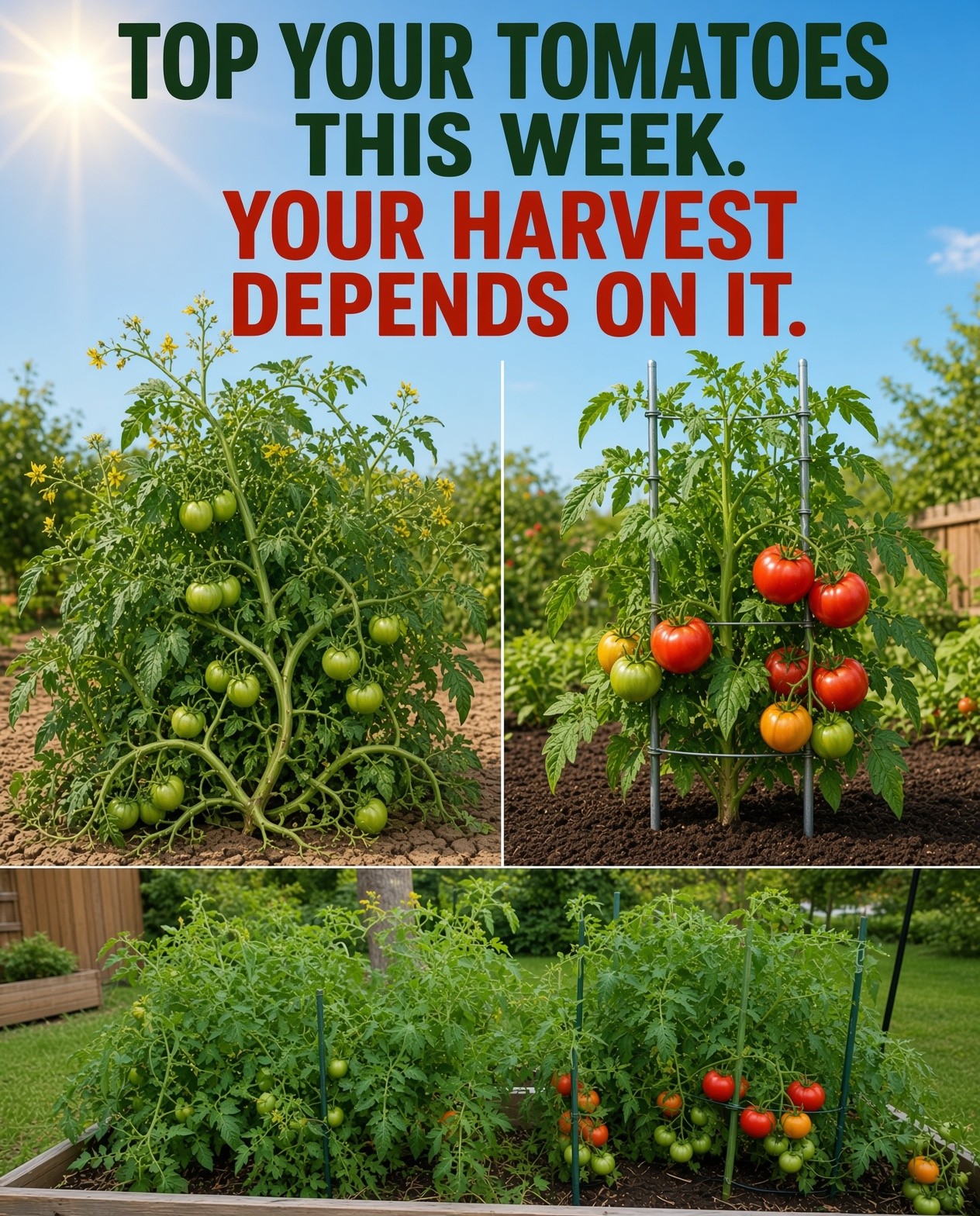
Why September Is the Right Time to Top Tomato Plants
By September, tomato plants are often still growing vigorously even though the season is clearly winding down. New leaves, shoots, flowers and tiny fruit may continue appearing, but shorter days and cooler nights mean there is less time for that new growth to become a useful harvest. Topping helps shift the plant from producing more growth to finishing the tomatoes it already has. The goal is not to stop the plant abruptly; it is to give the existing fruit a better chance to ripen before frost. For gardeners who still have healthy indeterminate plants carrying green fruit, this small late-season job can make the final weeks much more productive. Keep the remaining plant healthy and manageable.

What Topping Actually Does
Topping means removing the growing tip from the main stem or from selected tall leaders. That simple cut removes the plant’s newest growth point, so the plant has less reason to keep stretching upward and producing fresh flower clusters. The leaves and fruit already on the plant remain, allowing the tomato to concentrate on completing the crop that has a realistic chance of ripening. This is particularly useful with indeterminate varieties, which naturally keep growing until weather stops them. Think of topping as redirecting the plant’s attention rather than simply cutting it down. Keep the remaining plant healthy and manageable.

Look at Your Frost Date First
Timing is more important than the calendar itself. A practical guide is to top indeterminate tomatoes roughly four to six weeks before your area’s expected first frost. That gives existing fruit a useful finishing window without cutting productive growth unnecessarily early. Gardeners in warm regions may wait longer, while gardeners who regularly get an early frost should act sooner. Check your local frost history rather than assuming every September garden follows the same schedule. If a hard freeze is only days away, topping is unlikely to provide much benefit because the plant has too little time left. Keep the remaining plant healthy and manageable.

Choose the Highest Fruit You Want to Finish
Before making a cut, inspect the plant from the top down. Find the highest cluster of tomatoes that is large enough and developed enough to have a realistic chance of ripening. Then identify a healthy leaf or leaf node above that cluster. Keeping a little foliage above the fruit is useful because those leaves continue photosynthesizing and help support the developing tomatoes. The exact height will vary with the plant, so think in terms of fruit you can realistically finish rather than a fixed number of inches. Remove only what is necessary. Keep the remaining plant healthy and manageable.

Use Clean, Sharp Pruners
A clean, sharp pair of garden snips makes the job quick and reduces unnecessary crushing of the stem. Wipe the blades before working on the plant, especially if you have been pruning several plants. Make a clean cut just above the selected leaf or node, leaving only a short piece of stem. Avoid tearing the stem or making a ragged cut. If a plant shows signs of disease, clean your tools before moving to a healthy plant so you do not spread problems around the garden. A neat cut also makes the plant easier to inspect afterward. Keep the remaining plant healthy and manageable.

Remove New Flowers That Cannot Finish
After topping, look for fresh flower clusters near the upper growth. In a short autumn window, many of these flowers will never have enough time to become ripe tomatoes. Removing them can help the plant concentrate on fruit that is already developing. This does not mean stripping every blossom from the garden; it means making a realistic decision about what can mature before cold weather arrives. Keep the healthy, established fruit and reduce the late projects that are unlikely to pay off. That leaves more of the plant’s resources directed toward tomatoes you can actually harvest. Keep the remaining plant healthy and manageable.

Watch for Side Shoots After Topping
Tomatoes are persistent growers. Even after you remove the main growing tip, side shoots can appear and try to take over the job. Check the plant regularly and pinch out vigorous new shoots that are producing more foliage than useful fruit. A weekly inspection is usually enough during the final part of the season. Be selective rather than aggressive: keep healthy leaves that are helping fruit ripen, while removing unnecessary new growth that makes the plant dense and difficult to manage. This is especially helpful when a tall plant has already become tangled. Keep the remaining plant healthy and manageable.

Open the Plant to More Light and Air
A September tomato plant can become a tangled mass of stems and leaves. Topping and selective pruning can open the canopy, allowing more sunlight to reach ripening fruit and improving air movement through the foliage. Better airflow is especially valuable late in the season, when cool nights, dew and wet leaves can create favorable conditions for fungal problems. Do not strip the plant bare, however. Healthy foliage still matters because the plant needs leaves to make energy for the crop. Remove damaged or crowded leaves first and keep the productive canopy intact. Keep the remaining plant healthy and manageable.

Keep Watering Consistent
Late-season watering still matters after topping. Large changes in soil moisture can contribute to fruit cracking, especially when a dry spell is followed by heavy watering or rain. Aim for steady moisture around the root zone rather than alternating between very dry soil and saturation. Water the soil instead of repeatedly wetting the foliage, and use mulch where appropriate to reduce rapid moisture swings. Topping is only one part of finishing a strong autumn crop. Consistent care helps the remaining fruit size up, maintain good texture and avoid unnecessary stress. Keep the remaining plant healthy and manageable.

Harvest Tomatoes as They Begin to Color
Do not wait for every tomato to become fully red on the vine. Tomatoes that have reached the breaker stage, when they have begun changing from mature green toward their final color, can usually finish ripening indoors. Picking these fruits reduces the load on the plant and protects them from sudden cold or splitting. Handle them gently and keep them at normal room temperature rather than refrigerating them if you want the best flavor. Check the plants frequently because a few warm days can move several fruits from green to harvest-ready surprisingly quickly. Keep the remaining plant healthy and manageable.

What to Do With Green Tomatoes
Some green tomatoes will remain when frost approaches, and that is completely normal. Mature green fruit can be harvested before a freeze and used in cooking, while smaller fruit may be better suited to preserving or simply composting if it has no realistic chance to develop. Fried green tomatoes, relishes, pickles and other recipes can turn an end-of-season surplus into something useful. The important point is to harvest before a hard freeze damages the fruit. Sort the harvest by size and maturity so the tomatoes that can ripen indoors are separated from those better suited to cooking. Keep the remaining plant healthy and manageable.

Topping Can Also Make Harvesting Easier
Unmanaged tomato plants can become difficult to reach by late summer. Topping reduces excessive height and makes the remaining crop easier to inspect. You can see ripening fruit more clearly, notice damaged leaves sooner and reach tomatoes without fighting through a wall of new growth. This practical benefit is easy to overlook, but it can make the final weeks of the garden much less frustrating. A tidy plant is also easier to support, water and cover if an unexpected cold night is forecast. Keep the remaining plant healthy and manageable.

Which Tomatoes Benefit Most
Topping is most useful for indeterminate tomatoes that continue producing new stems and flowers throughout the season. Determinate varieties have a naturally limited growth pattern and are usually managed differently, so there is less reason to apply the same technique. If you are unsure which type you planted, check the seed packet or plant label. When in doubt, focus on the principle behind topping: remove growth that cannot realistically contribute to the harvest while preserving healthy foliage and developing fruit. The technique should support the plant’s natural growth habit, not fight against it. Keep the remaining plant healthy and manageable.

A Simple September Tomato Routine
Once you have topped the plants, make the final weeks simple. Check each plant once a week, remove fresh shoots that are racing upward, pick ripe and breaker-stage tomatoes, and remove damaged fruit. Keep soil moisture reasonably consistent and watch the forecast for frost. This small routine helps you get the most from the crop without turning autumn gardening into a major project. It also gives you a chance to catch disease, cracking or pest damage before a small problem affects a large portion of the harvest. Keep the remaining plant healthy and manageable.

Finish the Season With a Better Harvest
Topping tomatoes in September is less about cutting a plant back and more about helping it finish. By stopping unrealistic new growth, opening the canopy and directing attention toward fruit that already exists, you give the remaining crop a better chance to ripen before the season closes. Combined with steady watering, sensible pruning and timely harvesting, this simple late-season task can turn a jungle of vines into a manageable plant carrying a final wave of flavorful tomatoes. The best results come from making the cut at the right time and then keeping the plant comfortable through the final stretch. Keep the remaining plant healthy and manageable.
