
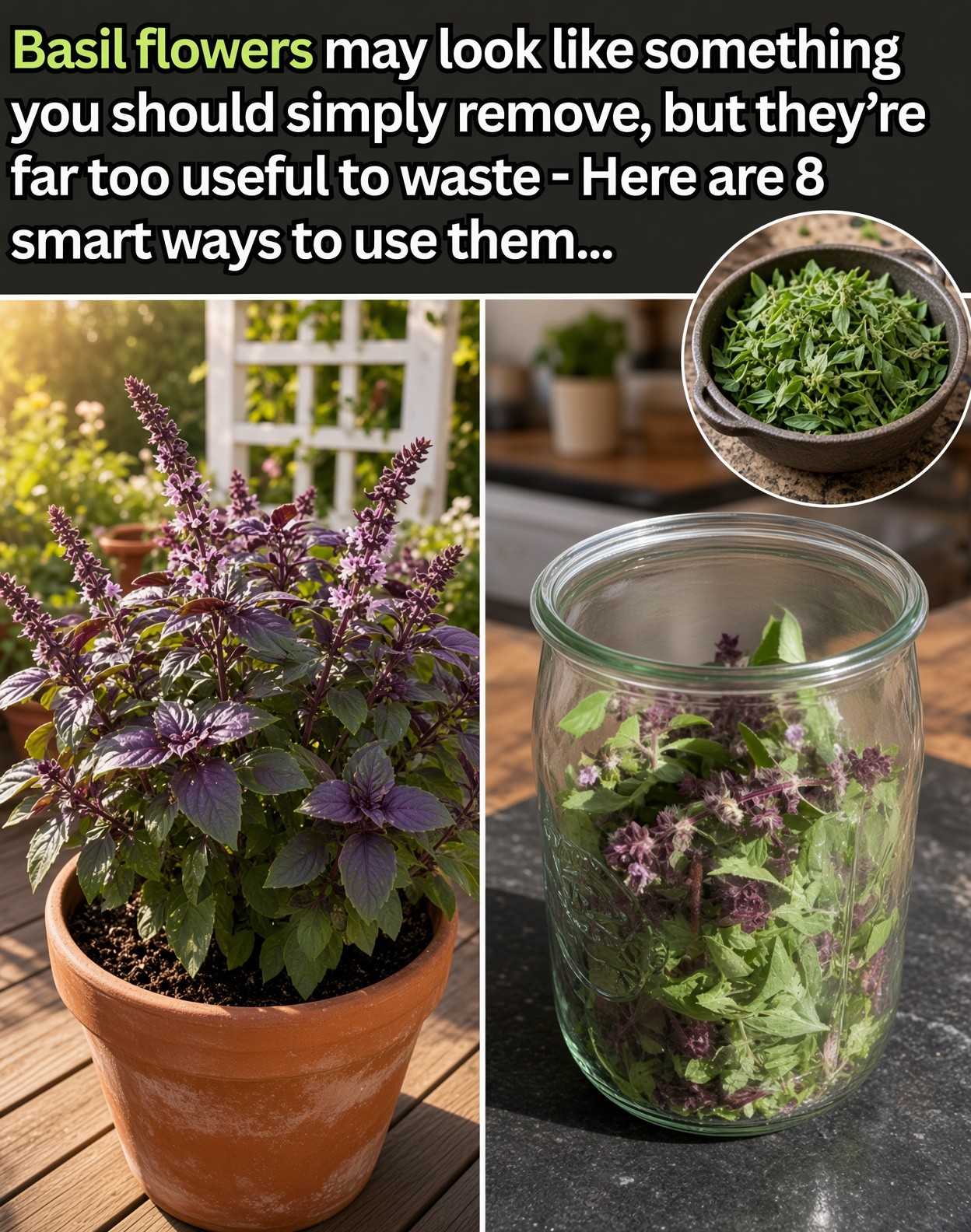
Basil flowers are often treated as a problem because many gardeners pinch them off as soon as they appear. But flowering is a natural part of the basil plant’s life cycle, and those tiny white, pink, or purple blooms are far from useless. They are edible, fragrant, attractive, and surprisingly versatile. If your basil is beginning to flower, you do not have to choose between harvesting leaves and throwing the blooms away. You can use some flowers in the kitchen, preserve others for later, and leave a few on the plant for pollinators and seed production. Here are eight practical ways to make more use of every basil plant in your garden.
1. Add Fresh Basil Flowers to Salads and Summer Dishes
Basil flowers are edible and have a gentler, more floral flavor than mature basil leaves. That makes them especially useful when you want basil’s aroma without overpowering a delicate dish. The tiny blooms look beautiful scattered over green salads, tomato salads, pasta salads, grain bowls, and fresh summer vegetables.

Harvest the flowers shortly before using them. Give them a gentle rinse if needed, pat them dry, and separate individual florets from the tougher stem. You can also use an entire small flower spike as a garnish when you want a more dramatic presentation.
Their mild flavor works particularly well with tomatoes, mozzarella, cucumber, peaches, melon, lemon, and olive oil. Add the flowers near the end so their fragrance remains noticeable.
2. Make Basil Flower Vinegar for Dressings and Marinades
Basil flowers can turn an ordinary bottle of vinegar into a fragrant pantry ingredient. A simple infusion gives vinegar a subtle herbal character that works beautifully in salad dressings, vegetable marinades, and finishing sauces.

Start with clean, dry basil flowers and a suitable vinegar such as white wine vinegar or apple cider vinegar. Place the flowers in a clean glass jar, cover them completely with vinegar, seal the jar, and let the mixture infuse in a cool, dark place. Strain it when the flavor is strong enough for your taste and store the finished vinegar in a clean bottle.
For the best quality, use dry equipment and avoid introducing water into the infusion. The finished vinegar also makes an attractive homemade gift.
3. Blend Basil Flower Pesto
If your basil plant has started flowering and leaf production is slowing, there is no reason to waste the blooms. Basil flowers can be blended with basil leaves to create a fragrant variation on traditional pesto. They bring a softer, slightly floral note while still fitting naturally with garlic, nuts, cheese, and olive oil.

For an easy batch, combine basil flowers and leaves with garlic, toasted pine nuts or walnuts, grated Parmesan, olive oil, salt, and pepper. Pulse everything in a food processor until it reaches the texture you like.
Basil flower pesto is excellent tossed with pasta, spread on toast, spooned over roasted vegetables, or used as a sandwich condiment.
4. Brew a Simple Basil Flower Tea
Fresh or dried basil flowers can be used to make a simple herbal infusion. The resulting drink has a light botanical aroma and can be enjoyed warm or chilled. It is naturally caffeine-free when made from basil alone.

Place clean basil flowers in a cup or teapot and pour over freshly boiled water. Allow them to steep for several minutes, then strain. Lemon, honey, or fresh mint can add another layer of flavor.
It is best to enjoy basil flower tea as a pleasant herbal drink rather than a medical treatment. Evidence for specific health benefits from homemade basil-flower tea is limited.
5. Freeze Basil Flowers in Ice Cubes
Freezing basil flowers is an easy way to preserve their decorative appeal for summer drinks. The tiny blossoms look especially attractive suspended inside clear ice cubes for lemonade, sparkling water, iced tea, or other beverages.

Place one or two small flowers into each compartment of an ice tray. Fill with clean water and freeze until solid. Filtered water can produce clearer-looking cubes.
You can also freeze flowers with a small basil leaf or lemon zest. This method is especially useful when the garden is producing more flowers than you can use immediately.
6. Make Fragrant Basil Flower Herb Salt
Basil flowers can be combined with salt to create a simple seasoning that captures some of the herb’s fragrance. This is a practical way to preserve a small harvest and use it later.

Make sure the flowers are completely dry before combining them with coarse sea salt. Pulse the mixture briefly in a food processor or crush it by hand. Spread the mixture on a tray and allow any remaining moisture to evaporate before storing it in an airtight jar.
Use basil flower salt over tomatoes, roasted vegetables, eggs, potatoes, salads, or freshly baked bread. The key to good storage is keeping the mixture dry.
7. Mix Basil Flowers Into Compound Butter
Compound butter is an easy kitchen project that gives basil flowers a useful second life. Softened butter can be mixed with finely chopped basil flowers to create a fragrant spread for bread, vegetables, potatoes, corn, or grilled foods.

Let unsalted butter soften, then mix in finely chopped basil flowers. Add a pinch of salt and, if you like, lemon zest, black pepper, or garlic. Shape the mixture into a log using parchment paper and refrigerate until firm.
For longer storage, wrap the butter well and freeze it in portions. A small piece melted over warm vegetables or stirred into pasta makes a quick finishing ingredient.
8. Leave Some Flowers for the Pollinators
Not every basil flower needs to end up in the kitchen. If you have more blooms than you can use, leave some on the plant. Basil flowers can provide nectar for bees and other beneficial insects, making flowering basil a useful addition to a wildlife-friendly garden.

If your main goal is maximum tender leaf production, pinching flowers encourages branching and delays flowering. But if you want seeds or want to support pollinators, allowing some flower spikes to mature is perfectly reasonable.
You can even divide your basil plants by purpose: keep some plants pinched for leaf harvest and allow another to flower. That way you get fresh basil while still enjoying the blooms and garden activity.
Final Thoughts
Basil flowers are not garden waste. They can become a fresh garnish, infused vinegar, pesto, herbal tea, decorative ice, seasoned salt, compound butter, or a valuable food source for pollinating insects. If you want the biggest supply of tender leaves, pinch flowers regularly. If you have plenty of basil or want to encourage pollinators and collect seeds, let some flower spikes mature. Either way, those little blooms have plenty of value. The next time you see basil flowering, pause before reaching for the scissors. A small harvest of blossoms can add flavor, fragrance, beauty, and usefulness to both your kitchen and your garden.
SEO keywords: basil flower uses, how to use basil flowers, basil flowers edible, basil flower tea, basil flower pesto, basil flower vinegar, basil flower recipes, basil gardening tips.